About this artwork
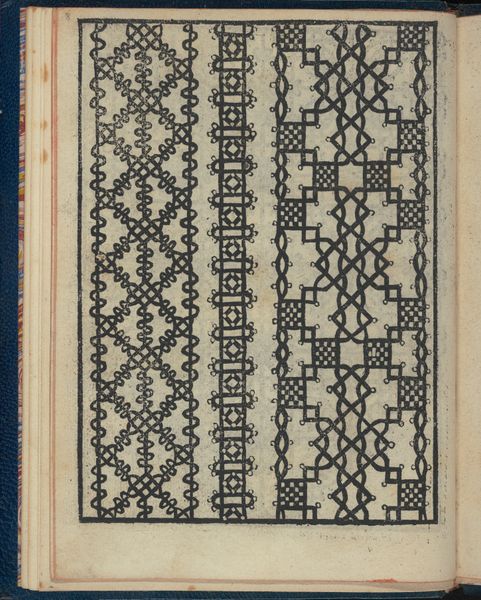
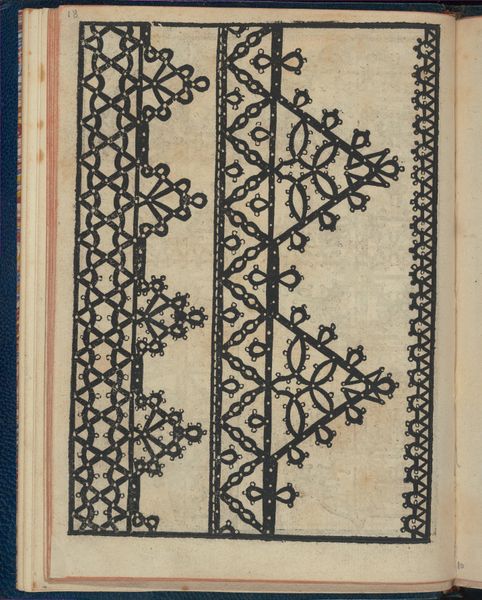
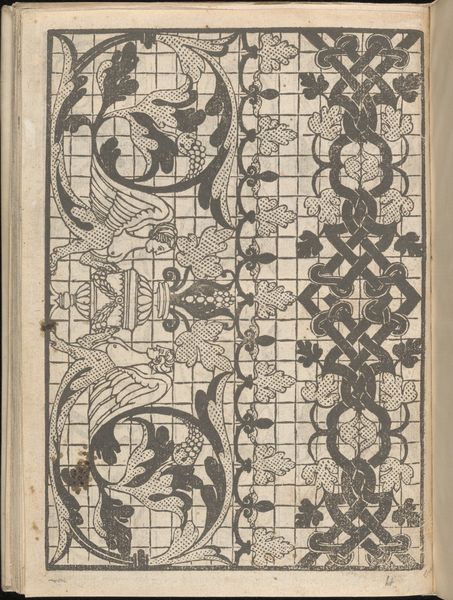
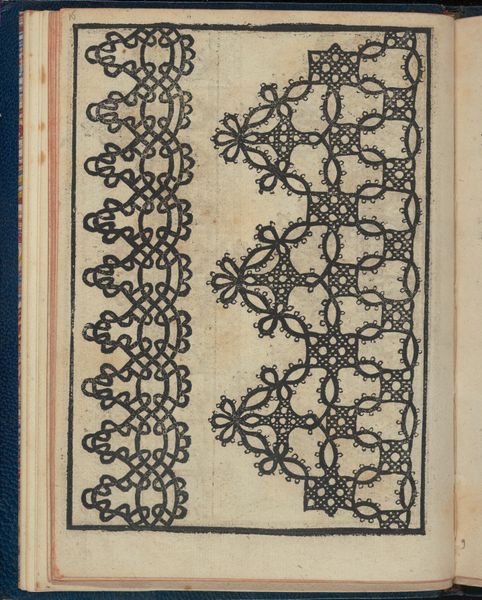
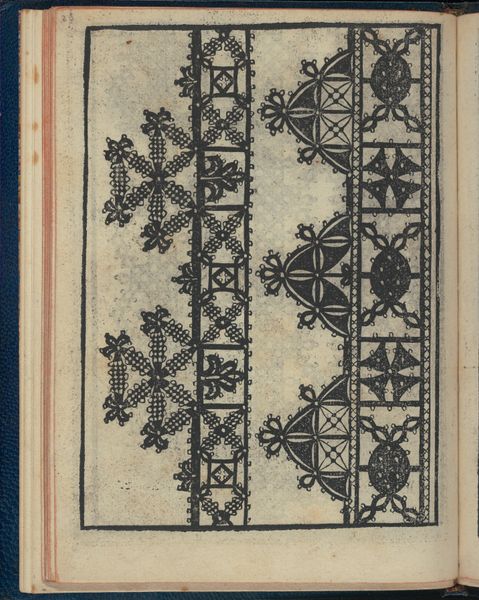
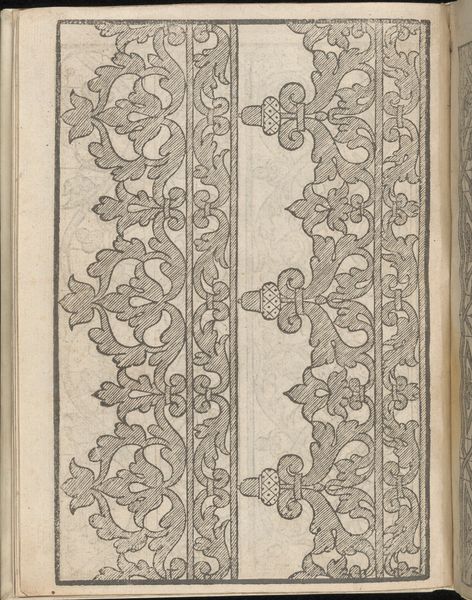
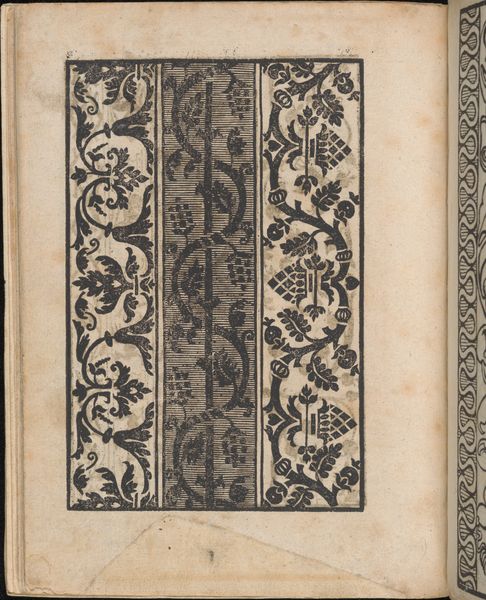
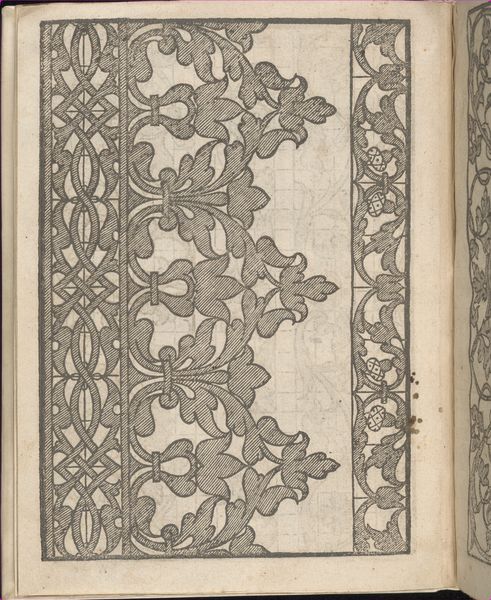
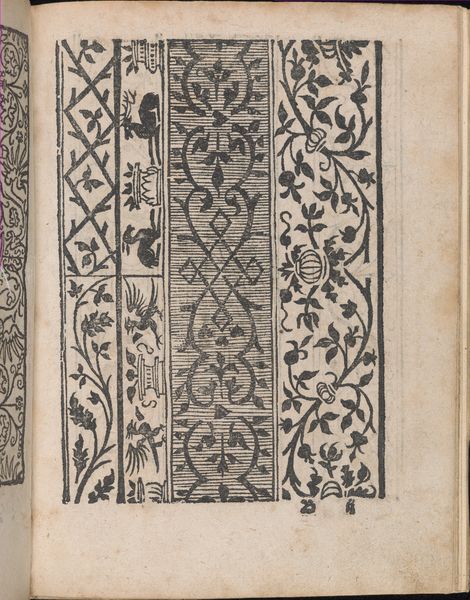
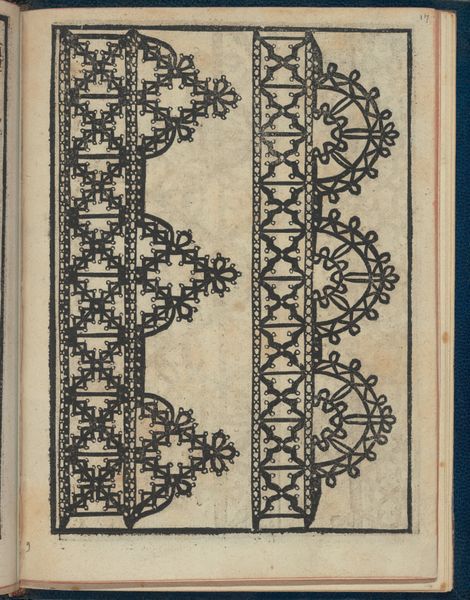
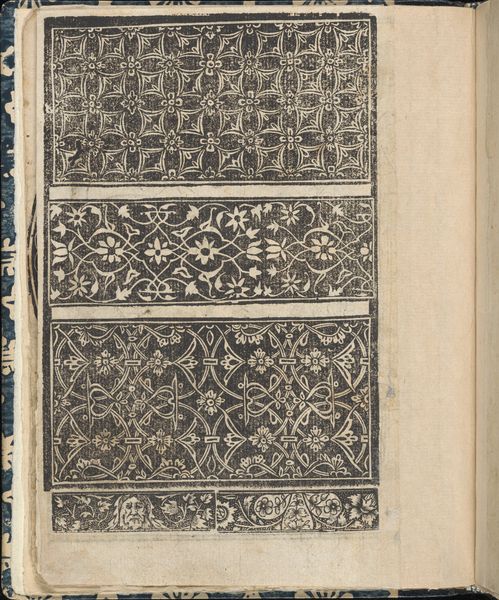
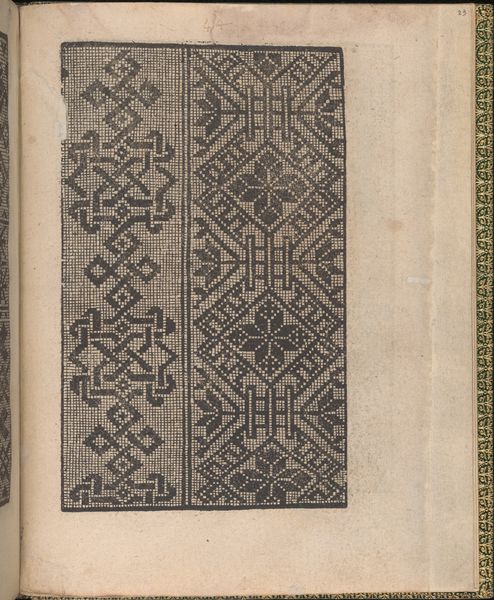
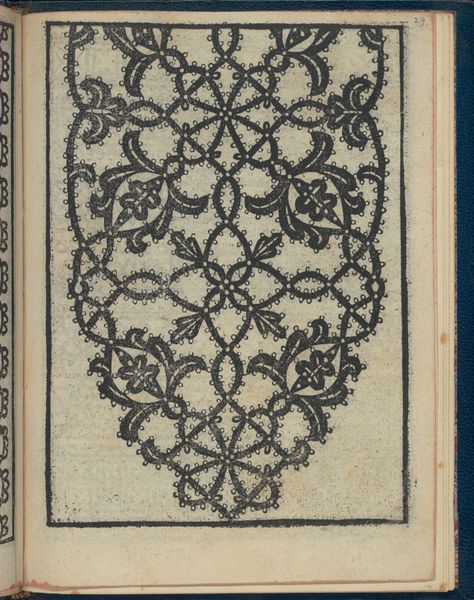
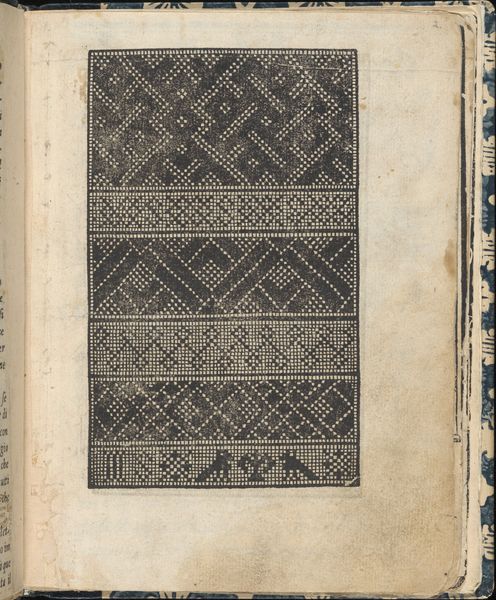
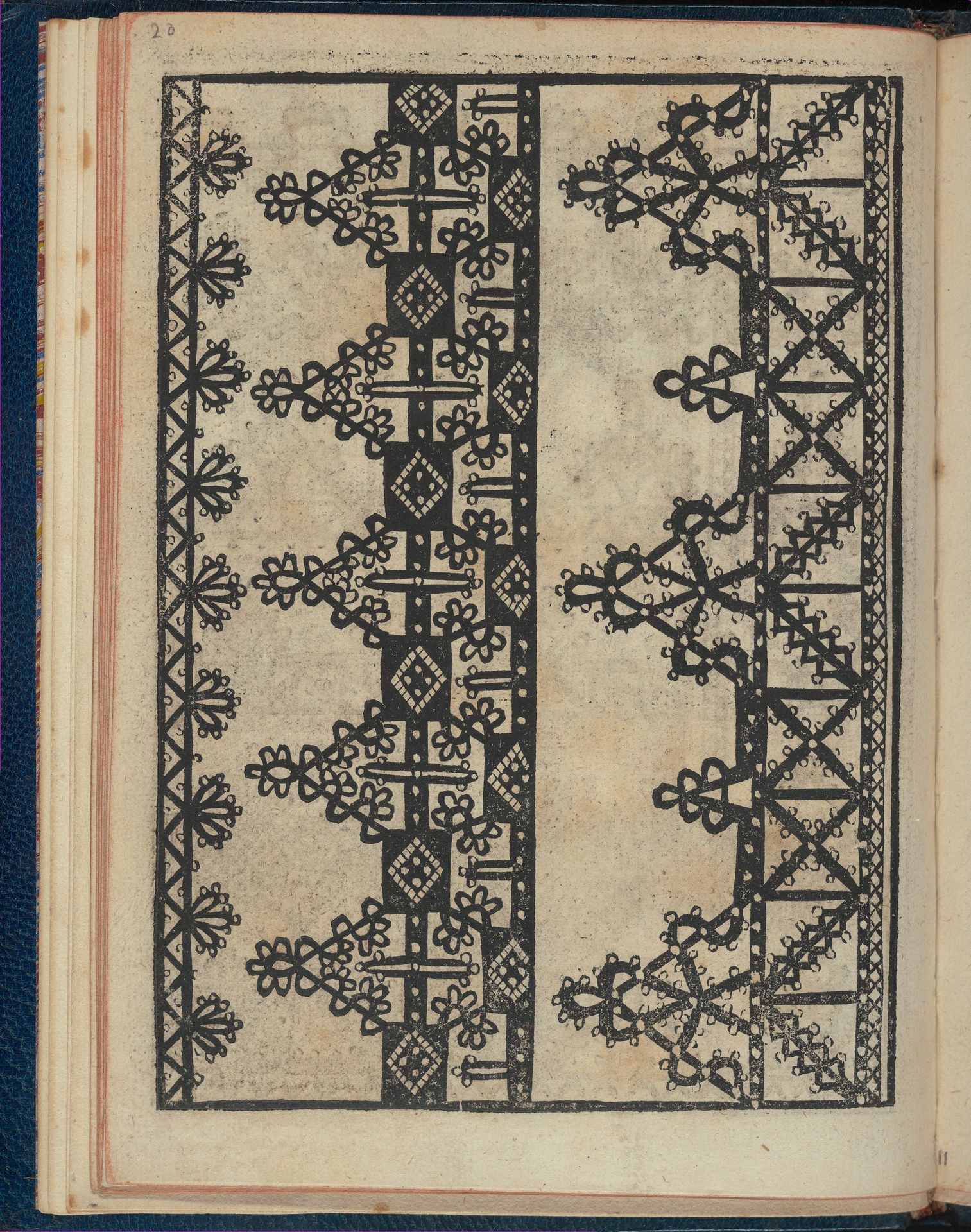
Curator: Here we have a page from Giovanni Battista and Marchio Sessa’s "Le Pompe: Opera Nova," dating back to 1557. It's a striking example of 16th-century Italian design, a print on paper showcasing intricate patterns intended for lacemaking. Editor: Immediately, I’m struck by its formality, almost a severe elegance. The stark contrast of black ink on the page creates this very structured and somewhat rigid feel. Curator: These designs weren’t just decorative. The geometric and floral motifs had very specific symbolic resonances for the time, communicating status, prosperity, and refined taste. They echo a kind of collective memory, tying back to older medieval visual traditions. Editor: Absolutely. And we can't ignore the economic context. Lace production in the 16th century was huge. These pattern books democratized design. Think of the power dynamic — a book allowing wider access to fashionable patterns trickling from elite consumption to a rising middle class. Curator: Indeed, patterns carried messages. The repetition of floral and geometric figures are often interpreted as expressions of harmony and the divine order. There's something quite psychologically soothing about them. Editor: Yet, there's tension in that harmony. Considering contemporary gender roles, one wonders about the lives of women engaged in lacemaking—was it empowering, a form of artistic expression and financial independence, or yet another form of constrained labor? Curator: Both, most likely. It's important to remember that creativity often flourishes under constraint. And regardless, these symbolic forms have persisted and evolved, reappearing in all sorts of later decorative work. Editor: Thinking about these patterns being reproduced by artisans across different socioeconomic statuses truly brings out that complexity for me. Curator: For me, it underscores that symbolic forms are both stable and mutable. Their echoes stretch into the present. Editor: I find myself thinking about craft, labor, and the democratization of design. It reveals the complicated history of aesthetics trickling across class lines.
Le Pompe: Opera Nova, page 10 (verso)
1557

Giovanni Battista & Marchio Sessa
@giovannibattistamarchiosessa
The Metropolitan Museum of Art
Metropolitan Museum of Art, New York, NYArtwork details
- Medium
- drawing, graphic-art, print, paper
- Dimensions
- Overall: 8 1/16 x 5 7/8 in. (20.5 x 15 cm)
- Location
- Metropolitan Museum of Art, New York, NY
- Copyright
- Public Domain
Tags
Comments
Share your thoughts
About this artwork
Curator: Here we have a page from Giovanni Battista and Marchio Sessa’s "Le Pompe: Opera Nova," dating back to 1557. It's a striking example of 16th-century Italian design, a print on paper showcasing intricate patterns intended for lacemaking. Editor: Immediately, I’m struck by its formality, almost a severe elegance. The stark contrast of black ink on the page creates this very structured and somewhat rigid feel. Curator: These designs weren’t just decorative. The geometric and floral motifs had very specific symbolic resonances for the time, communicating status, prosperity, and refined taste. They echo a kind of collective memory, tying back to older medieval visual traditions. Editor: Absolutely. And we can't ignore the economic context. Lace production in the 16th century was huge. These pattern books democratized design. Think of the power dynamic — a book allowing wider access to fashionable patterns trickling from elite consumption to a rising middle class. Curator: Indeed, patterns carried messages. The repetition of floral and geometric figures are often interpreted as expressions of harmony and the divine order. There's something quite psychologically soothing about them. Editor: Yet, there's tension in that harmony. Considering contemporary gender roles, one wonders about the lives of women engaged in lacemaking—was it empowering, a form of artistic expression and financial independence, or yet another form of constrained labor? Curator: Both, most likely. It's important to remember that creativity often flourishes under constraint. And regardless, these symbolic forms have persisted and evolved, reappearing in all sorts of later decorative work. Editor: Thinking about these patterns being reproduced by artisans across different socioeconomic statuses truly brings out that complexity for me. Curator: For me, it underscores that symbolic forms are both stable and mutable. Their echoes stretch into the present. Editor: I find myself thinking about craft, labor, and the democratization of design. It reveals the complicated history of aesthetics trickling across class lines.
Comments
Share your thoughts