print, engraving
#
portrait
#
neoclacissism
# print
#
history-painting
#
engraving
Dimensions: height 174 mm, width 115 mm
Copyright: Rijks Museum: Open Domain
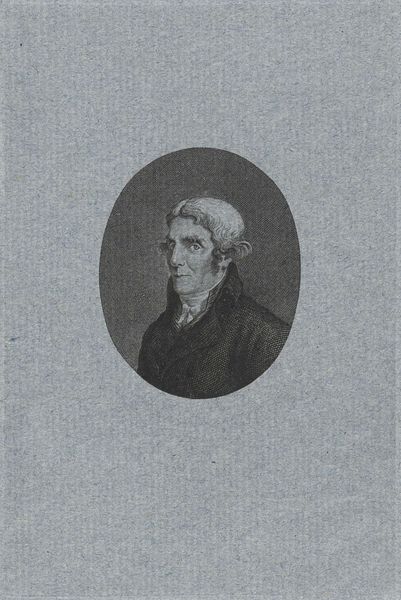
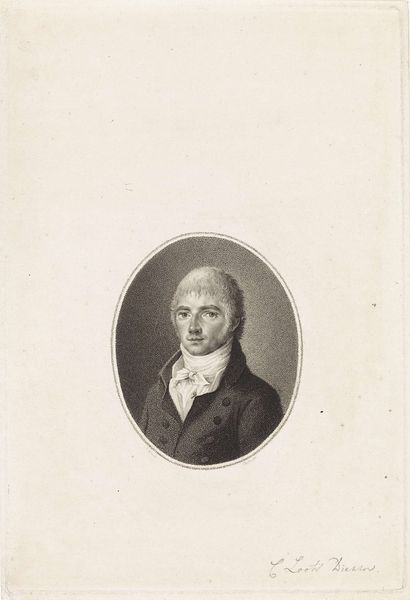
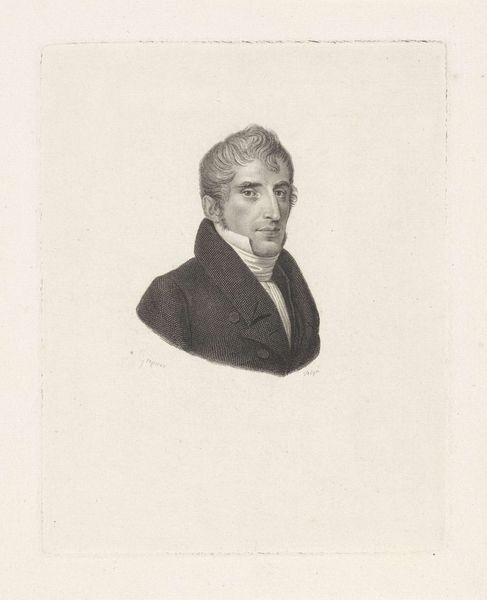
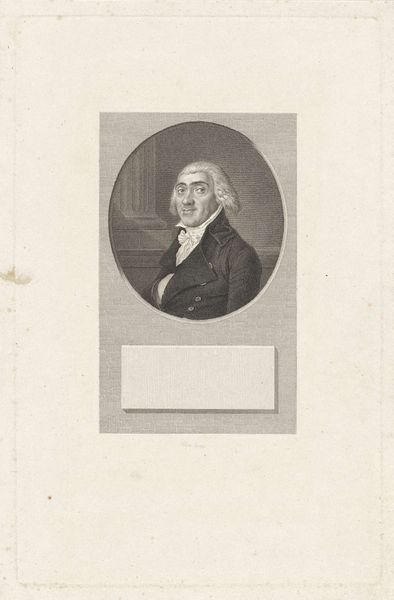
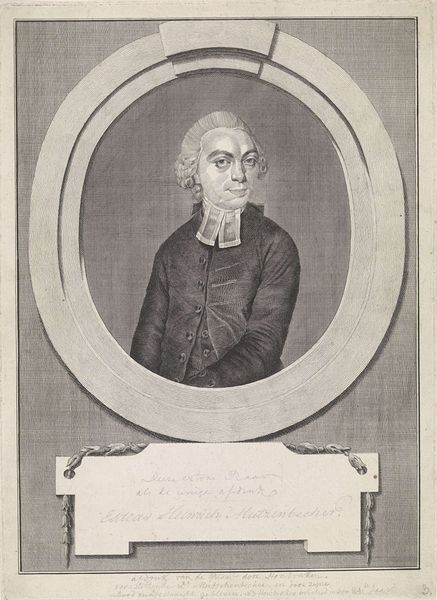
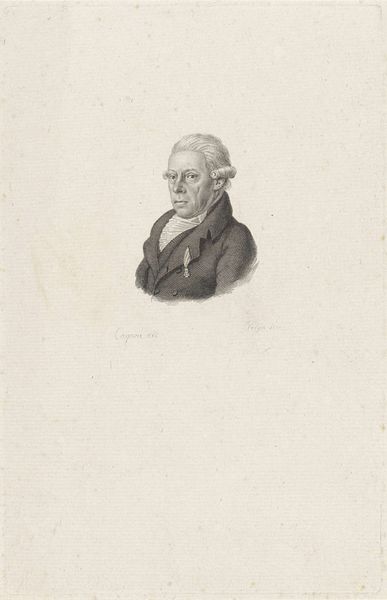
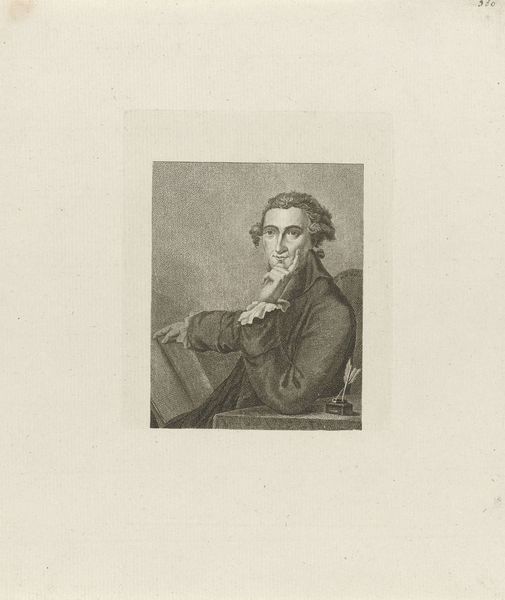
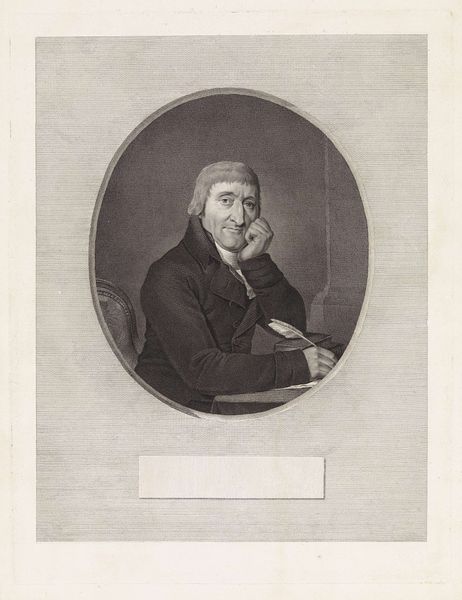
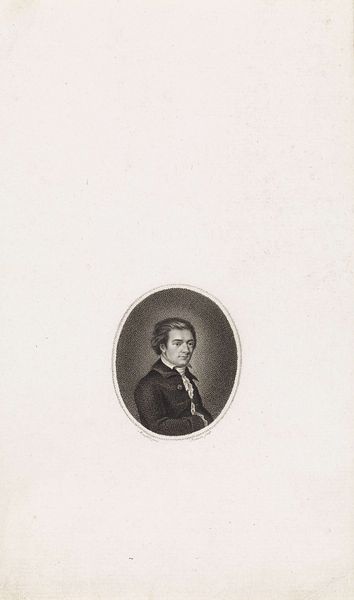
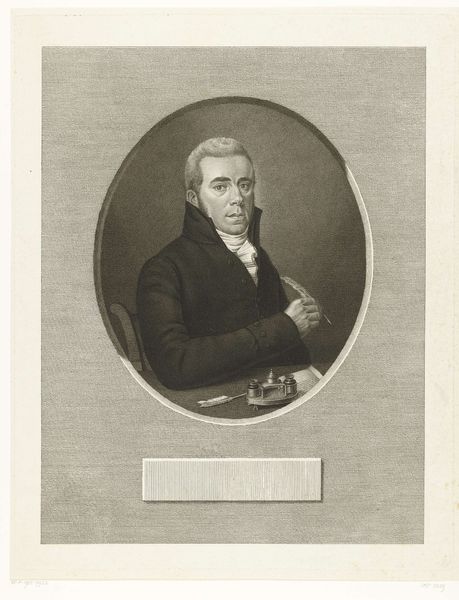
Joannes Pieter Visser Bender made this portrait of Izaak Jansz. de Wit using etching and engraving techniques. The Netherlands was in a period of political and social upheaval at the time, transitioning from the Dutch Republic to French influence. The etching's style reflects the conventions of portraiture in the late 18th and early 19th centuries, emphasizing the sitter's status and character. The choice of black and white etching, rather than a more elaborate painted portrait, might indicate a shift towards more sober, bourgeois values. To understand this work, you could research the political climate of the Netherlands during the late 18th and early 19th centuries, looking at the role of portraiture in shaping public perception and social identity. You could explore the artist's biography to understand his artistic training and the influences on his style. Only by placing this etching in its social and institutional context can we appreciate its significance as a reflection of its time.
Comments
No comments
Be the first to comment and join the conversation on the ultimate creative platform.
 Collect
 React
React Comment
More like this