painting, acrylic-paint
#
portrait
#
contemporary
#
character portrait
#
head
#
painting
#
acrylic-paint
#
figuration
#
social-realism
#
portrait reference
#
animal portrait
#
portrait art
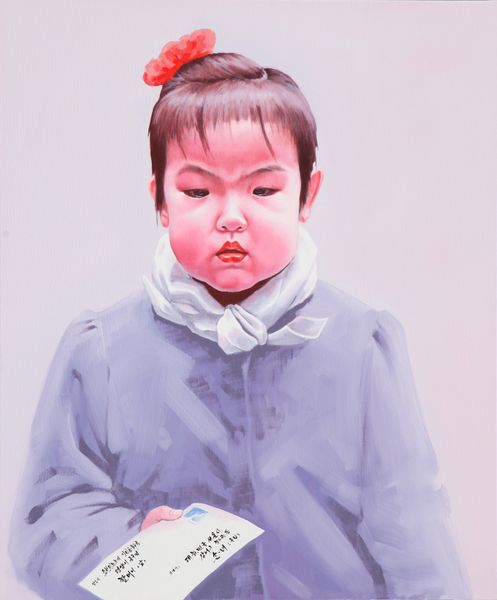
Copyright: Zhang Xiaogang,Fair Use
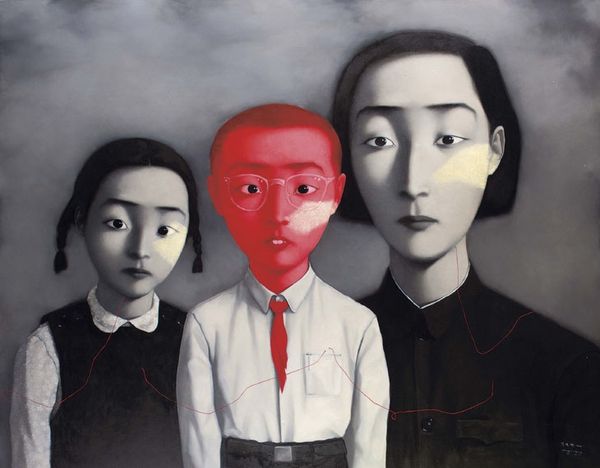
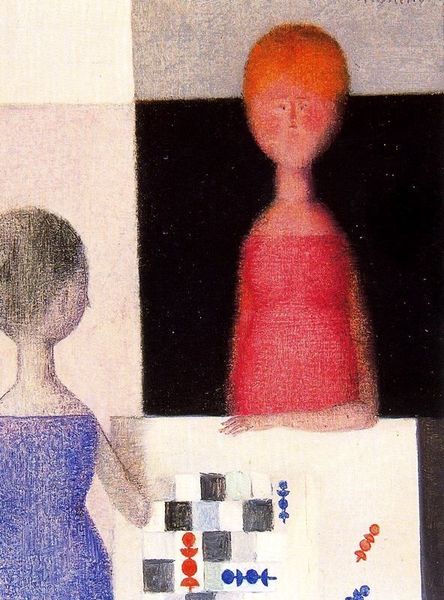
Editor: Here we have Zhang Xiaogang's "Big Family Girl" from 2006, made with acrylic paint. I find her expression really striking, almost unsettling. It feels so blank. What do you see in this piece? Art Historian: What I see, first and foremost, is a statement about identity and societal expectations within a specific Chinese context. Considering its place within contemporary art, Xiaogang engages the visual language of Social Realism to address more current socio-political climates. That slightly unsettling feeling you’re picking up on - how much do you think is the subject's expression, and how much is it created by the almost clinical gray background and somewhat graphic lines around her body? Editor: I guess it's both. The background makes her feel isolated, and those lines…are they like family ties, but fragile? Art Historian: Exactly. They can be interpreted that way – as thin threads connecting her, maybe suggesting a disruption in familial structure, influenced by cultural revolutions or economic reform, particularly within urban life. This tension is at play between state and personal life, public and private. What do you think the schoolbook she's holding adds to this message? Editor: Perhaps her cultural role in the society…something about conformity? Art Historian: It's that pressure to succeed within established structures. These portraits can be read as a silent protest against the sacrifices of individuality demanded by rapidly changing societies. Do you notice any contemporary artistic parallels in our society? Editor: It’s interesting how a single portrait can represent so much. It’s more than just a picture; it is also about history. Art Historian: Absolutely! Context transforms art and shapes cultural perception. Next time, consider art as not just the piece in front of you, but its societal reflections as well!
Comments
No comments
Be the first to comment and join the conversation on the ultimate creative platform.
 Collect
 React
React Comment
More like this