print, engraving
# print
#
landscape
#
geometric
#
cityscape
#
engraving
Dimensions: height 471 mm, width 633 mm
Copyright: Rijks Museum: Open Domain
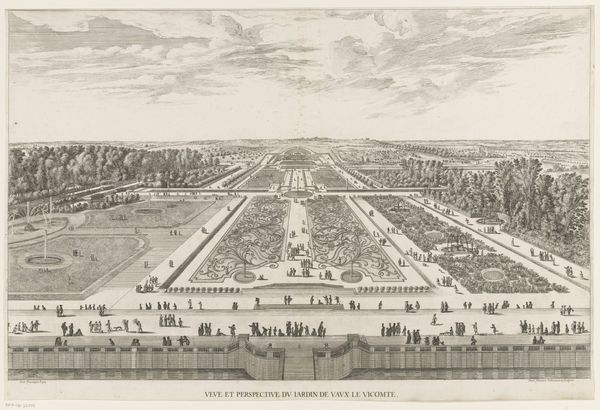
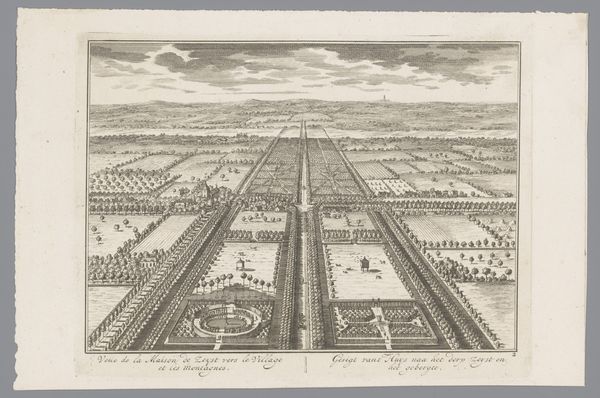
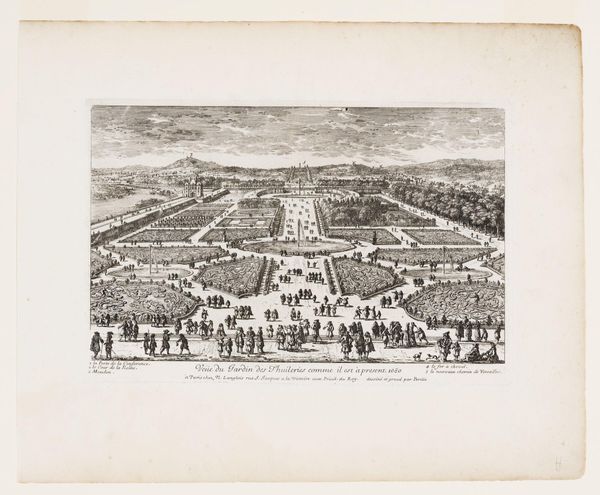
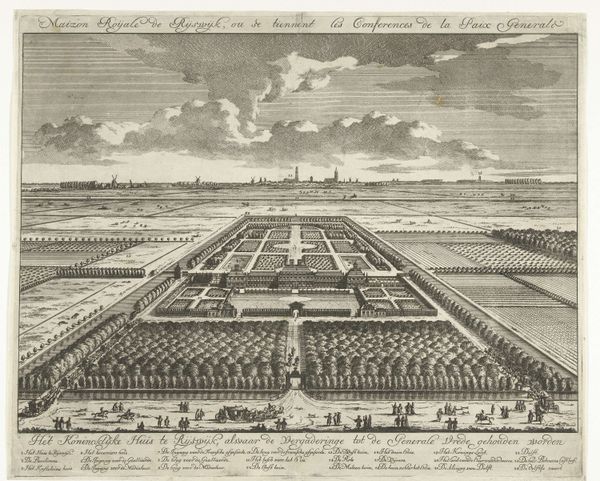
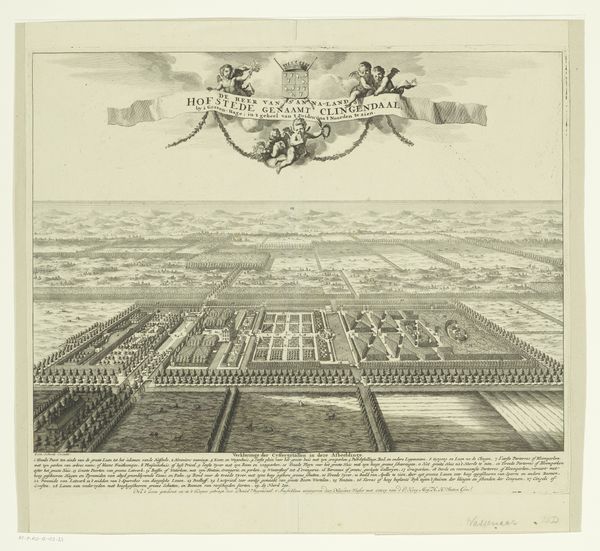
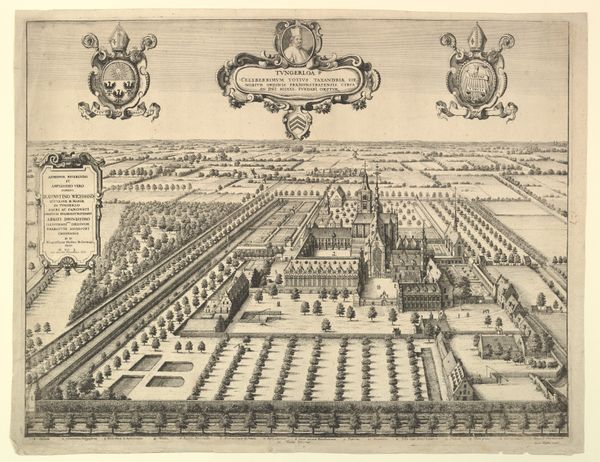
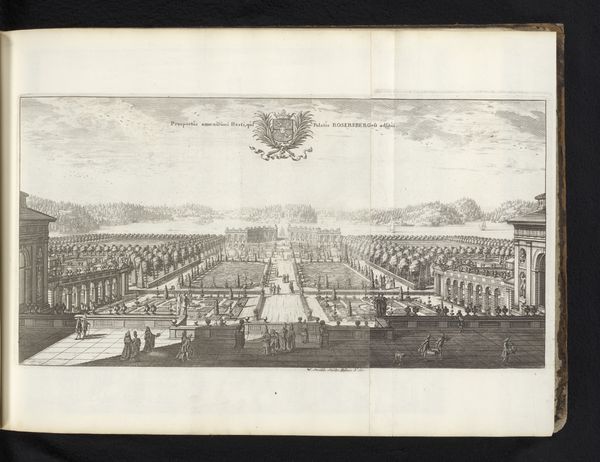
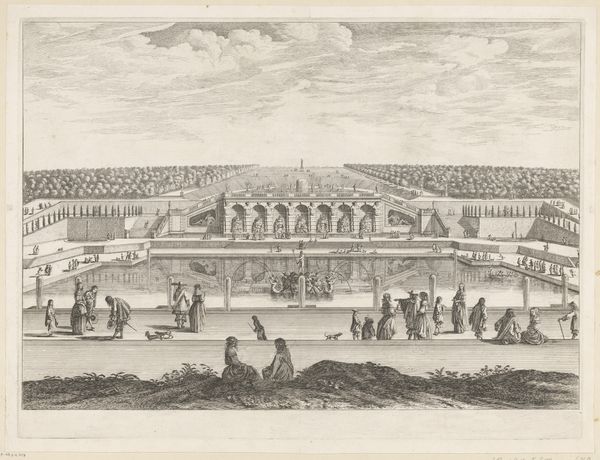
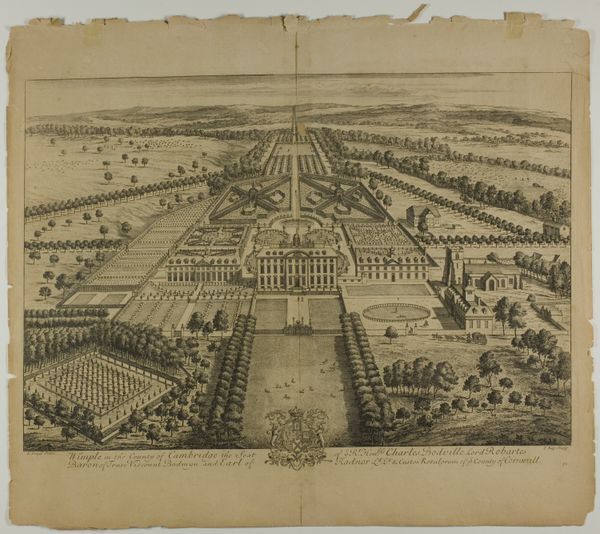
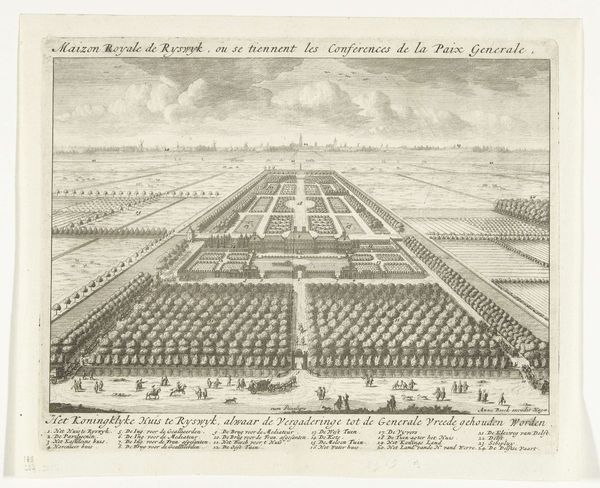
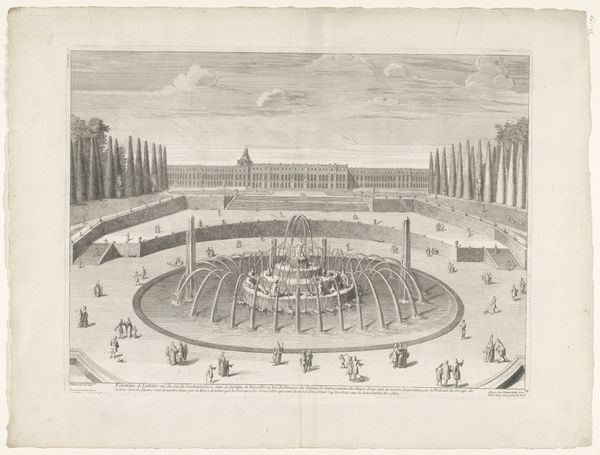
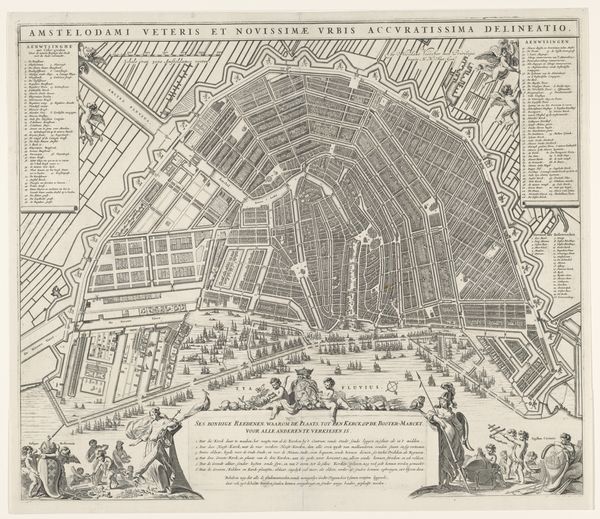
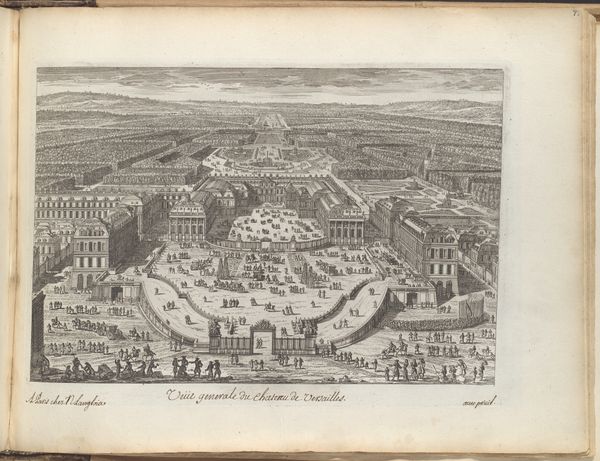
Editor: So, this is "Gezicht op het paleis van Karlsruhe," a print, likely an engraving, made before 1785 by Johann Baptist Haas. It's quite striking how geometric and orderly it is, almost utopian in its design. What do you see in this piece? Curator: Beyond the formal precision, I see an assertion of power and control. These planned cities weren’t simply about aesthetics. Think about who commissions such works. It is designed to showcase control over nature and society, reflecting specific political ideologies of the time. The radiating streets literally project the reach of the palace, centralizing authority and facilitating surveillance and control over the populace. Editor: Control… so, it's less about beauty and more about political intention? Curator: Beauty can serve many purposes. Consider, what stories are not told in this perfectly symmetrical rendering? Are the lives of commoners reflected here, or only the elite? Who gets to live within this beautiful, ordered space, and who is relegated to its margins? What's missing can be as significant as what’s presented. The uniformity in Haas' engraving serves to emphasize a distinct social hierarchy. Editor: That makes sense. The symmetry feels almost...oppressive now that you point it out. I hadn’t thought about the absent voices. Curator: Art from this period often idealizes the world, glossing over the lived realities of many. Reflecting on the choices made by the artist – what to include, what to exclude – allows us to understand the artwork within its historical context. These prints, therefore, are cultural artifacts that can unlock valuable historical truths. Editor: I see that. Looking closer, the social narrative seems embedded within the visual presentation. Curator: Exactly! And engaging critically is how we unravel these intricate layers and understand not only the aesthetic, but the interwoven socio-political forces behind it. Editor: Well, I’ll definitely look at cityscapes differently now. It’s more than just geometry and architectural flair. Curator: Absolutely, and that’s the power of looking at art through a contextual lens. We move beyond aesthetics to engage with the complex stories and social dynamics embedded within each piece.
Comments
No comments
Be the first to comment and join the conversation on the ultimate creative platform.
 Collect
 React
React Comment
More like this