About this artwork
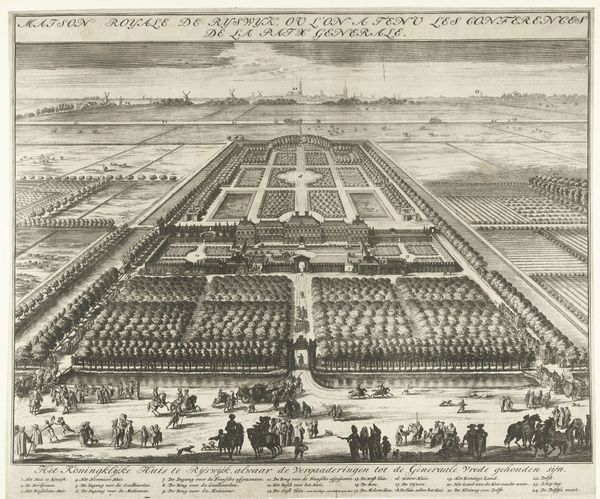
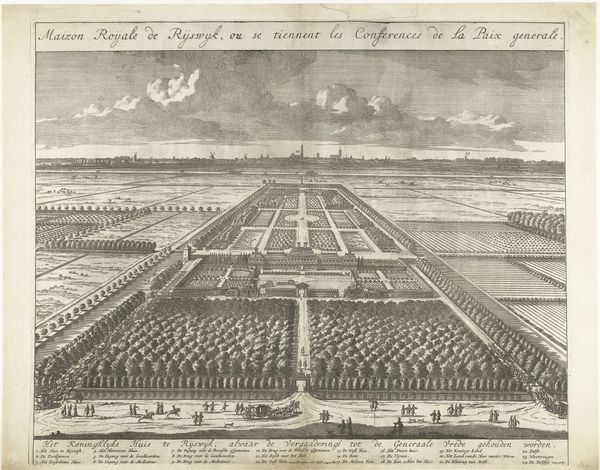
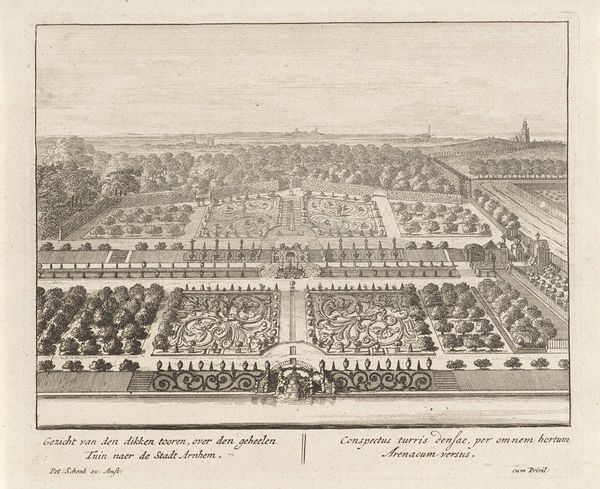
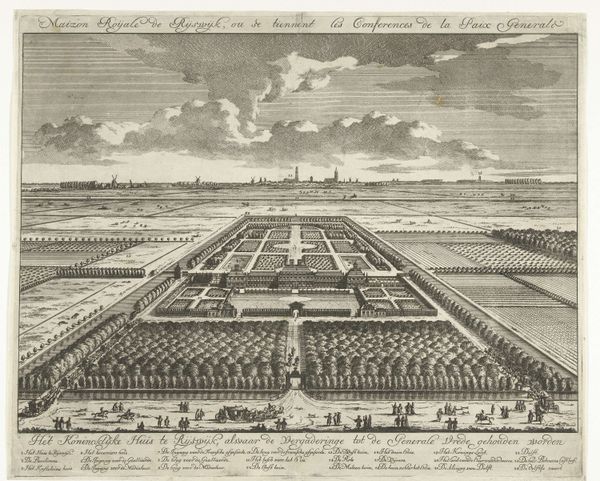
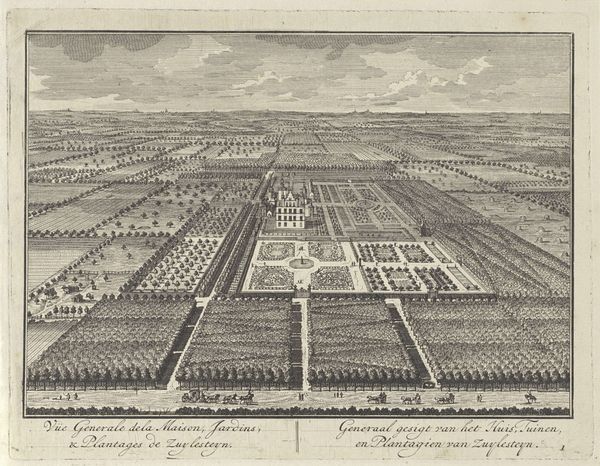
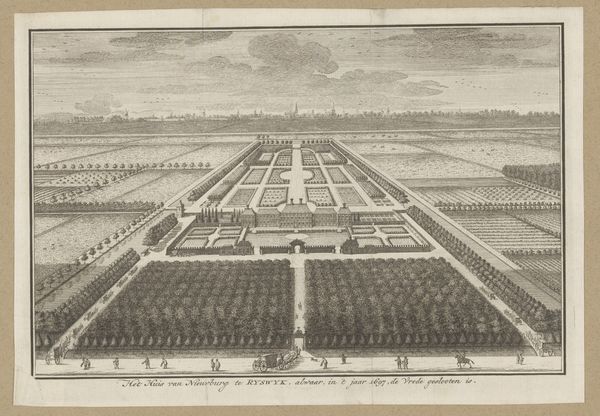
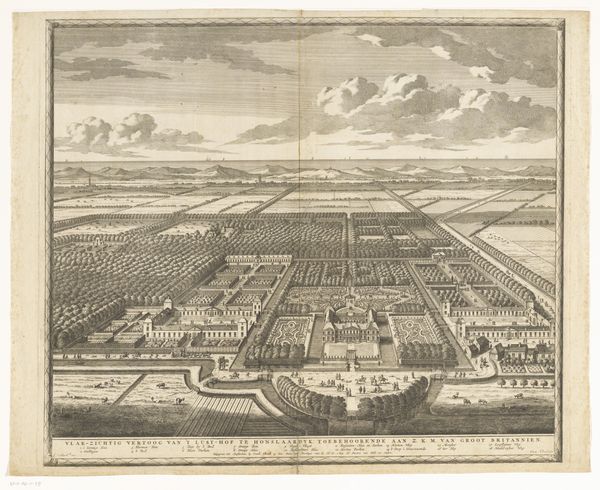
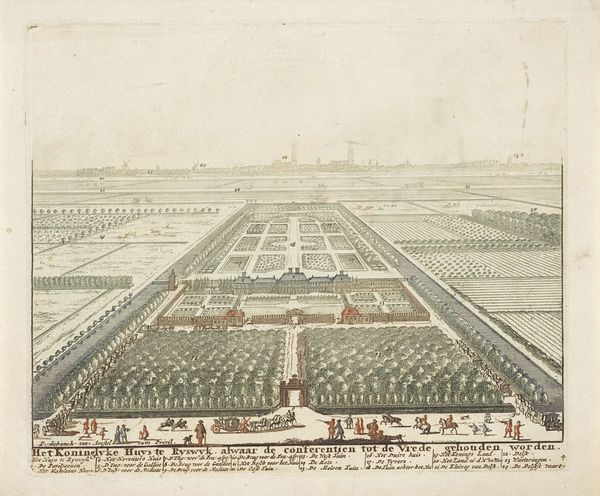
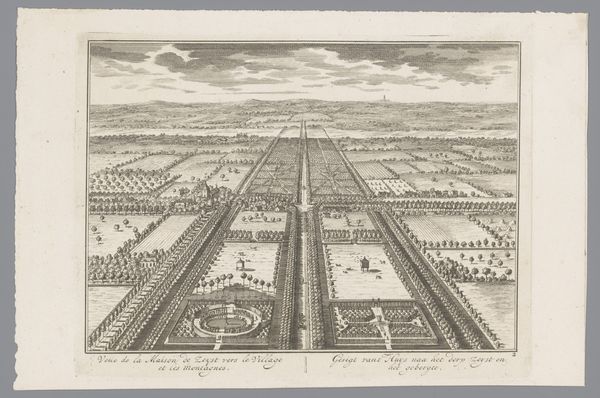
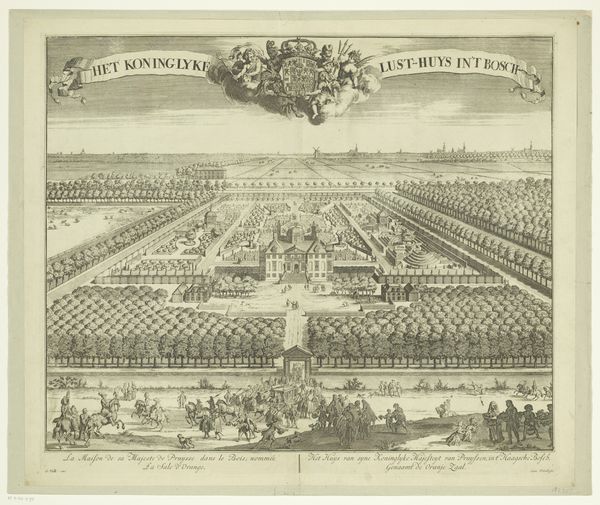
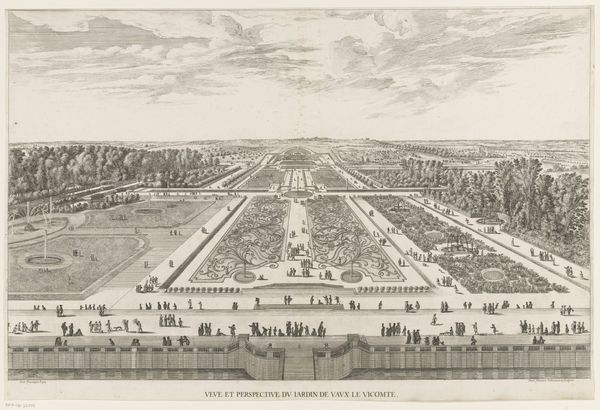
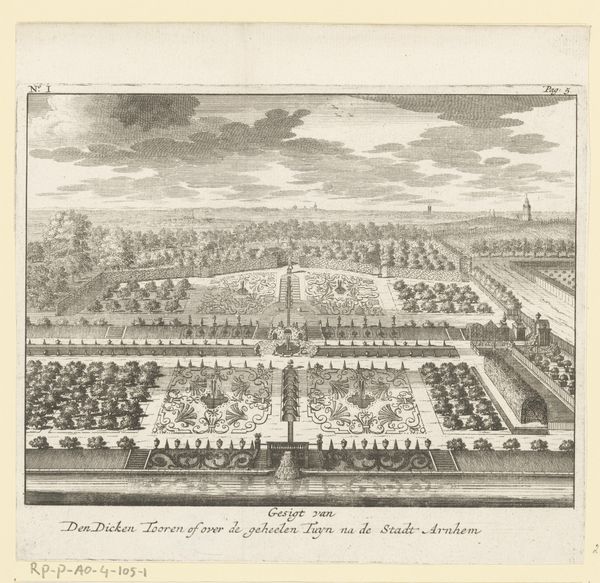
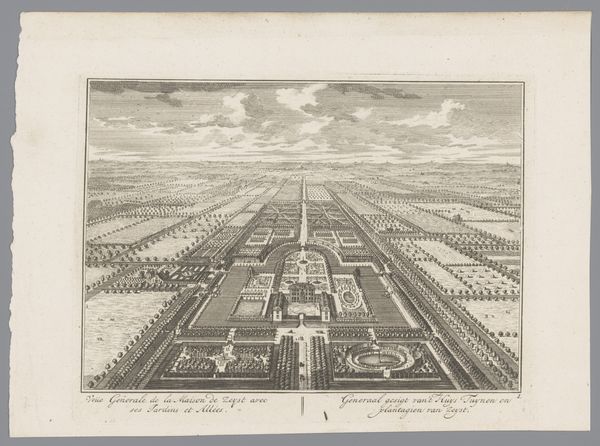
This is an etching from 1697 by an anonymous artist, titled "View of the gardens at the Huis ter Nieuburch in Rijswijk." The work's visual impact lies in its precise lines and symmetrical layout, rendered in monochrome. The formal gardens are meticulously arranged around the central Huis ter Nieuburch, creating a structured, almost mathematical landscape. Note how this structured composition reflects the 17th-century obsession with order and control. The garden's strict geometry, further articulated through the use of perspective, suggests a world where nature is tamed and subordinated to human intellect. This is a reflection of the broader philosophical currents of the time, emphasizing rationality and the human capacity to improve and organize the world. The aerial perspective flattens the pictorial space and reinforces the idea of human mastery over the environment, indicative of an era keen on imposing order upon both the natural world and society.
Gezicht op de tuinen bij het Huis ter Nieuburch in Rijswijk, 1697
1697

Anonymous
@anonymousLocation
RijksmuseumArtwork details
- Medium
- print, etching
- Dimensions
- height 220 mm, width 275 mm
- Location
- Rijksmuseum
- Copyright
- Rijks Museum: Open Domain
Tags
Comments
Share your thoughts
About this artwork
This is an etching from 1697 by an anonymous artist, titled "View of the gardens at the Huis ter Nieuburch in Rijswijk." The work's visual impact lies in its precise lines and symmetrical layout, rendered in monochrome. The formal gardens are meticulously arranged around the central Huis ter Nieuburch, creating a structured, almost mathematical landscape. Note how this structured composition reflects the 17th-century obsession with order and control. The garden's strict geometry, further articulated through the use of perspective, suggests a world where nature is tamed and subordinated to human intellect. This is a reflection of the broader philosophical currents of the time, emphasizing rationality and the human capacity to improve and organize the world. The aerial perspective flattens the pictorial space and reinforces the idea of human mastery over the environment, indicative of an era keen on imposing order upon both the natural world and society.
Comments
Share your thoughts