1697
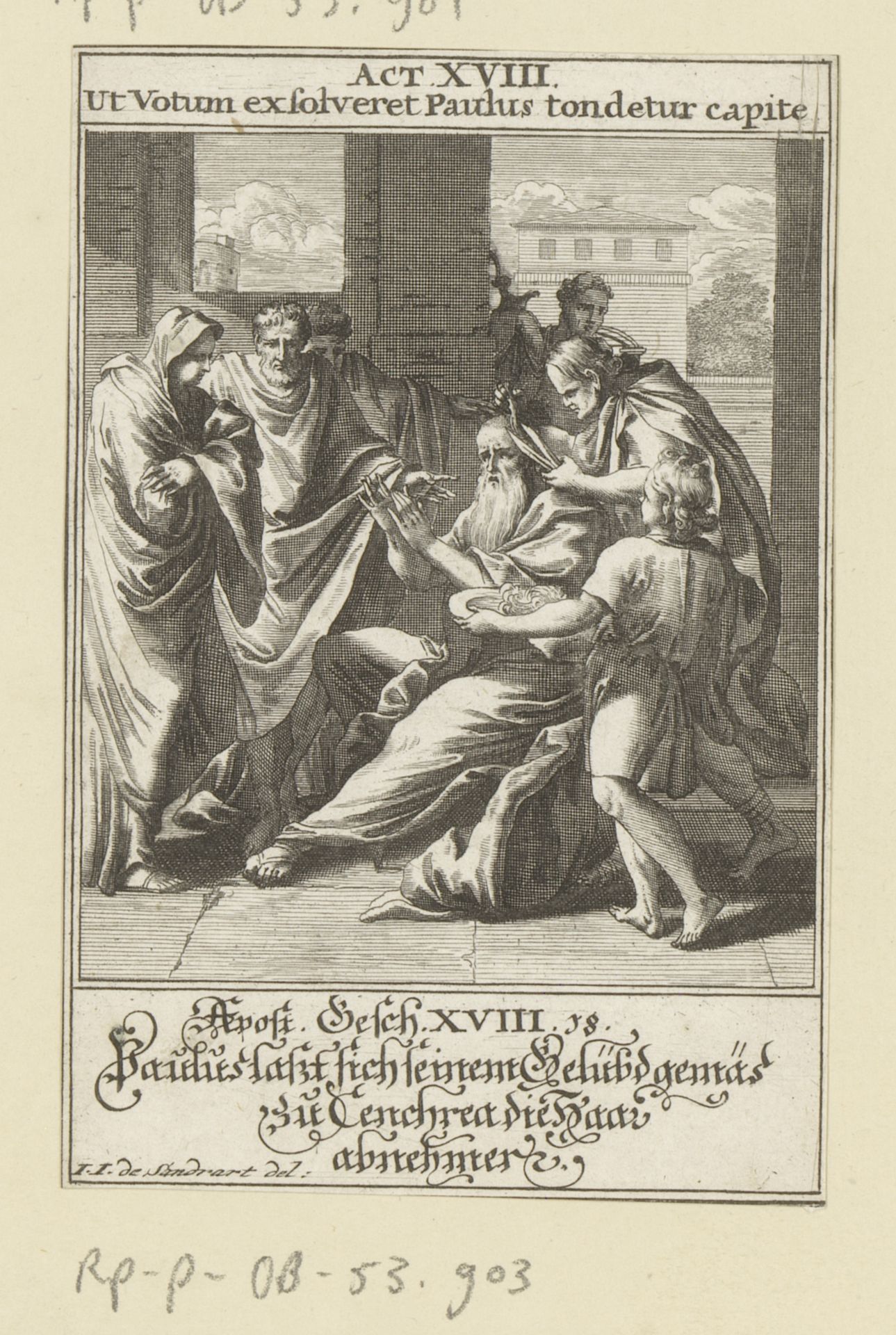
Apostel Paulus laat zijn haar afknippen

Anonymous
@anonymousLocation
RijksmuseumListen to curator's interpretation
Curatorial notes
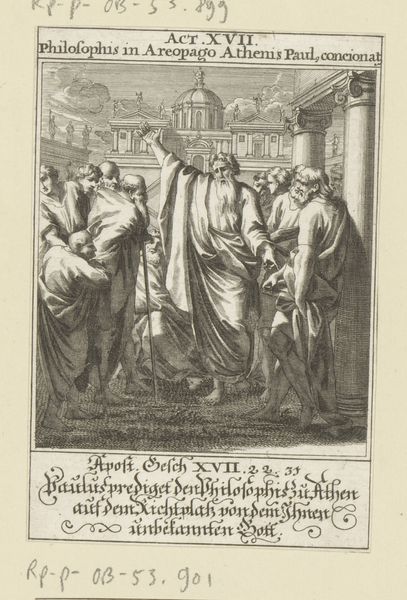
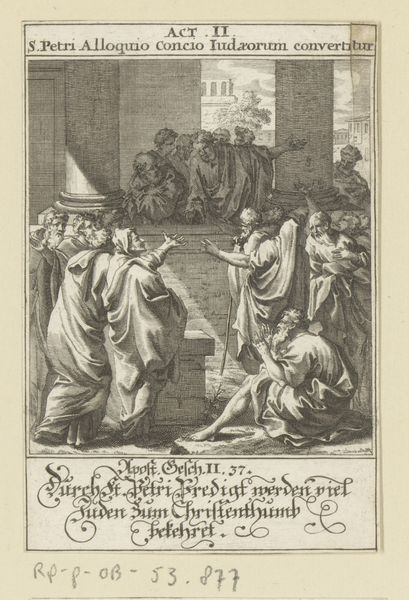
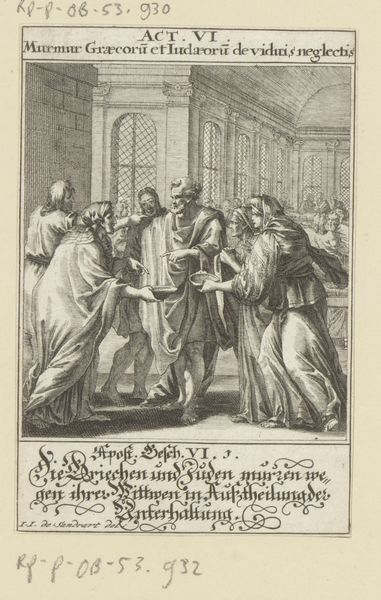
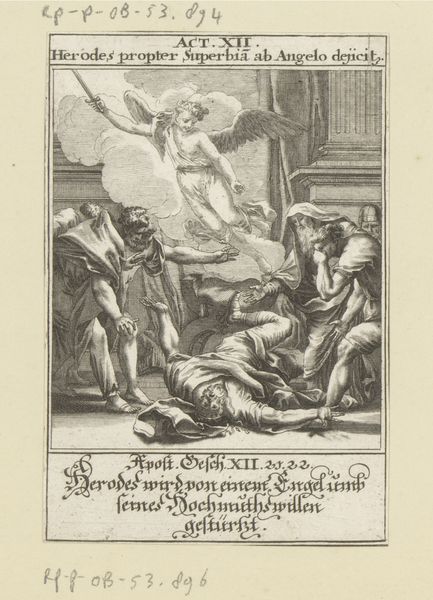
Editor: This engraving from 1697, titled "Apostel Paulus laat zijn haar afknippen" depicts Paul the Apostle having his hair cut. The fine lines create a dramatic scene, but there's almost a quiet solemnity to the composition. What draws your eye in this piece? Curator: My attention is immediately drawn to the act of cutting itself – a ritual shedding. Throughout history, hair has been laden with meaning. Consider Samson, whose strength resided in his locks; or monastic traditions that involve tonsuring. What symbolic resonances do you think are activated by depicting Paul in this way? Editor: I suppose it represents a kind of sacrifice or a vow being fulfilled. Curator: Precisely! And note how the figures surrounding Paul mirror his own contemplative pose, reinforcing the solemnity and shared cultural understanding of vows. This isn't merely a haircut; it's an outward manifestation of inner devotion, tapping into a deep well of religious iconography. Does this resonate with your own understanding of images and their emotional impact? Editor: Absolutely. Seeing it framed this way helps me appreciate how much more there is than just the literal action in the image. The hair, the cutting, the shared silence - it's all symbolism. Curator: It’s a testament to how artists use culturally recognized symbols to convey complex ideas. Visual culture relies on these symbols; a vocabulary shared through generations. Think of how relevant symbols change their context and understanding with shifting cultural viewpoints. Editor: Thanks! That gives me a lot to consider when I look at art moving forward. Curator: Indeed. It is through images that we transmit our deepest fears, hopes and joys to one another through time and space.