About this artwork
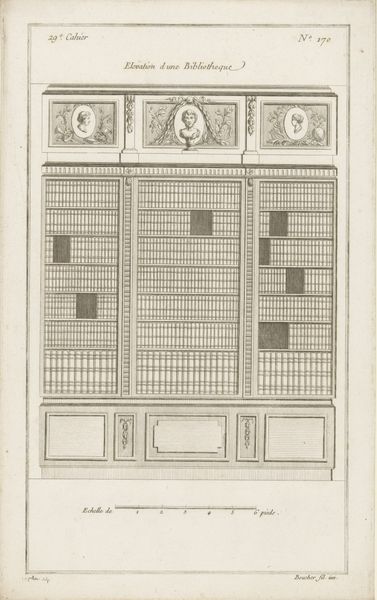
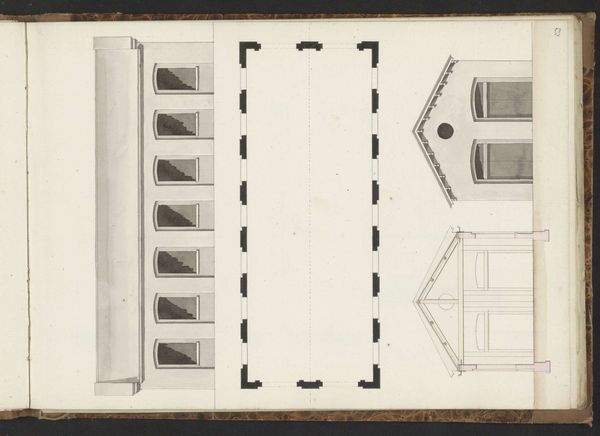
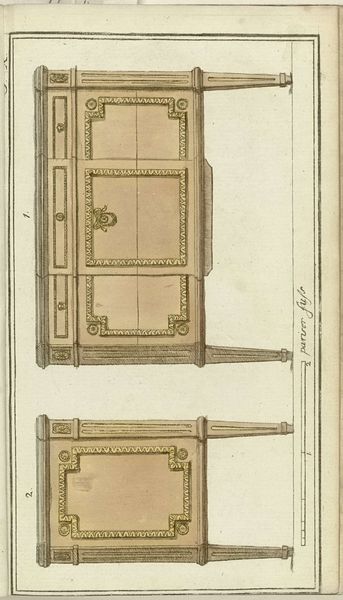
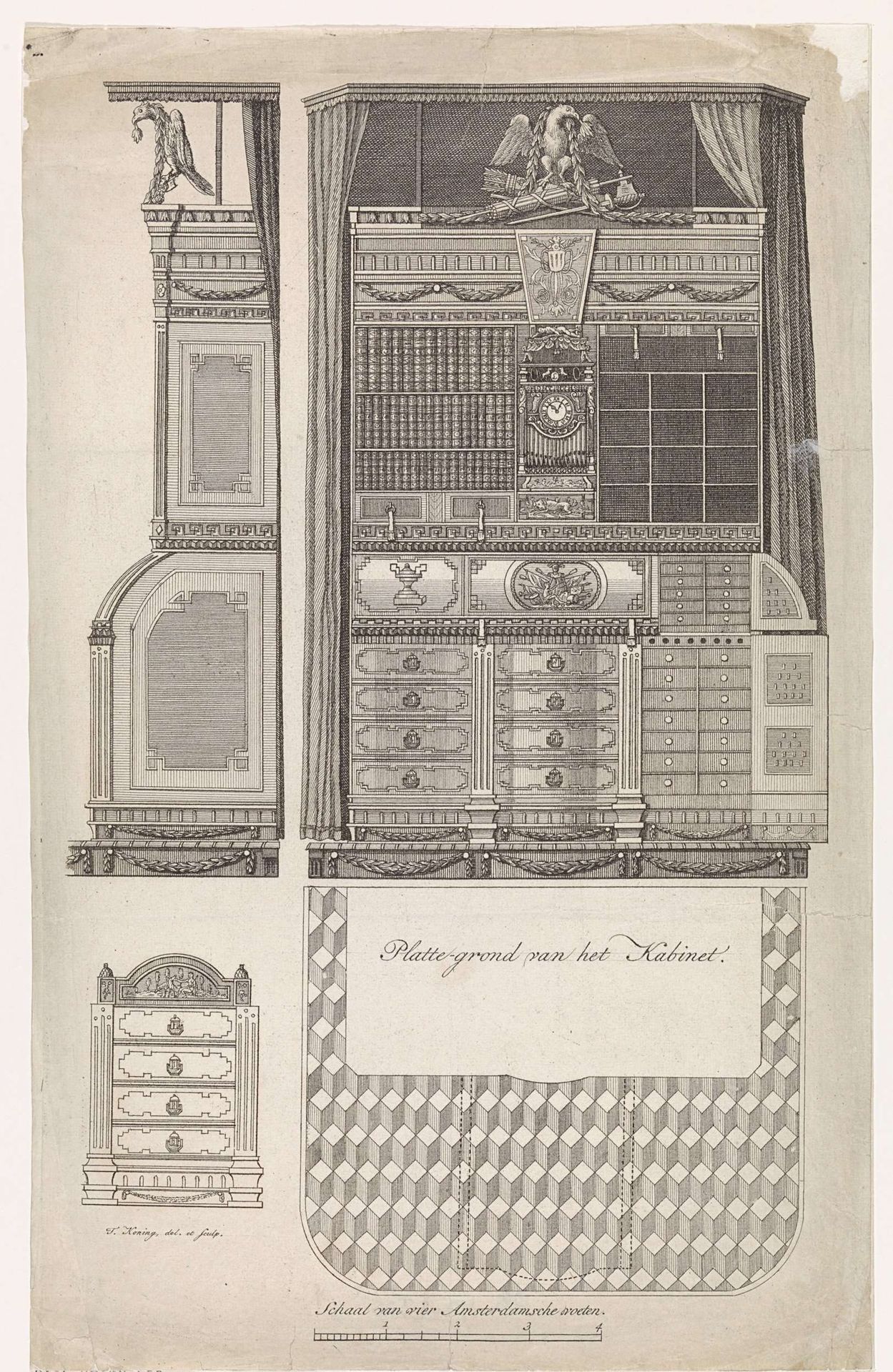
Curator: Here we have "Scale Model of a Cabinet," dating from 1758 to 1829, attributed to Theodoor Koning. It’s currently held in the Rijksmuseum. Editor: My initial impression is how meticulously rendered the details are. It's almost architectural in its precision, even though it's just a drawing of a cabinet. Curator: Exactly. Koning created this work amidst shifting cultural values concerning artistry and design. The precise detail wasn’t just about aesthetics; it reflected societal shifts towards valuing demonstrable skill and detailed craftsmanship within artisan communities and guilds. Editor: It makes me wonder about the labour involved. Creating a cabinet like this, and then drafting this model, highlights different tiers of making, from the physical craft to the intellectual design. Who was this model *for*? Curator: That's the fascinating thing: these detailed plans were essentially aspirational blueprints circulated amongst craftspeople. The image of such a magnificent object had the capacity to influence design trends within elite social circles who valued sophisticated Dutch craftsmanship. Editor: The engraving gives it a blueprint quality as well. It emphasizes the planning stage and intellectual rigor that goes into such a complex project rather than emphasizing any ornate features. Almost celebrating the 'how' over the 'wow'. Curator: In its own way it shows how design and aspiration trickled through the ranks, influencing material tastes and fueling new forms of visual culture. Editor: For me, considering materiality, what’s amazing about looking at a paper model today is thinking about that intended final result and its place in a household. Who was this design serving, what class, what labor— Curator: A question that resonates, then and now, doesn't it? Koning's precise engraving offers a glimpse into how material desire, artisan innovation, and social aspirations converged in the visual and material culture of the Netherlands. Editor: A compelling piece for thinking about both material making and how information traveled around the time it was made.

Artwork details
- Dimensions
- height 349 mm, width 218 mm
- Location
- Rijksmuseum
- Copyright
- Rijks Museum: Open Domain
Tags
Comments
Share your thoughts
About this artwork
Curator: Here we have "Scale Model of a Cabinet," dating from 1758 to 1829, attributed to Theodoor Koning. It’s currently held in the Rijksmuseum. Editor: My initial impression is how meticulously rendered the details are. It's almost architectural in its precision, even though it's just a drawing of a cabinet. Curator: Exactly. Koning created this work amidst shifting cultural values concerning artistry and design. The precise detail wasn’t just about aesthetics; it reflected societal shifts towards valuing demonstrable skill and detailed craftsmanship within artisan communities and guilds. Editor: It makes me wonder about the labour involved. Creating a cabinet like this, and then drafting this model, highlights different tiers of making, from the physical craft to the intellectual design. Who was this model *for*? Curator: That's the fascinating thing: these detailed plans were essentially aspirational blueprints circulated amongst craftspeople. The image of such a magnificent object had the capacity to influence design trends within elite social circles who valued sophisticated Dutch craftsmanship. Editor: The engraving gives it a blueprint quality as well. It emphasizes the planning stage and intellectual rigor that goes into such a complex project rather than emphasizing any ornate features. Almost celebrating the 'how' over the 'wow'. Curator: In its own way it shows how design and aspiration trickled through the ranks, influencing material tastes and fueling new forms of visual culture. Editor: For me, considering materiality, what’s amazing about looking at a paper model today is thinking about that intended final result and its place in a household. Who was this design serving, what class, what labor— Curator: A question that resonates, then and now, doesn't it? Koning's precise engraving offers a glimpse into how material desire, artisan innovation, and social aspirations converged in the visual and material culture of the Netherlands. Editor: A compelling piece for thinking about both material making and how information traveled around the time it was made.
Comments
Share your thoughts