photography
#
contemporary
#
white backdrop
#
landscape
#
photography
#
geometric
#
abstraction
Copyright: www.guiadegrancanaria.org
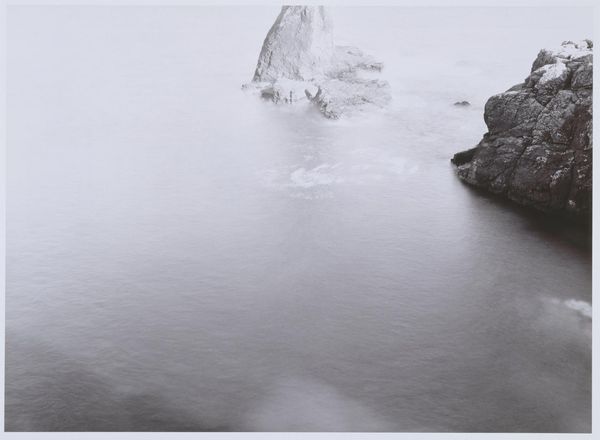
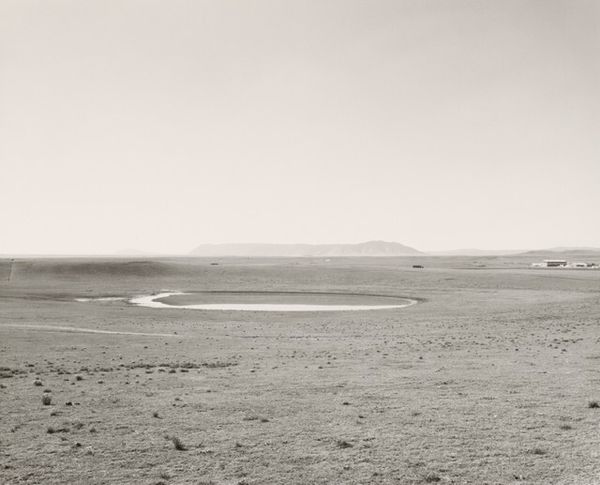
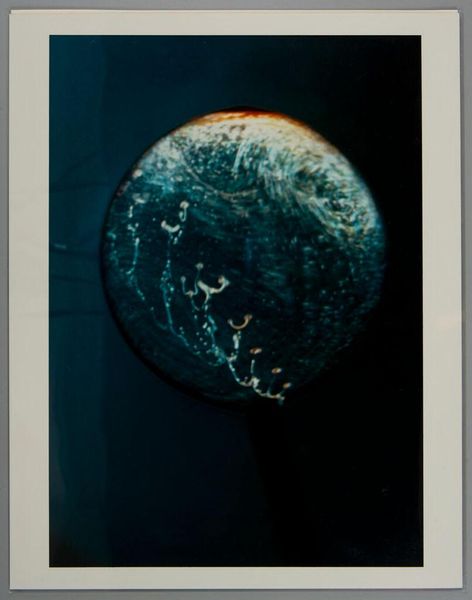
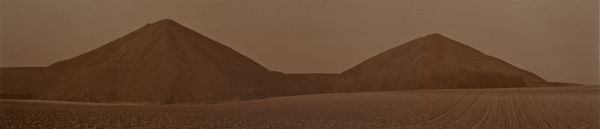
Curator: Before us is Francis Naranjo's photographic work, "La coleccionista de luces," created in 2010. Its subject is essentially a desert landscape dominated by what appears to be an immense orb of light. What is your initial reading of it? Editor: Stark and unsettling. The massive light feels almost oppressive, bleached out. The earth below looks dry, eroded—a desolate scene, not inviting in the slightest. Is that light source naturally occurring? Curator: Functionally, it is the crucial formal element. The stark geometric contrast between the sphere and the uneven landforms dictates the composition. Note how the sharp horizon dissects the frame, leading the eye back to that orb. Editor: Interesting you bring that up; given that title, and based on the earth’s stark appearance, my mind races to issues around resource extraction. Look how the ground and that geometric peak are stripped and excavated! What methods were employed, and to what destructive ends? Curator: Certainly. Considering the title "The Collector of Lights," one is tempted to ponder on what light could represent—knowledge, perhaps, or some intangible force. Furthermore, what does collecting it signify within the frame of the photograph itself? It almost seems as though nature is exploited, stripped. Editor: Indeed, as though a whole, previously unseen dimension of value is wrested, consumed. In photography, a landscape tradition is tied to modes of extraction, consumption and erasure. In these cases it becomes a site both picturesque and devastated. Curator: That is something I agree with. Naranjo challenges that sublime, picturesque tradition through harsh contrasts and unsettling spatial relations. The geometry here creates discomfort, a rupture in spatial logic, and maybe Naranjo hoped to reveal the tension between ideal forms and environmental damage. Editor: Precisely. He invites us to face a potentially unsustainable transaction within the very land. Thanks to Naranjo’s photographic lens, an alternative kind of geometric ‘structure’ becomes legible; one of exploited geological resources, and ecological tragedy. Curator: Yes, on second viewing, it’s apparent to me this piece presents a visually haunting question of value; and, as such, it challenges us. Editor: Well said. It shows how the photograph captures not only the what, but, ultimately, the implications behind extraction.
Comments
No comments
Be the first to comment and join the conversation on the ultimate creative platform.
 Collect
 React
React Comment
More like this