drawing, paper, ink
#
portrait
#
drawing
#
paper
#
personal sketchbook
#
ink
#
calligraphy
Copyright: Rijks Museum: Open Domain
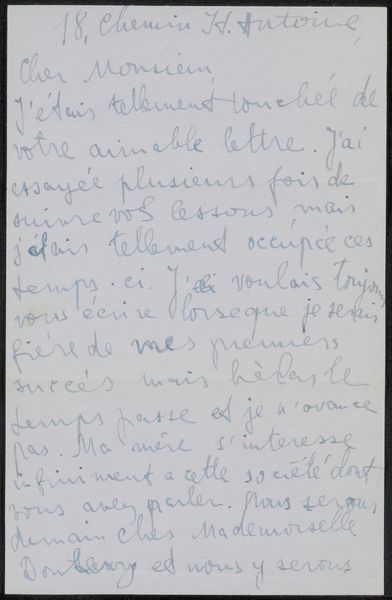
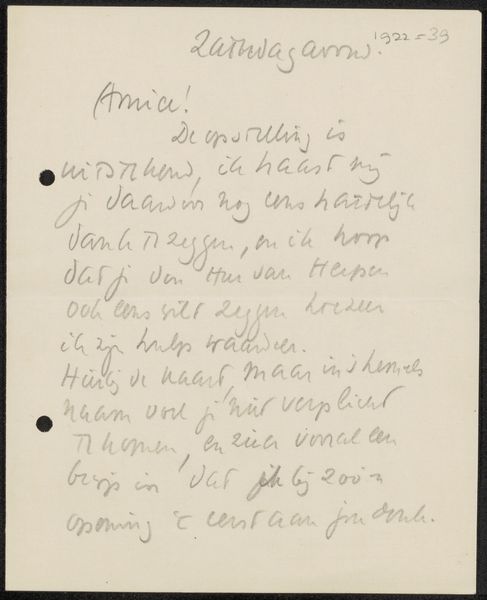
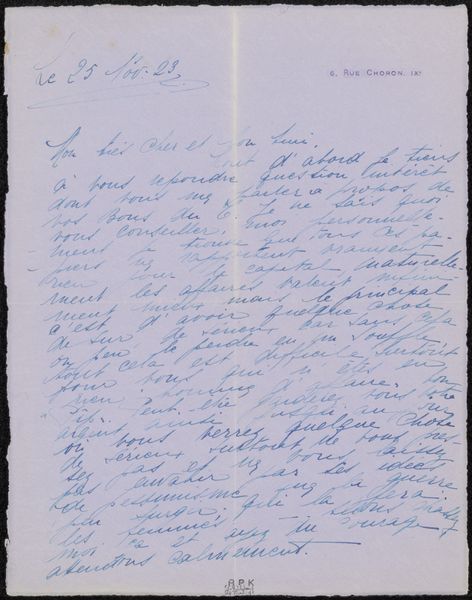
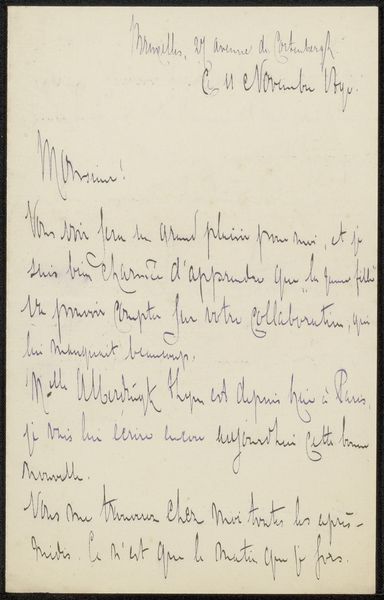
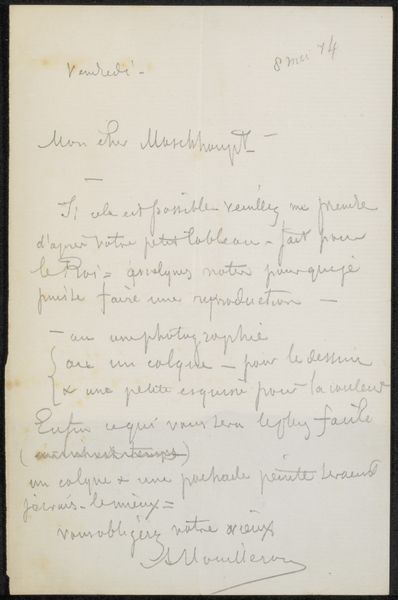
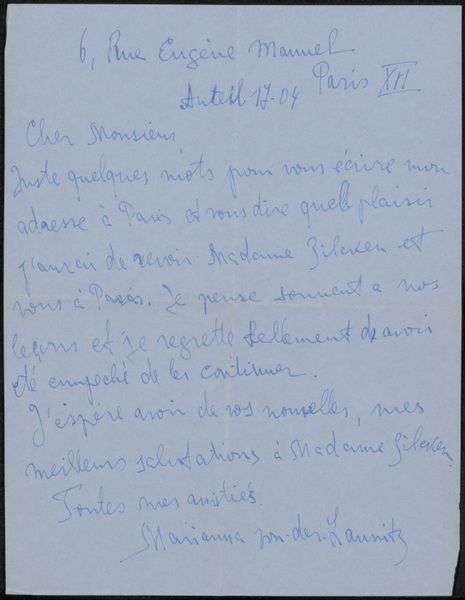
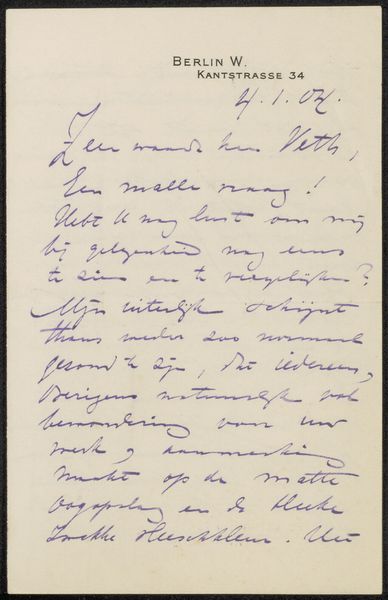
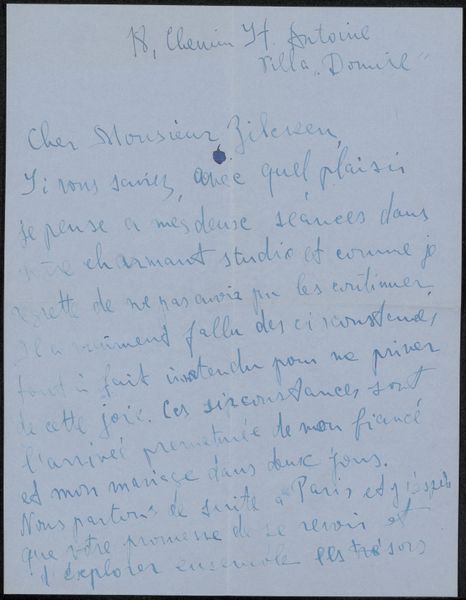
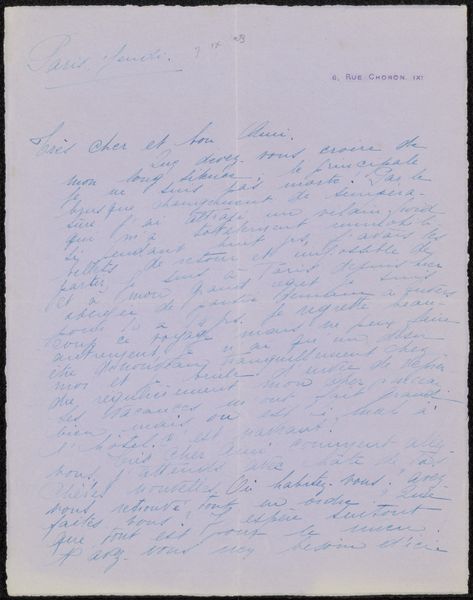
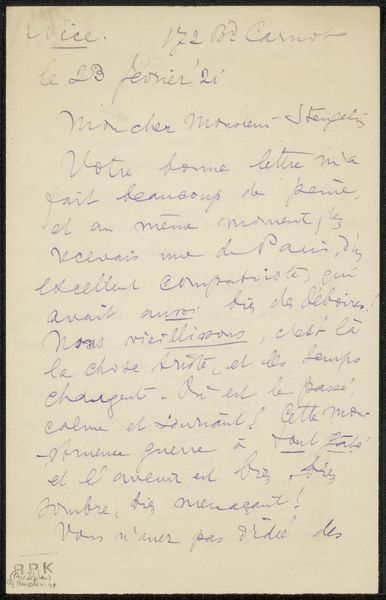
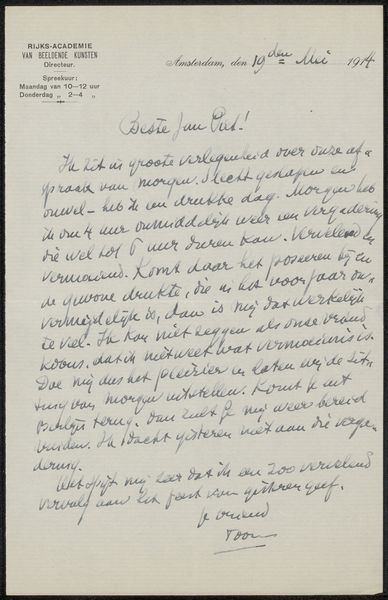
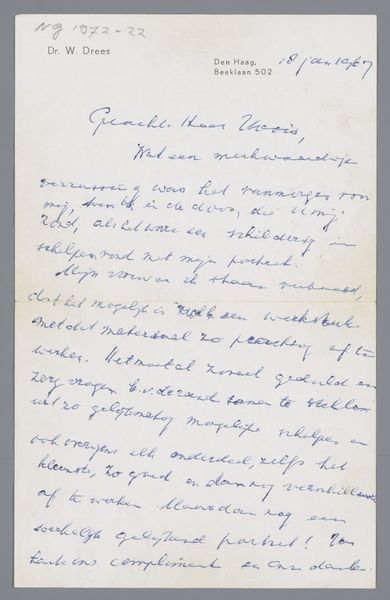
Curator: So, here we have "Brief aan Philip Zilcken" a letter drawn in ink on paper, sometime before 1928, by Marianne von der Launitz. Editor: Yes, it’s a handwritten note, seemingly quite personal and intimate because you can almost feel her vulnerability through the calligraphy and choice of words, a direct view into a historical exchange. What meaning do you draw from a piece like this? Curator: It's interesting to view it as a fragment of history seen through a specific lens. Letters from this period are not just correspondence; they become documents of social exchange. Looking at her handwriting itself as a form of art, or a marker of her social class, tells us so much more. Considering von der Launitz as a woman artist within the social constraints of her time allows us to read between the lines. Who was Philip Zilcken, and what relationship did he hold in her life that gave her permission to even pen something so vulnerably. Editor: It makes you wonder about her expression, I guess. Does her use of language also mirror the unspoken rules or norms she lived by? Curator: Precisely. Think about the formal tone in 'Cher Monsieur' then juxtapose that against the hint of anticipation when she discusses drawing together at the recipient's workshop ("atelier"). And, perhaps more intriguing, is the expression of doubt or even fear with the words "j'ai bien peur de vous"— the phrase "I am very afraid of you". How do these elements either challenge or support established societal roles? Does her letter reinforce norms around communication at that time? Editor: Seeing this now, I didn't appreciate that something seemingly simple holds complex power dynamics of both social expectation and vulnerability. I hadn't appreciated letters could be viewed as social narratives themselves. Curator: Exactly! And remember, every artwork offers perspectives for understanding past conditions.
Comments
No comments
Be the first to comment and join the conversation on the ultimate creative platform.
 Collect
 React
React Comment
More like this