About this artwork
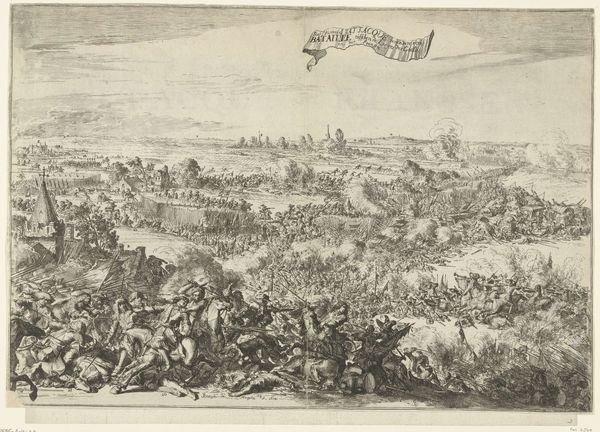
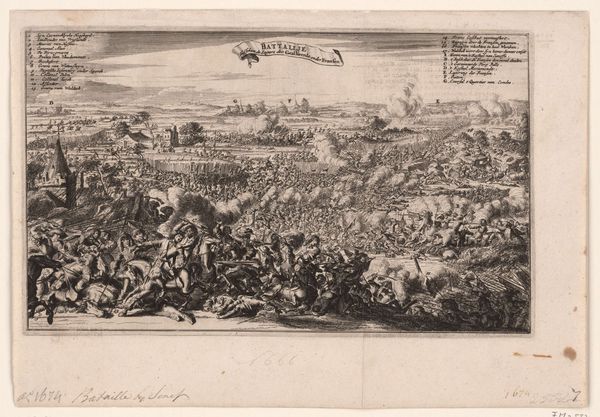
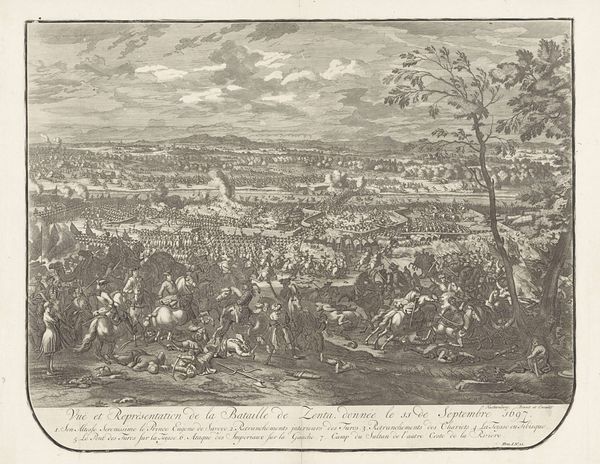
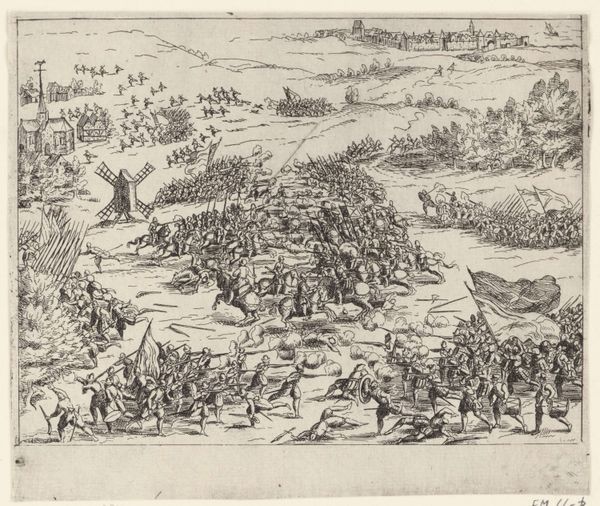
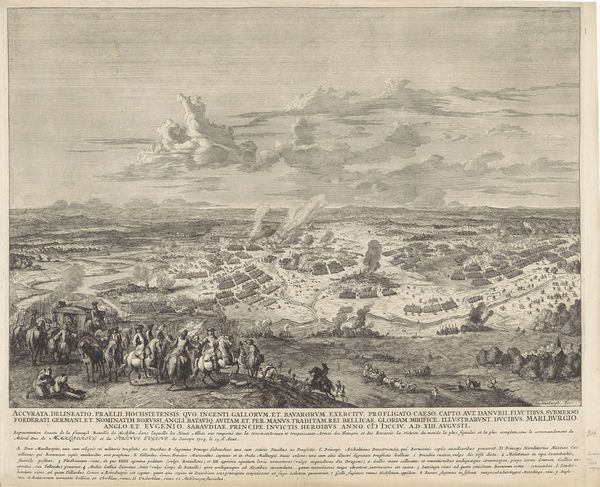
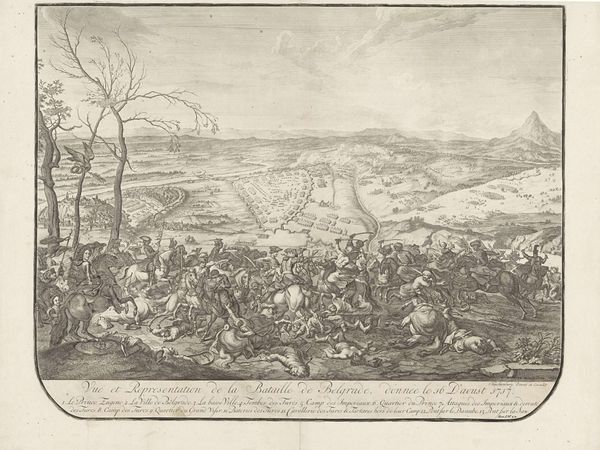
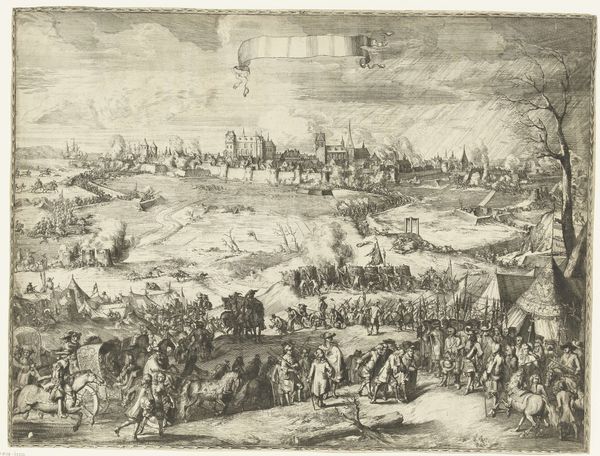
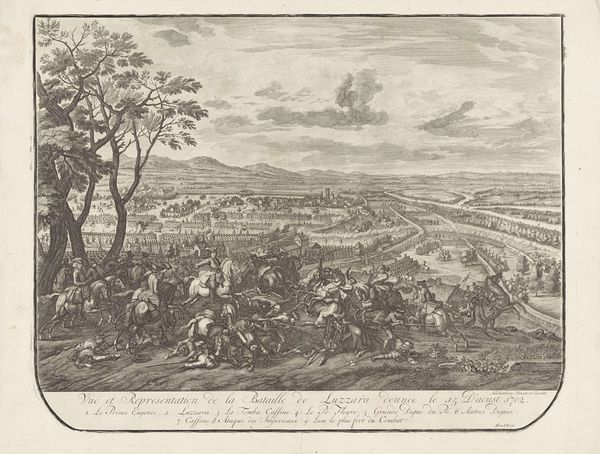
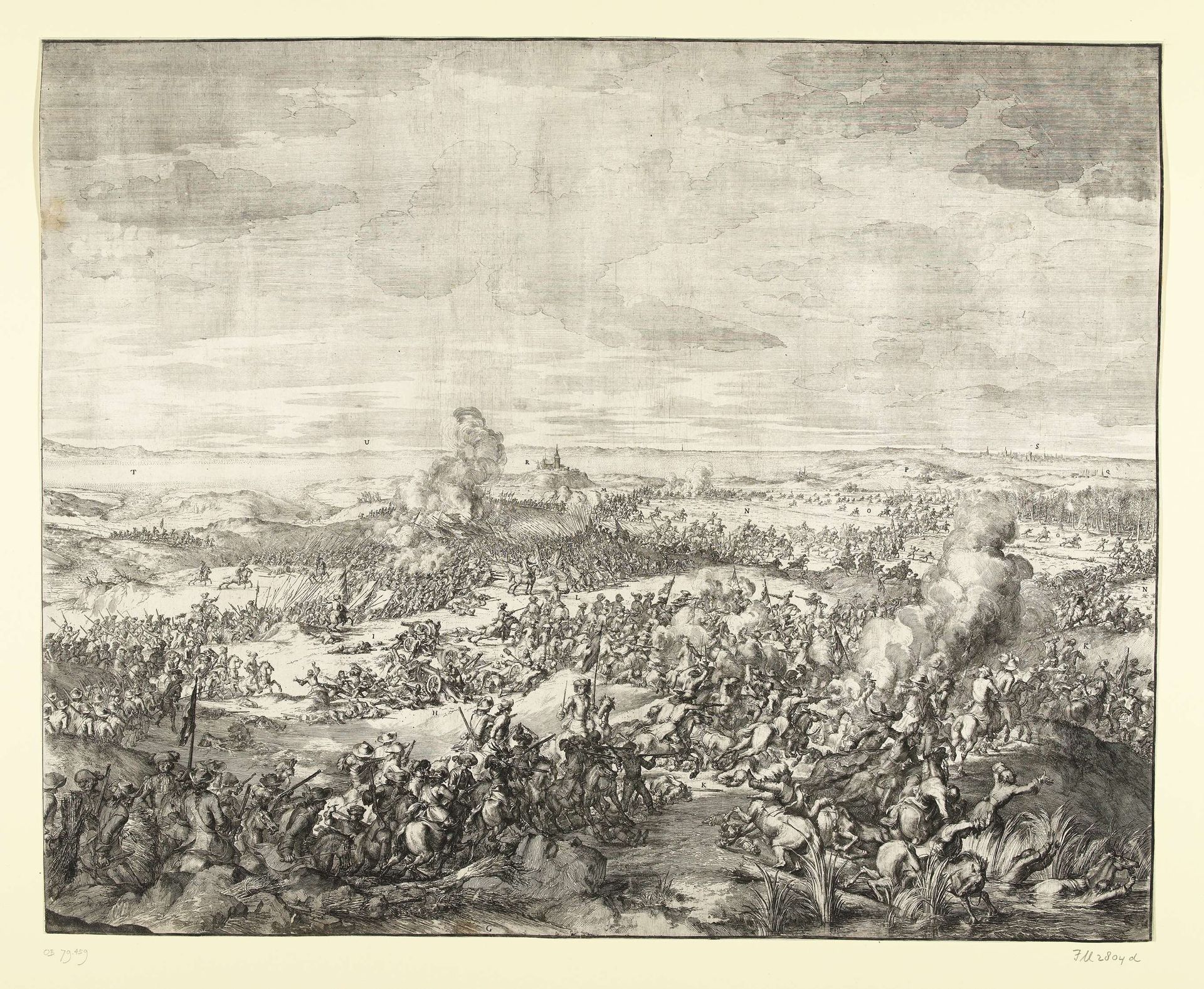
This is the right half of Romeyn de Hooghe’s 1677 print depicting Christian V of Denmark’s campaign on Rügen Island. Battles, as captured here, have long been depicted with chaotic scenes of conflict – swirling masses of bodies and weaponry rendered in a flurry of lines to convey the intensity of combat. The depiction of warfare, and especially the charging horsemen, echoes the classical friezes of antiquity, such as the Pergamon Altar’s depiction of the Gigantomachy. The horsemen, symbols of power and virility, have been used for centuries to express triumph and dominance. These symbols are rooted deep in our collective consciousness. Each historical iteration influences the next in an unbroken chain. From the Roman equestrian statues to renaissance paintings of battle, we can observe a powerful display of force engaging viewers on a visceral level. The image of conflict remains etched in the cultural memory.
Veldtocht van Christiaan V van Denemarken op het eiland Rügen (rechterhelft), 1677
1677 - 1678

Romeyn de Hooghe
1645 - 1708Location
RijksmuseumArtwork details
- Medium
- print, engraving
- Dimensions
- height 540 mm, width 665 mm
- Location
- Rijksmuseum
- Copyright
- Rijks Museum: Open Domain
Tags
Comments
Share your thoughts
About this artwork
This is the right half of Romeyn de Hooghe’s 1677 print depicting Christian V of Denmark’s campaign on Rügen Island. Battles, as captured here, have long been depicted with chaotic scenes of conflict – swirling masses of bodies and weaponry rendered in a flurry of lines to convey the intensity of combat. The depiction of warfare, and especially the charging horsemen, echoes the classical friezes of antiquity, such as the Pergamon Altar’s depiction of the Gigantomachy. The horsemen, symbols of power and virility, have been used for centuries to express triumph and dominance. These symbols are rooted deep in our collective consciousness. Each historical iteration influences the next in an unbroken chain. From the Roman equestrian statues to renaissance paintings of battle, we can observe a powerful display of force engaging viewers on a visceral level. The image of conflict remains etched in the cultural memory.
Comments
Share your thoughts