About this artwork
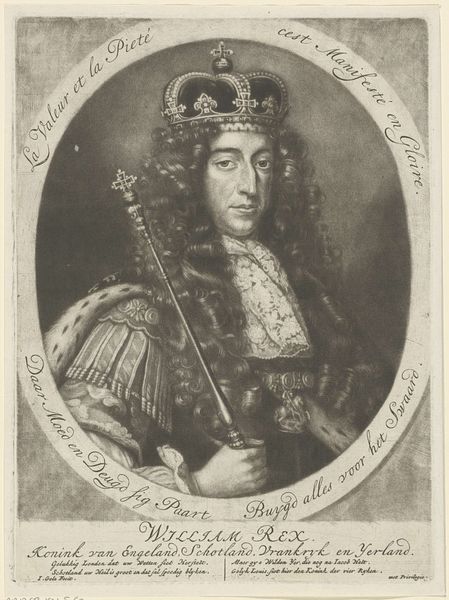
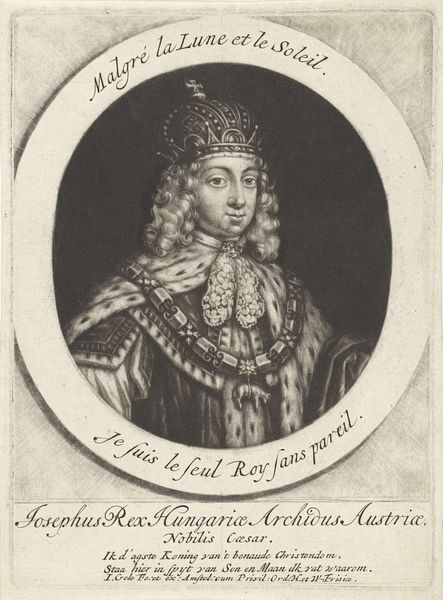
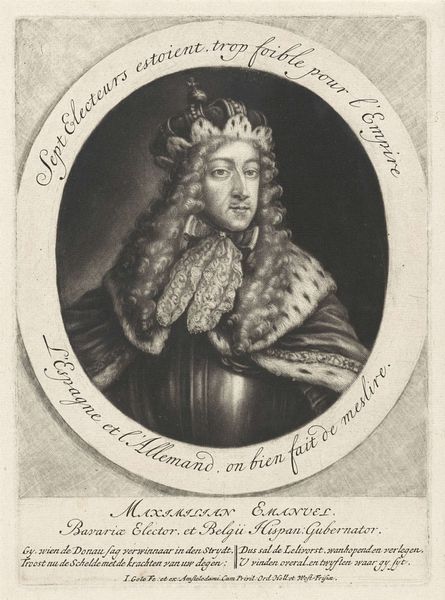
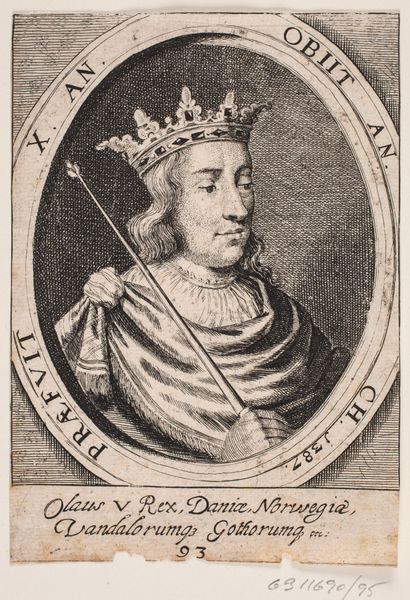
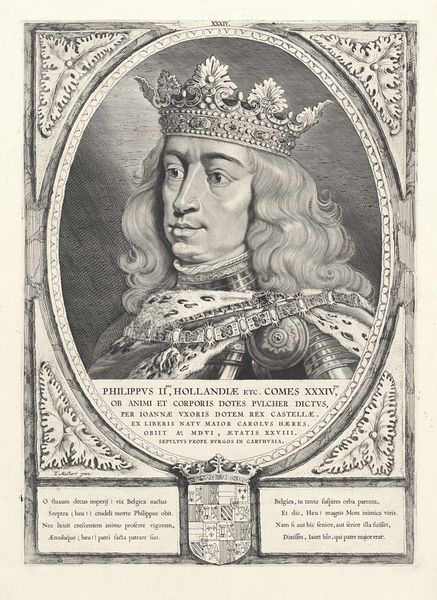
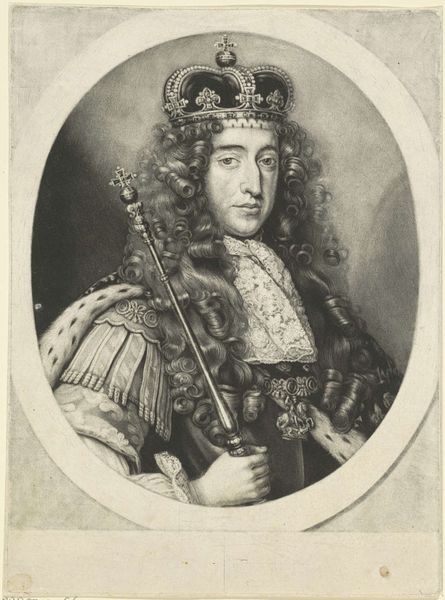
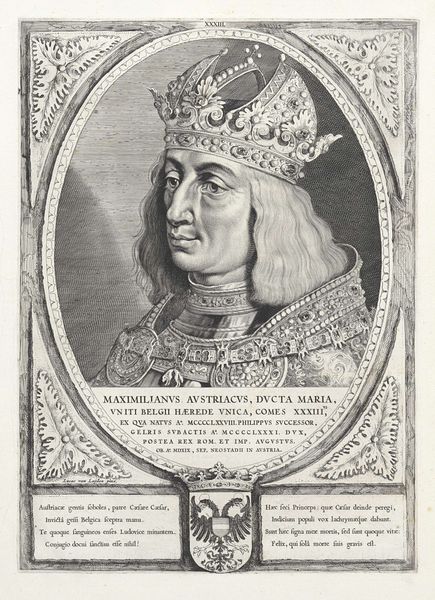
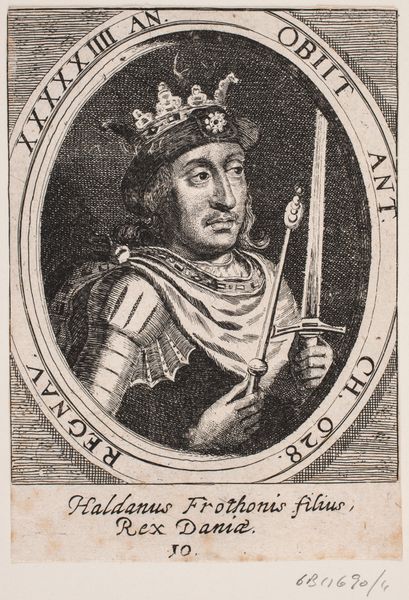
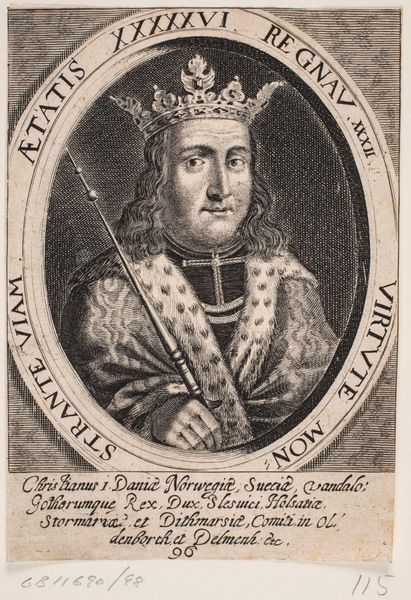
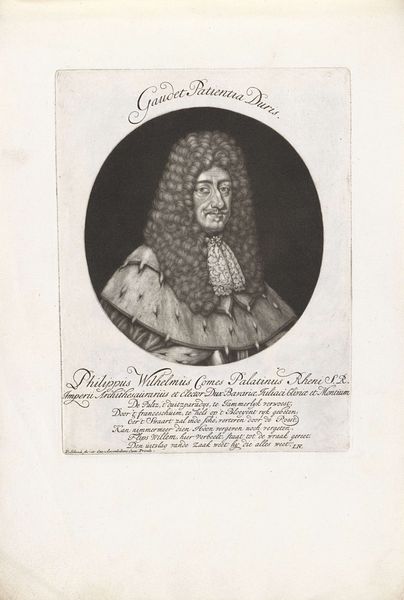
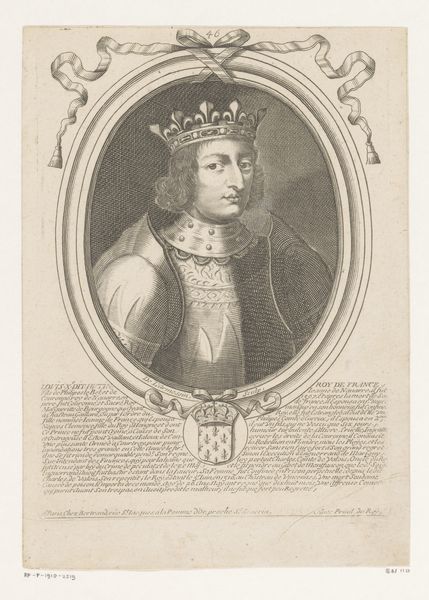
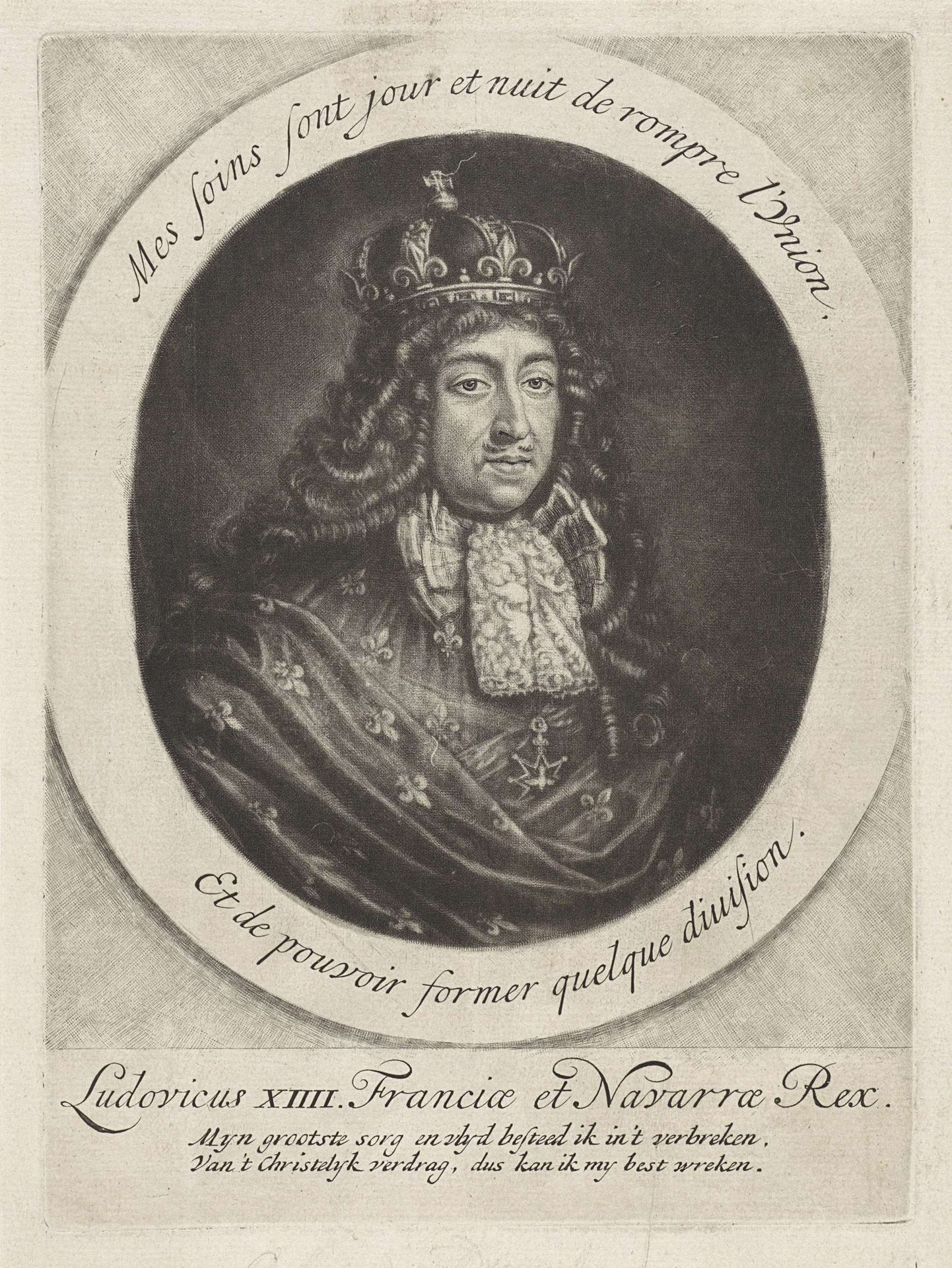
This is Jacob Gole's portrait of Louis XIV, King of France, made sometime between 1660 and 1737 using engraving techniques. The composition is dominated by an oval frame that captures the King. The formal arrangement is stark. The texture has been meticulously rendered with precise lines. Gole's engraving offers insight into how power was visually constructed during Louis XIV's reign. The King is framed by text that speaks to strategies of division. This reflects broader philosophical concerns of the period, where stability and order were often maintained through carefully managed discord. Semiotically, the crown and royal garments are signs of authority, yet the surrounding text subtly undermines the stability they project. Notice how Gole uses the structure of the portrait—its composition, frame, and textual elements—to engage with a complex interplay of power, unity, and division. It reminds us that portraits do not merely represent; they actively participate in constructing meaning and shaping perceptions.
Portret van Lodewijk XIV, koning van Frankrijk 1670 - 1724

Jacob Gole
1660 - 1737Location
RijksmuseumArtwork details
- Medium
- print, engraving
- Dimensions
- height 190 mm, width 140 mm
- Location
- Rijksmuseum
- Copyright
- Rijks Museum: Open Domain
Tags
portrait
aged paper
baroque
old engraving style
personal sketchbook
19th century
history-painting
engraving
Comments
No comments
About this artwork
This is Jacob Gole's portrait of Louis XIV, King of France, made sometime between 1660 and 1737 using engraving techniques. The composition is dominated by an oval frame that captures the King. The formal arrangement is stark. The texture has been meticulously rendered with precise lines. Gole's engraving offers insight into how power was visually constructed during Louis XIV's reign. The King is framed by text that speaks to strategies of division. This reflects broader philosophical concerns of the period, where stability and order were often maintained through carefully managed discord. Semiotically, the crown and royal garments are signs of authority, yet the surrounding text subtly undermines the stability they project. Notice how Gole uses the structure of the portrait—its composition, frame, and textual elements—to engage with a complex interplay of power, unity, and division. It reminds us that portraits do not merely represent; they actively participate in constructing meaning and shaping perceptions.
Comments
No comments