About this artwork
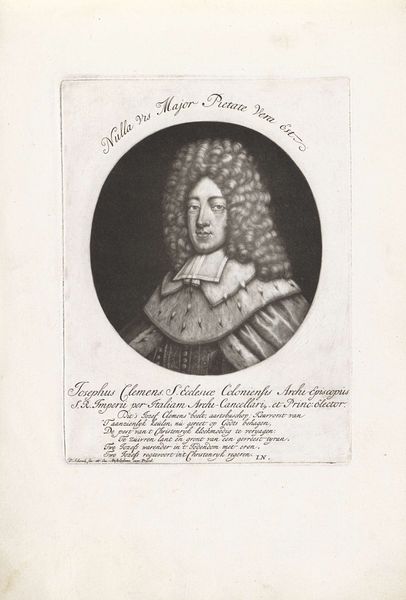
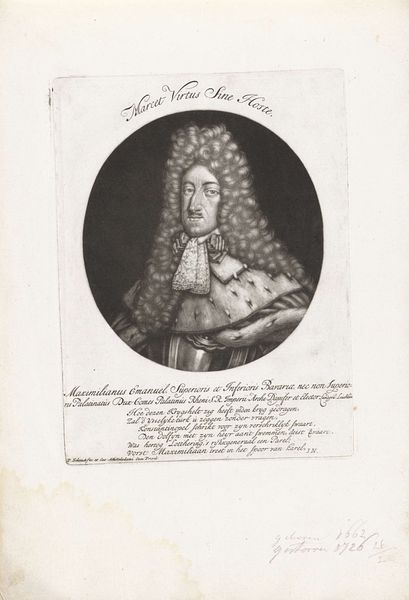
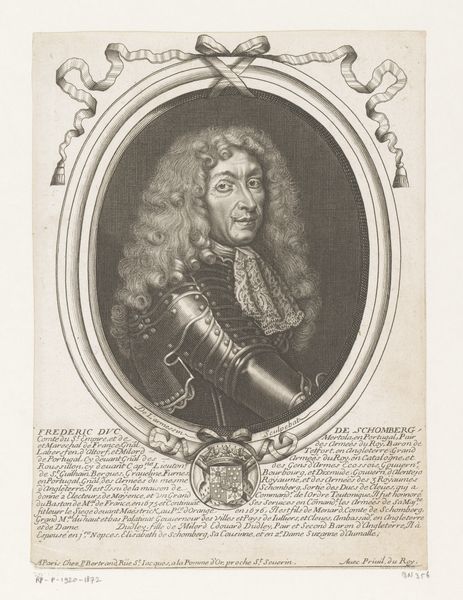
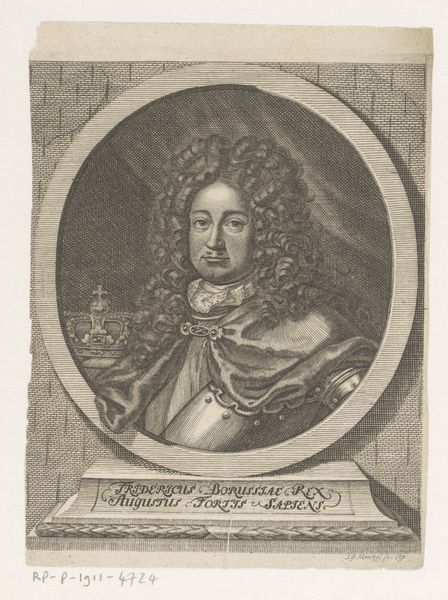
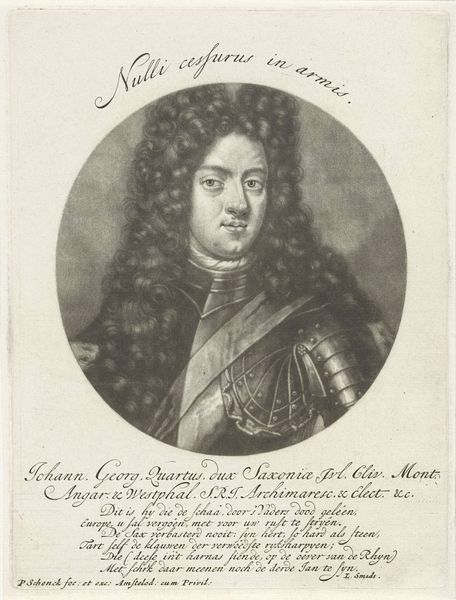
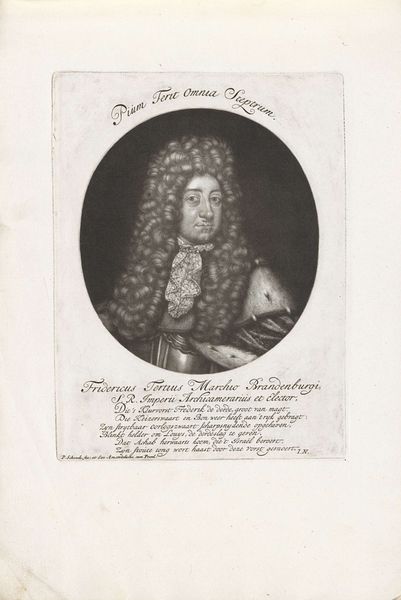
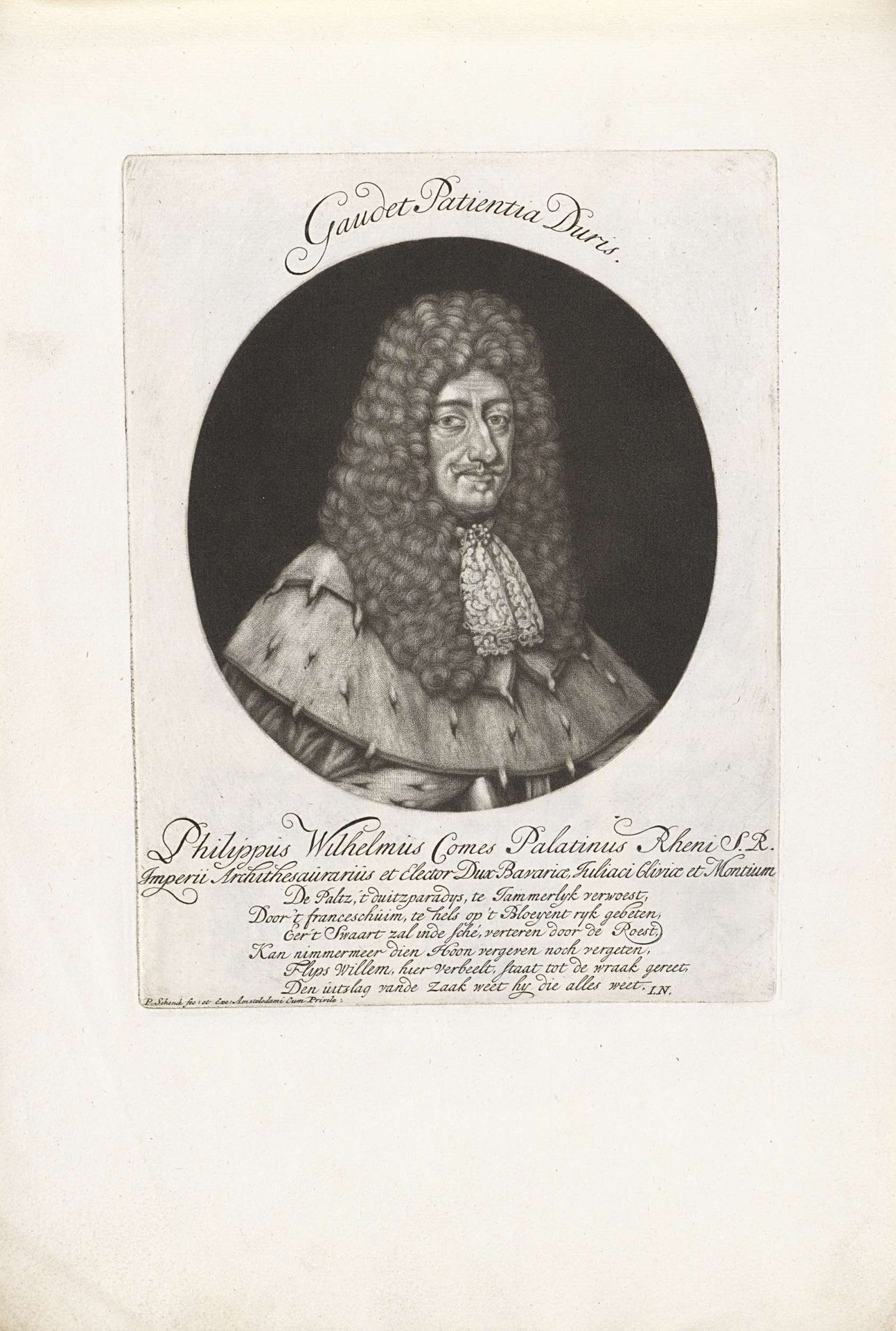
This is Pieter Schenk’s diminutive yet commanding portrait of Filips Willem, Elector Palatine, rendered in print around the turn of the 18th century. The composition is structured by stark contrasts: the subject's face and elaborate wig are framed within a severe, dark oval, which immediately draws the eye. Below, dense inscriptions in elegant script add layers of meaning, celebrating the virtues and titles of the Elector. Yet the image transcends mere representation; it invites us to delve into the interplay between identity and power. Schenk employs a rigorous technique that highlights texture and form. Notice how the undulating curls of the wig contrast with the smooth, idealized features of the face. This contrast functions as a semiotic code, differentiating between the artificial constructs of status and the natural, human aspects of the individual. The portrait doesn’t just present an image; it constructs a narrative about authority and its visual rhetoric. The portrait operates within a framework of symbolic representation, where every line and shadow contributes to the construction of meaning and the complex negotiations between image and identity.
Portret van Filips Willem, keurvorst van de Palts 1690 - 1713

Pieter Schenk
1660 - 1711Location
RijksmuseumArtwork details
- Medium
- print, engraving
- Dimensions
- height 184 mm, width 140 mm
- Location
- Rijksmuseum
- Copyright
- Rijks Museum: Open Domain
Tags
portrait
baroque
old engraving style
line
engraving
Comments
No comments
About this artwork
This is Pieter Schenk’s diminutive yet commanding portrait of Filips Willem, Elector Palatine, rendered in print around the turn of the 18th century. The composition is structured by stark contrasts: the subject's face and elaborate wig are framed within a severe, dark oval, which immediately draws the eye. Below, dense inscriptions in elegant script add layers of meaning, celebrating the virtues and titles of the Elector. Yet the image transcends mere representation; it invites us to delve into the interplay between identity and power. Schenk employs a rigorous technique that highlights texture and form. Notice how the undulating curls of the wig contrast with the smooth, idealized features of the face. This contrast functions as a semiotic code, differentiating between the artificial constructs of status and the natural, human aspects of the individual. The portrait doesn’t just present an image; it constructs a narrative about authority and its visual rhetoric. The portrait operates within a framework of symbolic representation, where every line and shadow contributes to the construction of meaning and the complex negotiations between image and identity.
Comments
No comments