1662 - 1695
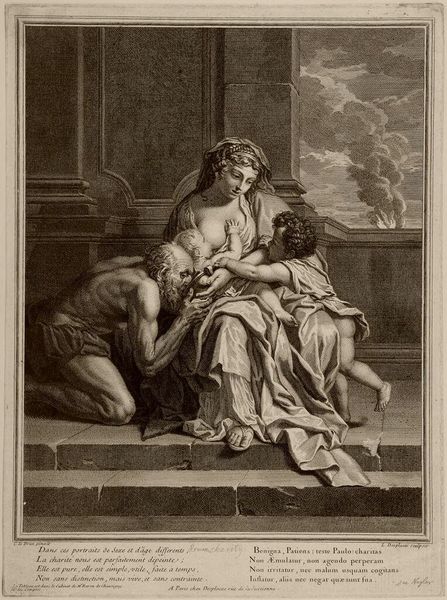
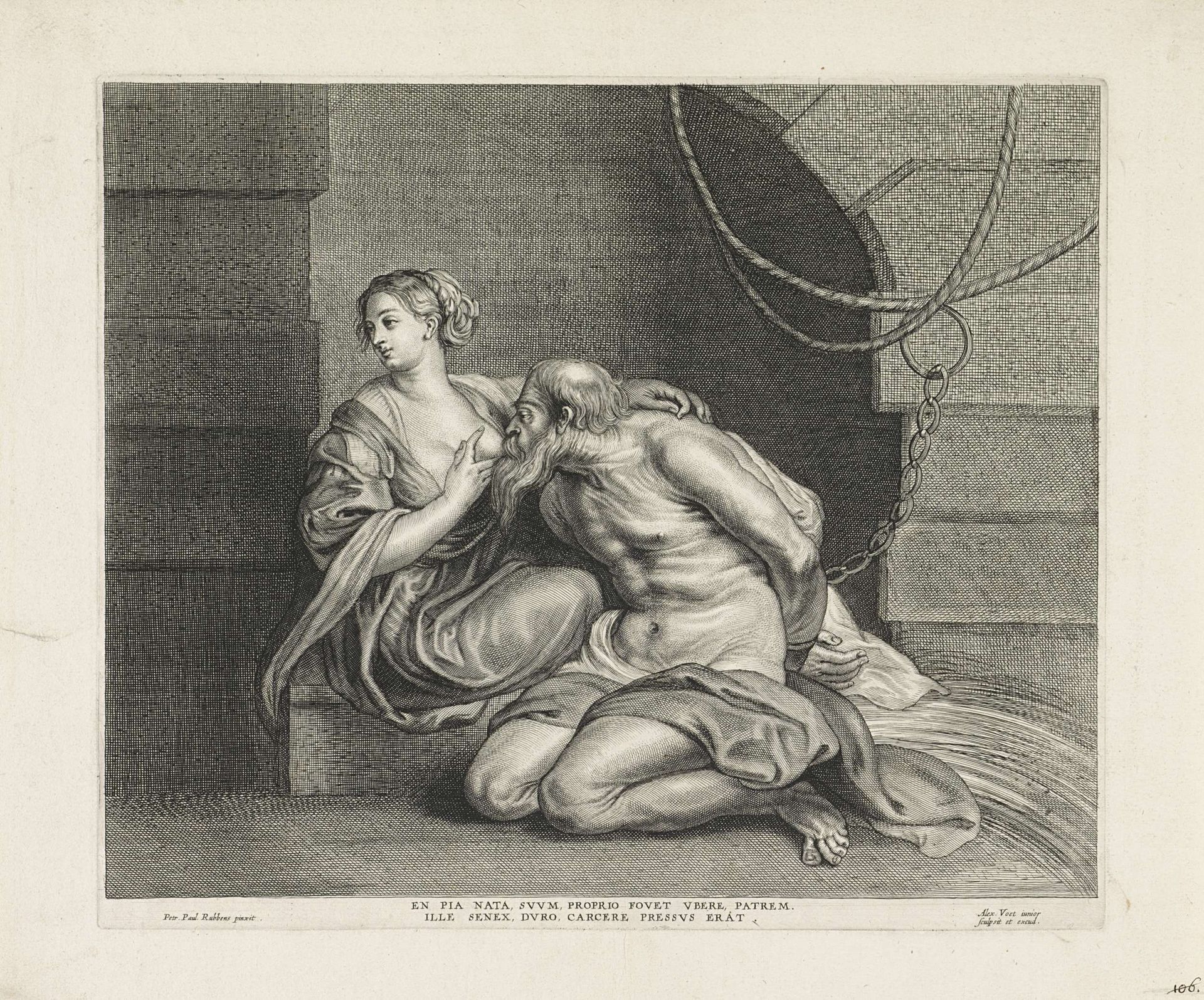
Cimon en Pero (Caritas Romana)

Alexander (II) Voet
1635 - 1695Location
RijksmuseumListen to curator's interpretation
Curatorial notes
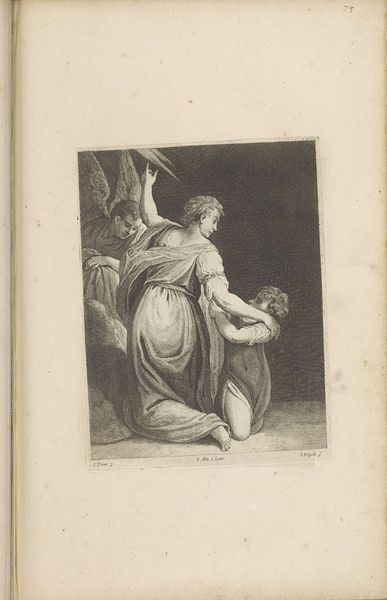
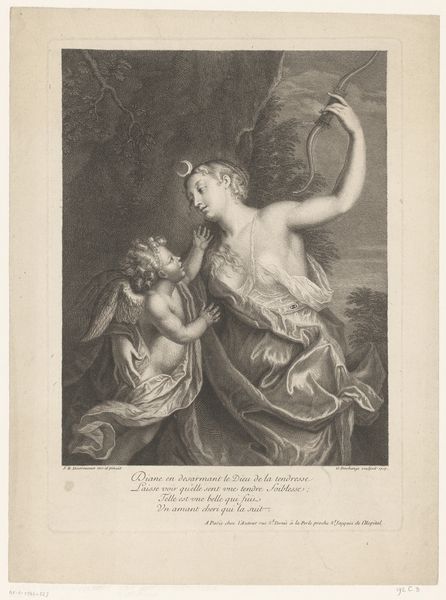
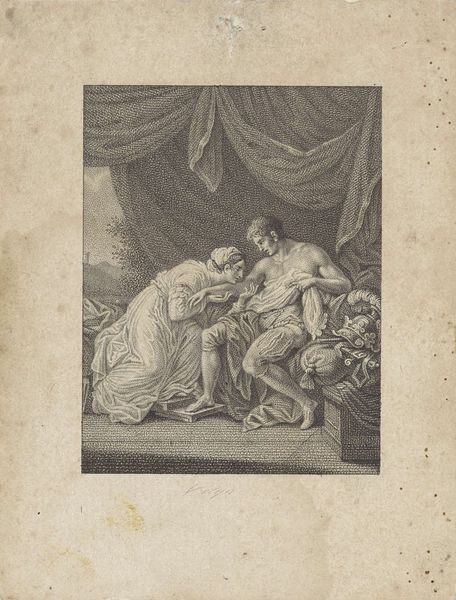
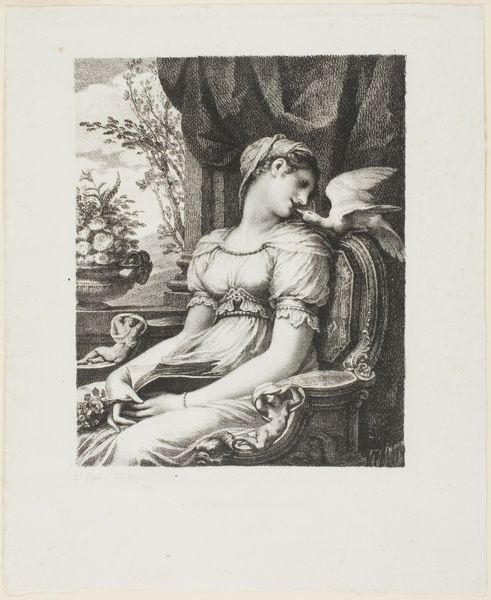
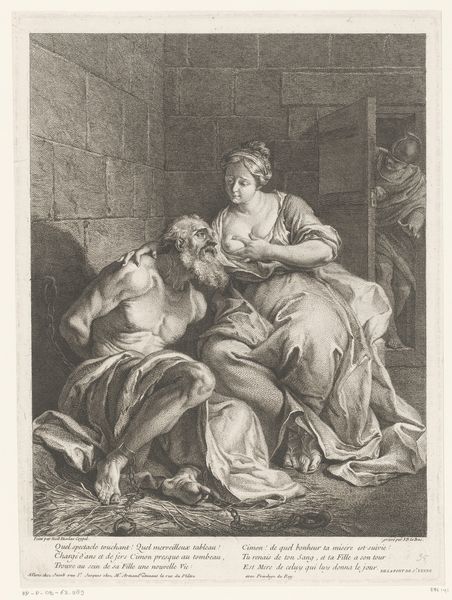
Alexander Voet II created this print, "Cimon en Pero (Caritas Romana)," sometime in the 17th century. It’s made using engraving, a process of incising lines into a metal plate, which is then inked and printed. This wasn't just a means of reproduction; the very act of engraving, with its precise, controlled labor, imbued the image with value. Look closely, and you can see how the engraver's hand has painstakingly built up the tonal range, from the deepest shadows to the delicate highlights on the figures' skin. The labor-intensive nature of engraving meant that prints were relatively expensive, circulating among a privileged audience. The subject matter - a daughter secretly breastfeeding her imprisoned father to save him from starvation - speaks to a specific set of social values: filial piety, sacrifice, and the importance of family bonds. The act of making and the image itself are intertwined, both reflecting a world of labor, value, and social obligation.