1919
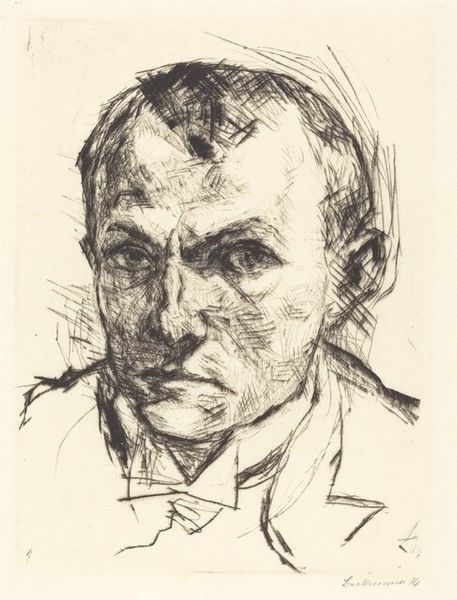
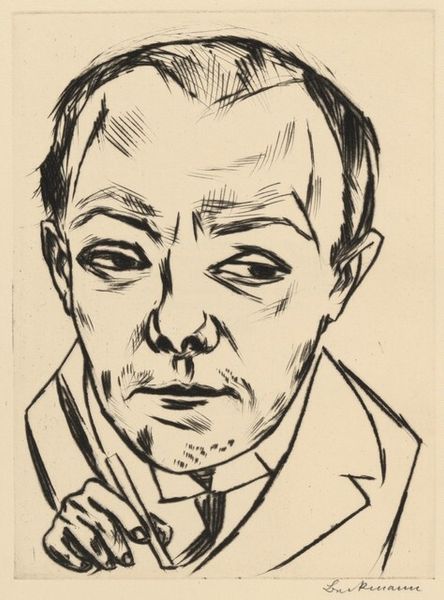
Self-Portrait


Listen to curator's interpretation
Curatorial notes
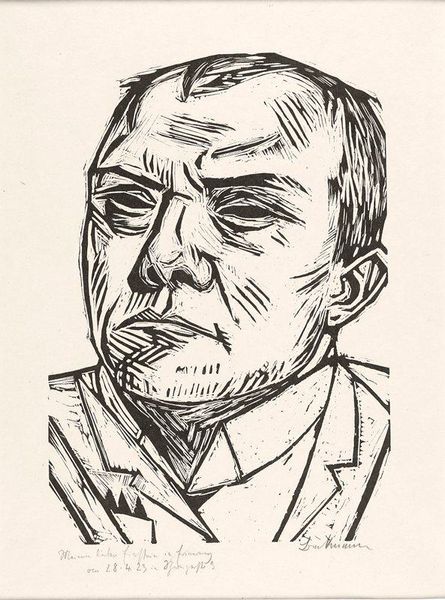
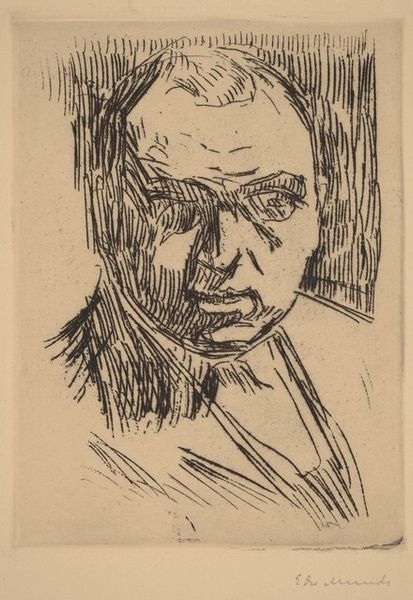
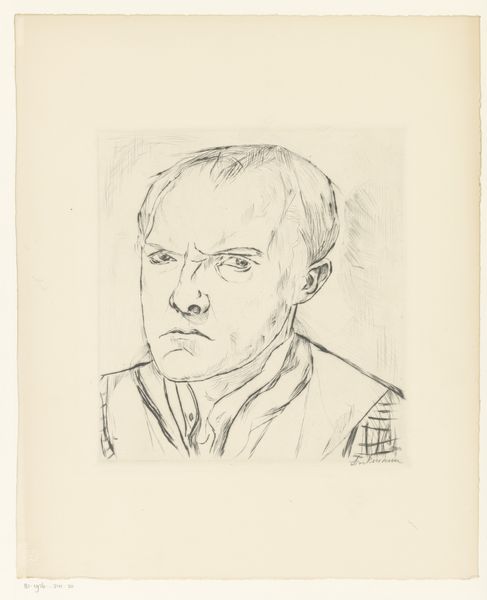
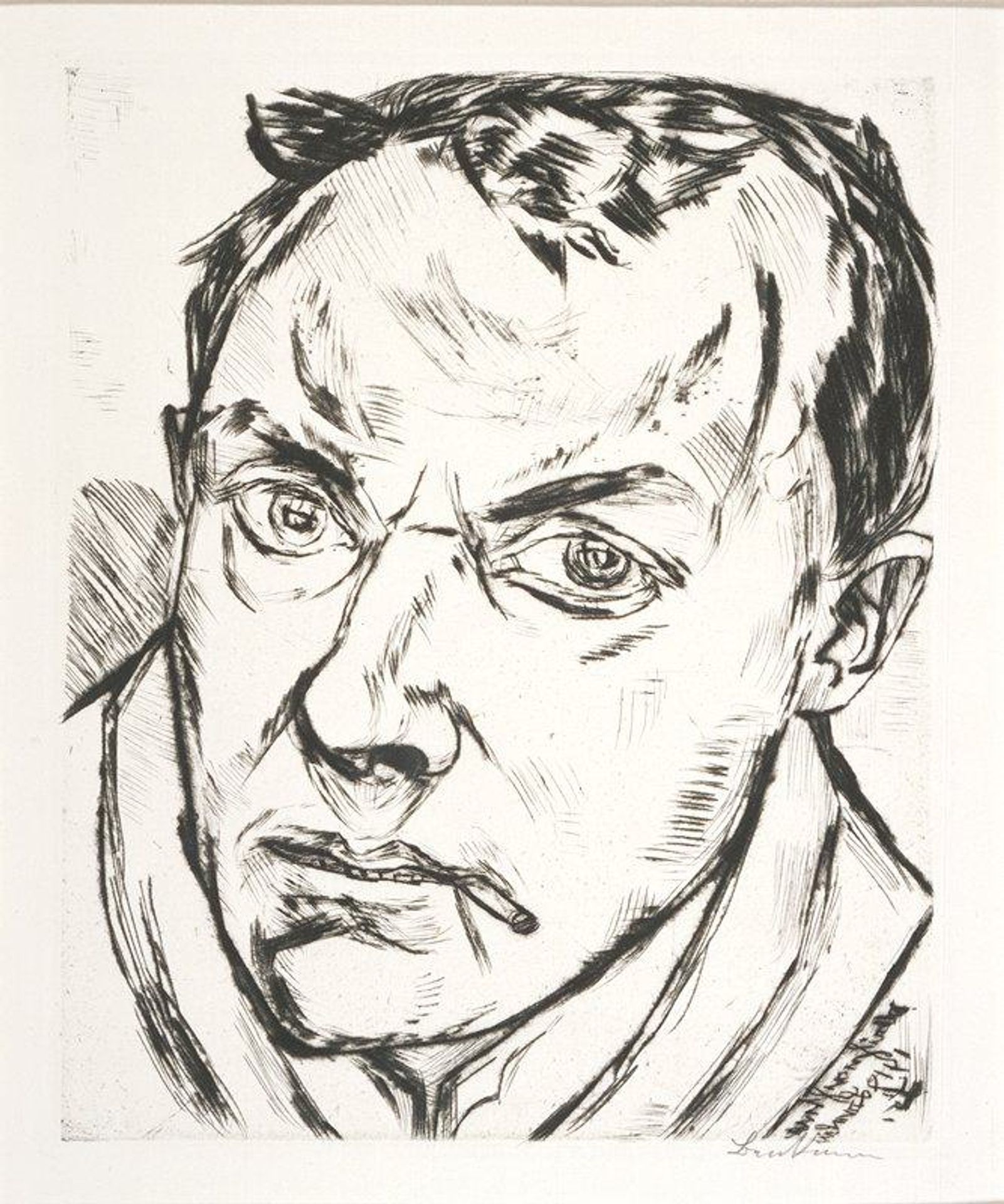
Curator: Let's turn our attention to Max Beckmann's stark "Self-Portrait" from 1919, housed here at the Minneapolis Institute of Art. He created this powerful image using etching and drypoint techniques, which are types of printmaking processes. Editor: Wow, immediately I get this raw, almost confrontational vibe. The lines are so bold and the gaze… intense. It’s like he’s daring you to look away. Curator: Precisely. As a print, think about the process; this wasn't a singular, spontaneous brushstroke but a deliberate, laborious method. Each line etched into the plate, each wipe of ink… a physical engagement. The materials themselves—metal, acid, ink—lend a weight and permanence. It reflects a specific social environment of Germany after World War I. Editor: Right, you can practically feel the weight of the world in those lines! The etching… it's almost sculptural, gives such texture. And I love that despite the grimness, there’s still something… humanizing? The cigarette dangling from his mouth gives him a devil-may-care attitude. Curator: The cigarette certainly injects an element of lived reality into the composition. Consider also that Beckmann was directly responding to his experiences serving as a medical orderly during the war, an experience that profoundly impacted his artistic vision. Editor: That makes sense! It definitely adds another layer of understanding to that penetrating stare. It feels less like arrogance, more like… survivor’s guilt perhaps? Articulating complex emotional landscapes on a physical copper plate… Amazing. Curator: The print medium made his work more accessible too. Think of these prints being reproduced and distributed. How might the dissemination of such images speak to post-war cultural production and social consciousness? Editor: I guess it's interesting, too, how even in a self-portrait—traditionally, you’d think so focused on the artist as an individual— the print medium inherently makes it a more collaborative or accessible enterprise? It breaks the kind of precious, auteur mystique. Curator: Exactly! We can't separate it from its production. What a profound act of self-revelation through a mechanical medium. Editor: What starts as this really visceral experience gets even more interesting when you dig into the process. I'll look at etchings differently from now on.