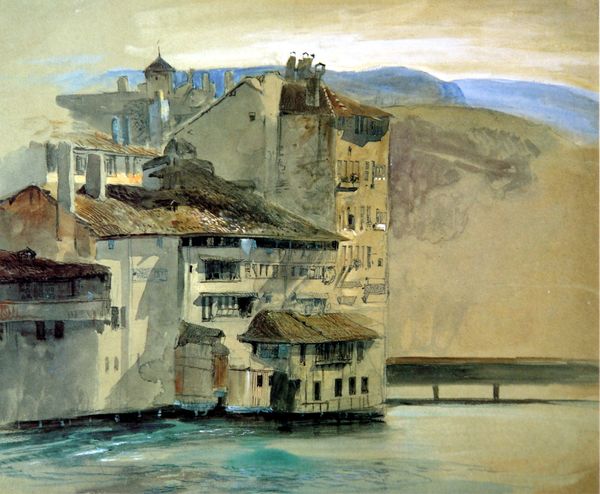
Geneva View of Part of the City 1835
0:00
0:00

jeanbaptistecamillecorot
Philadelphia Museum of Art, Philadelphia, PA, US
Copyright: Public domain
Editor: Here we have Corot's "Geneva, View of Part of the City" painted around 1835 using oil on canvas. It's quite a serene scene. There's a sense of quiet contemplation with the lone boat on the water. What strikes you most about this piece? Curator: What I find fascinating is the way Corot positions Geneva within the historical context of the rising bourgeoisie. Before the advent of photography, cityscapes like these served a vital function. Editor: In what sense? Curator: They offered a visual inventory of urban spaces, reinforcing civic pride and a sense of collective identity. Corot isn't just painting a pretty picture; he is documenting and, to some extent, idealizing Geneva for its inhabitants. Think about who would have commissioned or bought this painting. Who was meant to gaze upon this? Editor: Probably wealthy merchants and town officials? So the painting wasn’t just for personal enjoyment, but more like a public relations piece for the city. Curator: Precisely! The light, the tranquil composition... it all contributes to a very particular narrative about Geneva. Does that change how you view the "serene scene" you first described? Editor: Definitely. I see it now as more calculated, almost a carefully constructed image designed to project an image of prosperity and peace. Curator: Exactly. And that awareness, of the painting as a socio-political object, enriches our experience of it. I suppose I'll keep this in mind. Editor: Absolutely, the blend of artistic vision and social function gives the artwork its power.
Comments
No comments
Be the first to comment and join the conversation on the ultimate creative platform.
 Collect
 React
React Comment
More like this