
Curatorial notes
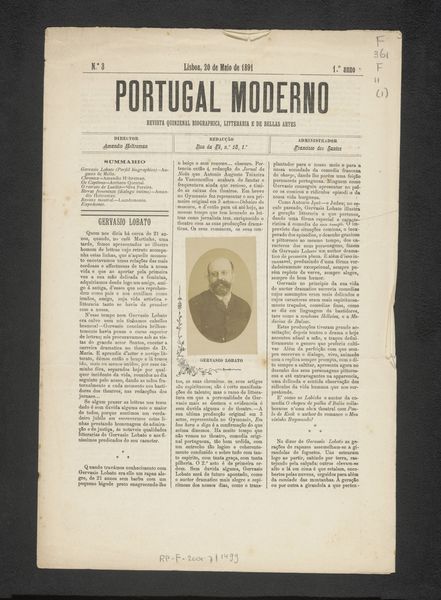
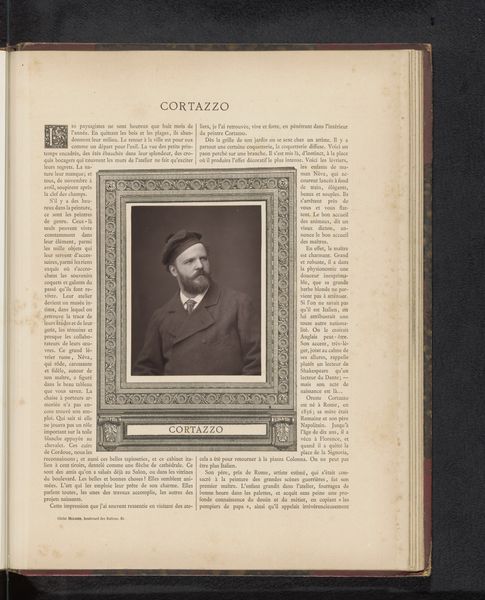
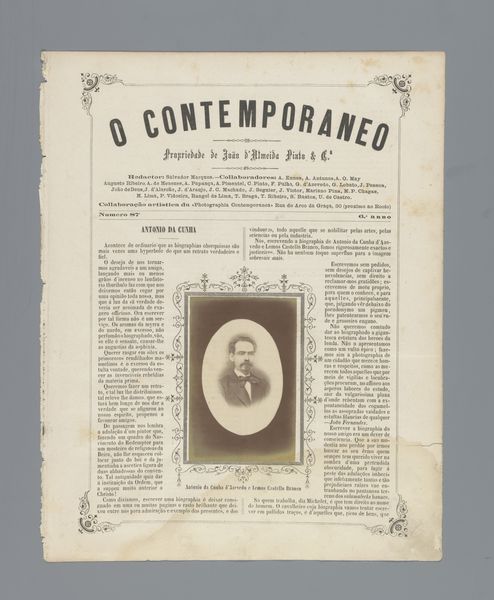
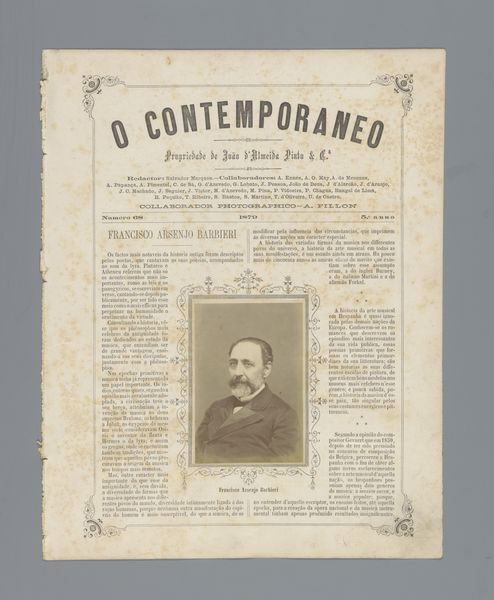
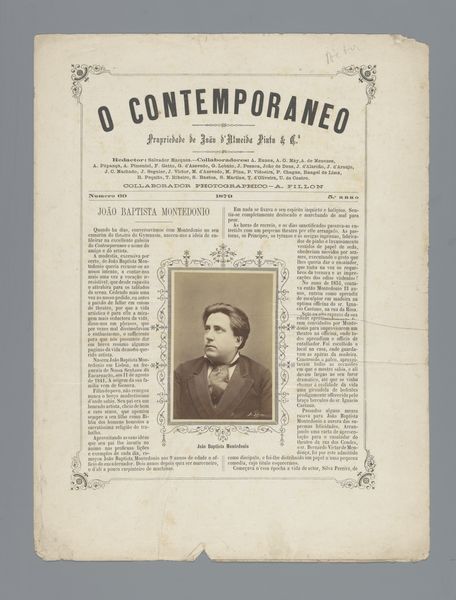
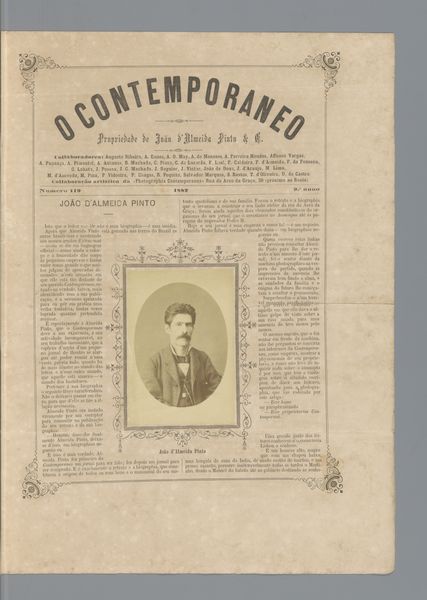
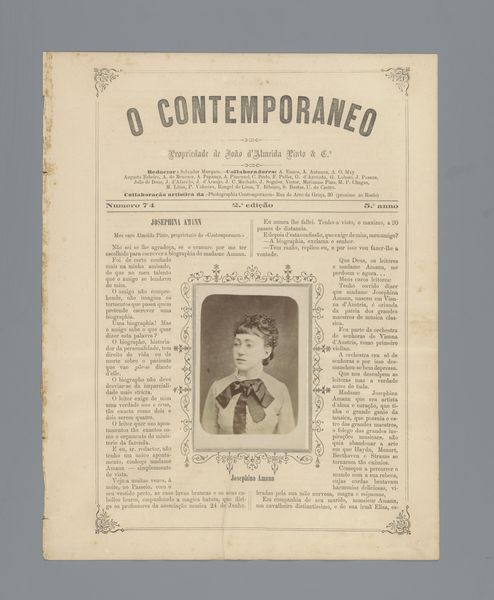
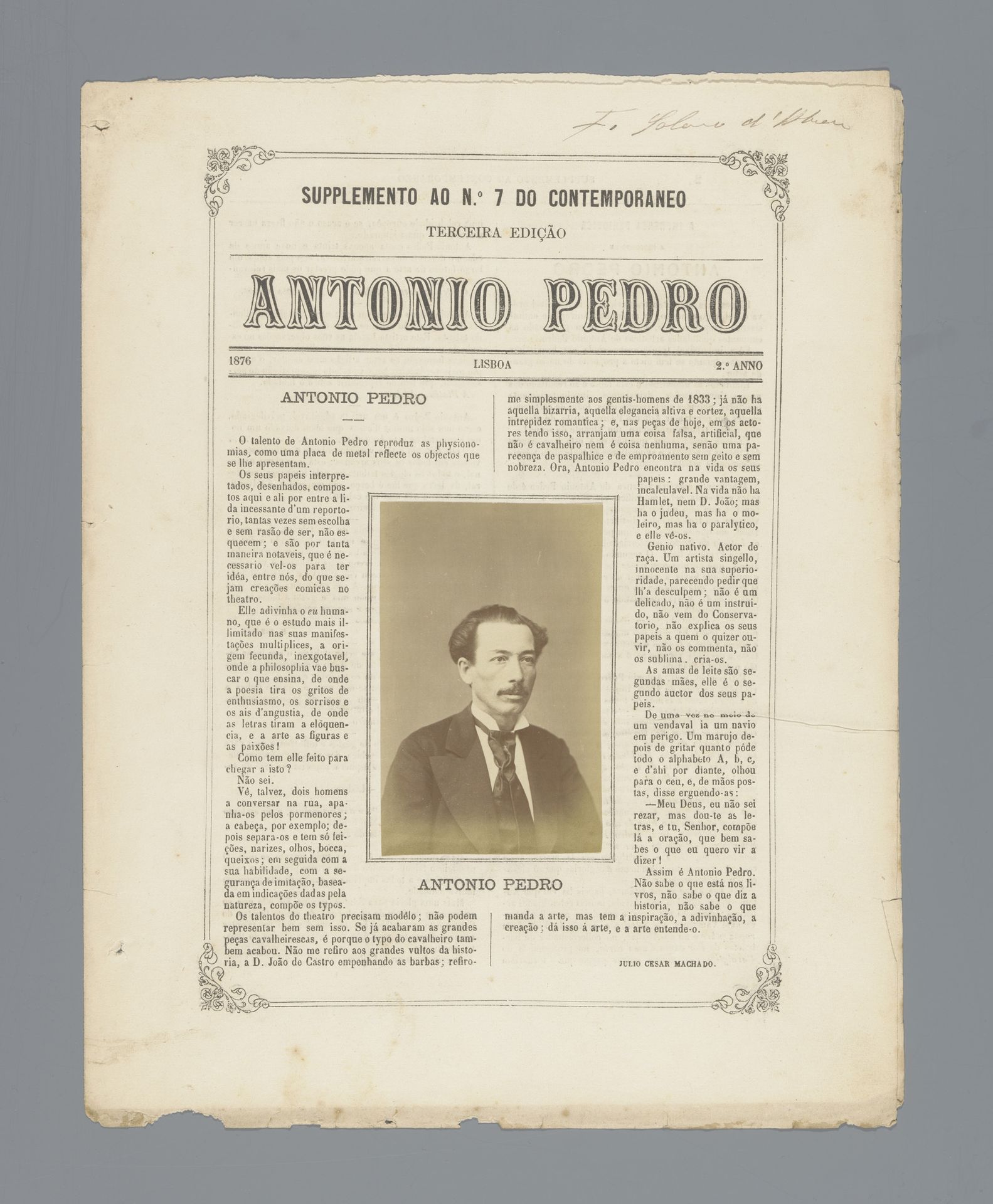
Curator: This photographic collotype from before 1876, titled "O Contemporaneo," showcases Antonio Pedro, most likely a figure of note. There's a solemnity to the portrait, embedded within text and decorative framing – quite the symbolic package! What do you see in it? Editor: I find it intriguing how the image of Antonio Pedro is presented within what seems like a newspaper or magazine page. It makes me wonder about his cultural significance. It’s more than a simple portrait, right? Curator: Precisely! Think about the context. Placed within printed text, Pedro becomes an idea as much as a person. The romanticism style speaks to an idealized representation. Do you see how the very act of capturing his likeness and placing it in print transforms him into something enduring? It's designed for wide distribution; his image becomes intertwined with collective memory. Editor: So, his image becomes a symbol through the act of reproduction and the printed word? How does the combination of the romantic portrait style with photography play into that? Curator: Photography was still relatively new then, a 'modern' way to capture reality. Juxtapose that with Romanticism, a style which valued emotion and subjective experience. The photographic "truth" gains a layer of emotional depth. By framing Antonio Pedro in this way, the creators immortalize not just his physical likeness but also the perceived essence of the man. Almost like fashioning an icon. Does this shift how you perceive his place within the culture? Editor: Absolutely. The combination elevates him beyond a mere individual; he becomes a symbol of an era, an idea...It's like the photographic image gains another life through its cultural and textual context! Thanks! Curator: Indeed. Symbols within symbols. These older images have a powerful ability to speak if we learn their symbolic language.