drawing, print, engraving
#
drawing
#
baroque
# print
#
landscape
#
cityscape
#
engraving
#
building
Dimensions: Sheet: 5 11/16 in. × 10 in. (14.4 × 25.4 cm)
Copyright: Public Domain
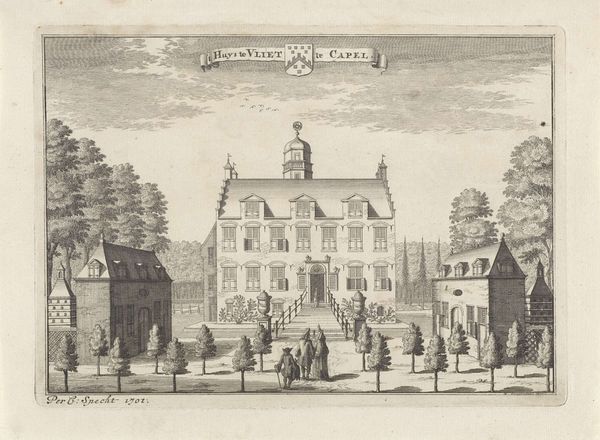
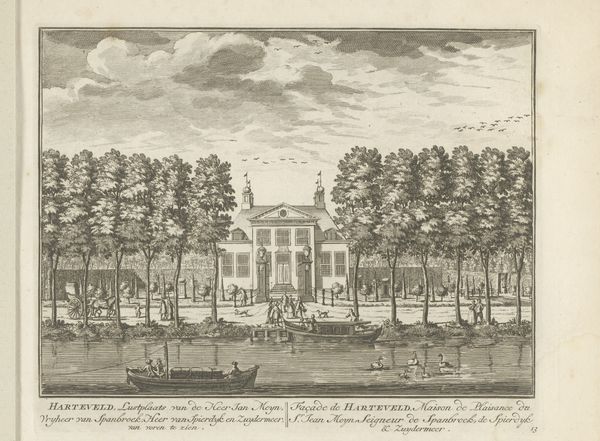
Editor: Right now we're looking at Wenceslaus Hollar's "Piazza in Covent Garden," made between 1642 and 1652. It’s an engraving – a meticulously rendered cityscape. I'm struck by how orderly and yet bustling it feels; there's this sense of a planned space coming to life with movement. What catches your eye here? Curator: You know, I often wonder what it must have been like to stroll through this Covent Garden then. Hollar captures the atmosphere wonderfully – it's that Baroque ideal of order imposed onto the messy reality of daily life, isn’t it? The crisp lines, the imposing architecture… and then, the lively little figures milling about. Do you get the sense, as I do, that he's really trying to show off London as this grand, modern capital? Editor: Absolutely. It almost feels like a stage set, doesn’t it? The buildings become backdrops for the human drama playing out. Though, if I'm honest, I find the clouds almost comical – so puffy and cartoonish against the detailed architecture. Curator: Ah, the clouds! They’re so Hollar, aren’t they? Always a touch of whimsy, grounding the formality. To me, they’re a reminder that even the most ambitious urban designs are still under the vast, uncontrollable sky. It makes the whole thing more human, less severe. Don't you think? It’s like he's saying, "Yes, we’re building this magnificent city, but let's not forget the poetry of a good cloud formation." Editor: I can see that. So it's a tension, then, between control and chaos, ambition and nature. Very Baroque indeed. I never would have considered the clouds more than an afterthought, so that's been helpful. Thanks. Curator: My pleasure! And remember, art isn’t about fixed meanings, it’s about the stories *you* find in it. So keep looking, keep questioning those clouds!
Comments
No comments
Be the first to comment and join the conversation on the ultimate creative platform.
 Collect
 React
React Comment
More like this