About this artwork
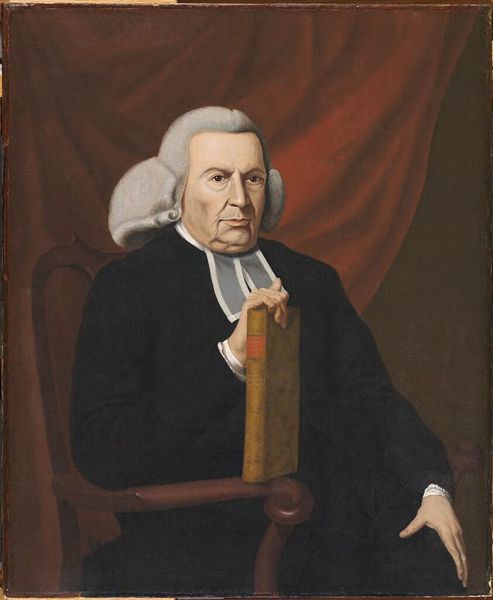
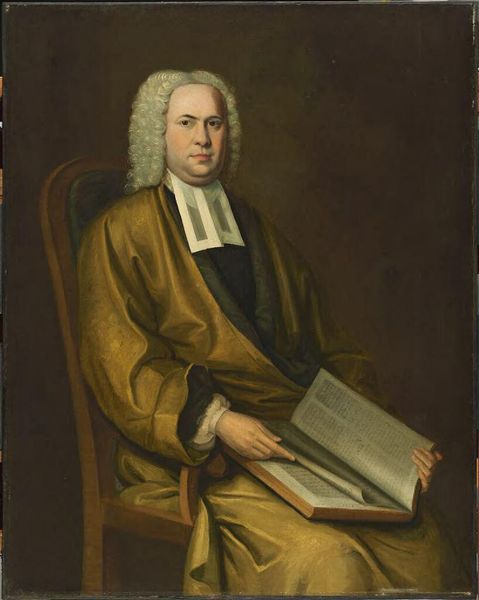
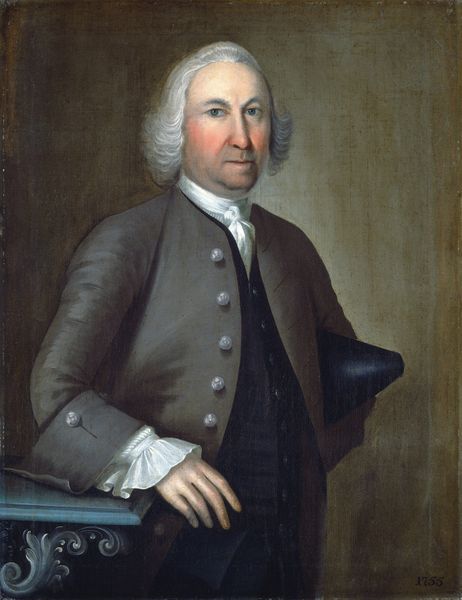
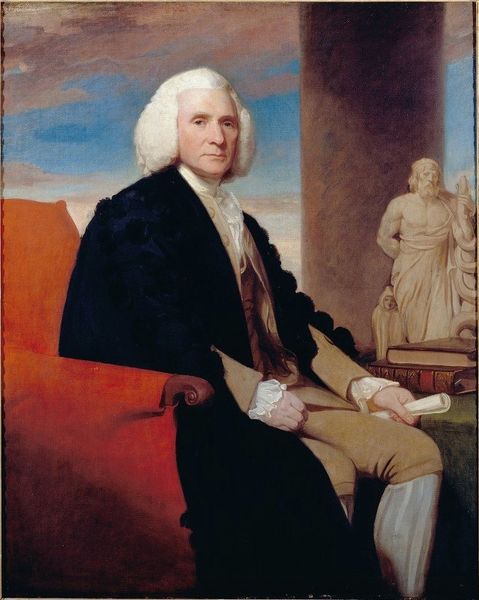
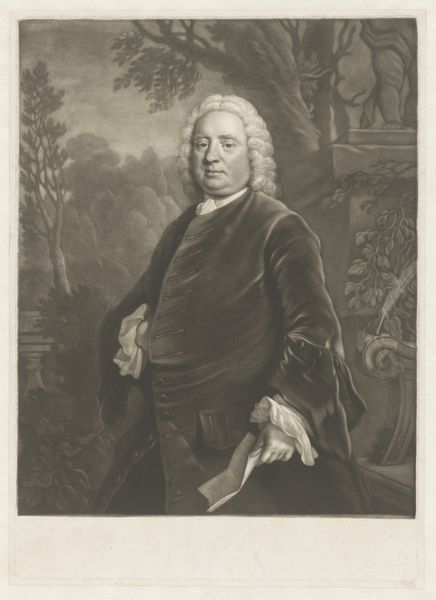
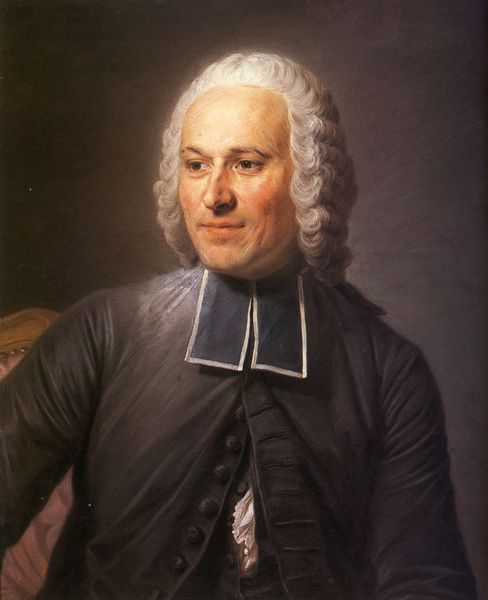
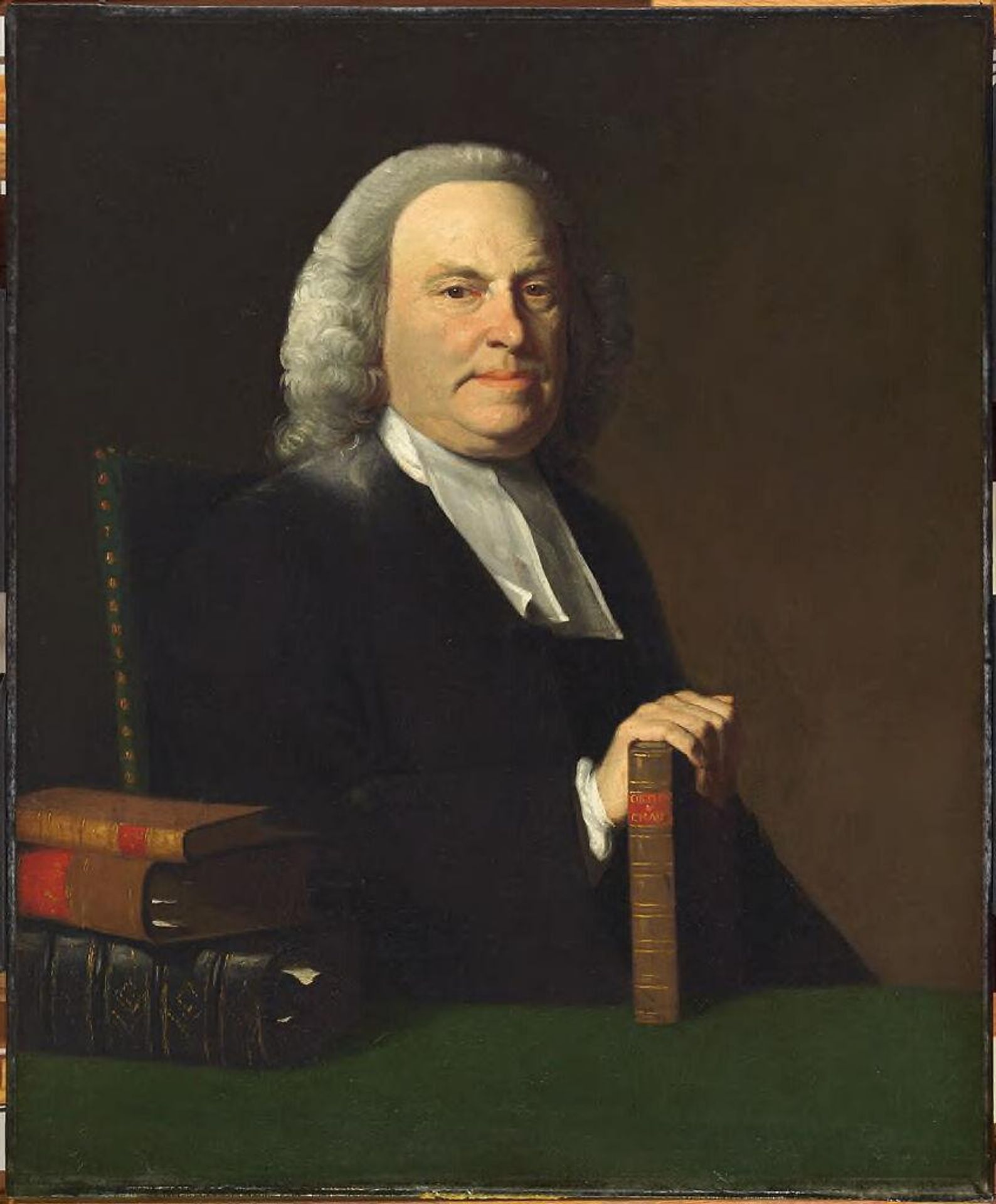
Curator: This is John Singleton Copley’s portrait of Nathaniel Appleton, currently residing at the Harvard Art Museums. Editor: The somber tones immediately suggest gravitas, almost a weightiness of intellect and position. The book itself seems to anchor him. Curator: Consider the materiality, though. Copley, ever the craftsman, meticulously renders Appleton's scholarly presentation, highlighting the labor and societal expectations embedded within these objects. Editor: The books, of course, are crucial symbols. They represent knowledge, authority, and Appleton's role as a minister and theologian. They signify a life dedicated to learning and spiritual guidance. Curator: Yes, but look closer at the textiles and the palpable texture that Copley achieves. The paint itself becomes a signifier of status and access, essential to Copley's Boston clientele. Editor: Ultimately, it’s Appleton’s gaze that lingers. A quiet strength and unwavering conviction seem to emanate from his eyes, connecting us to a legacy of faith and intellectual pursuit. Curator: Indeed, and understanding the context of these materials is key to understanding the society that produced, consumed, and venerated them.
Nathaniel Appleton (1693-1784) 1759 - 1761


Artwork details
- Dimensions
- 90.5 x 74.9 cm (35 5/8 x 29 1/2 in.) framed: 102.6 x 87.3 x 3.8 cm (40 3/8 x 34 3/8 x 1 1/2 in.)
- Location
- Harvard Art Museums
- Copyright
- CC0 1.0
Comments
No comments
About this artwork
Curator: This is John Singleton Copley’s portrait of Nathaniel Appleton, currently residing at the Harvard Art Museums. Editor: The somber tones immediately suggest gravitas, almost a weightiness of intellect and position. The book itself seems to anchor him. Curator: Consider the materiality, though. Copley, ever the craftsman, meticulously renders Appleton's scholarly presentation, highlighting the labor and societal expectations embedded within these objects. Editor: The books, of course, are crucial symbols. They represent knowledge, authority, and Appleton's role as a minister and theologian. They signify a life dedicated to learning and spiritual guidance. Curator: Yes, but look closer at the textiles and the palpable texture that Copley achieves. The paint itself becomes a signifier of status and access, essential to Copley's Boston clientele. Editor: Ultimately, it’s Appleton’s gaze that lingers. A quiet strength and unwavering conviction seem to emanate from his eyes, connecting us to a legacy of faith and intellectual pursuit. Curator: Indeed, and understanding the context of these materials is key to understanding the society that produced, consumed, and venerated them.
Comments
No comments