About this artwork
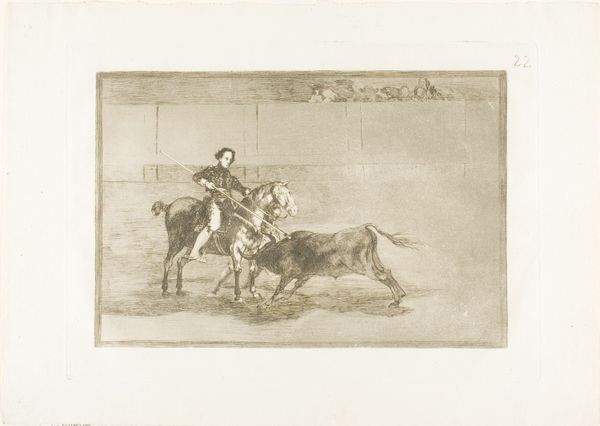
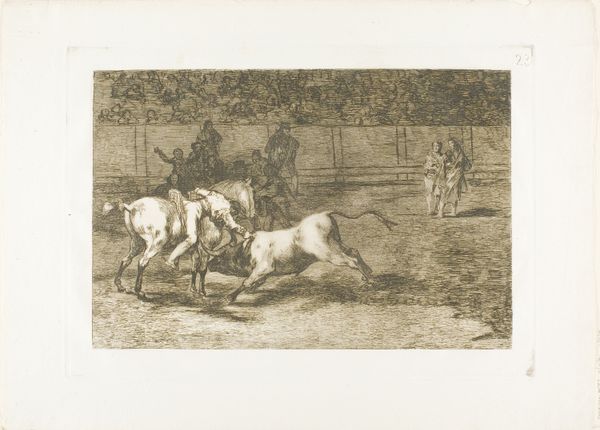
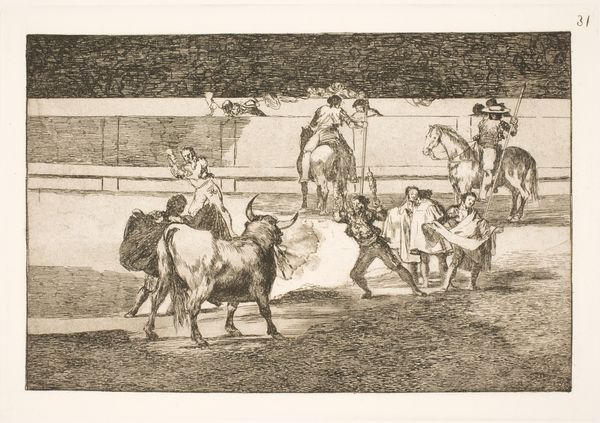
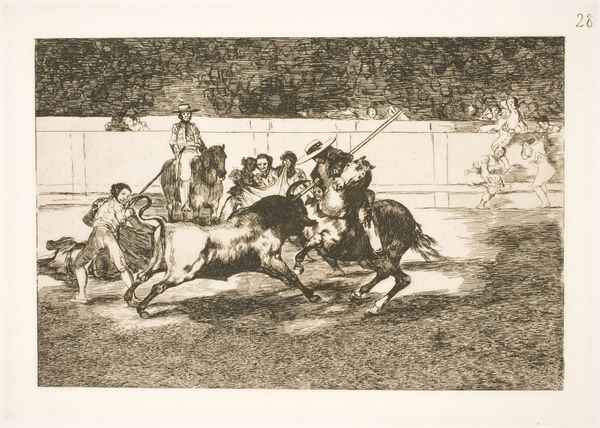
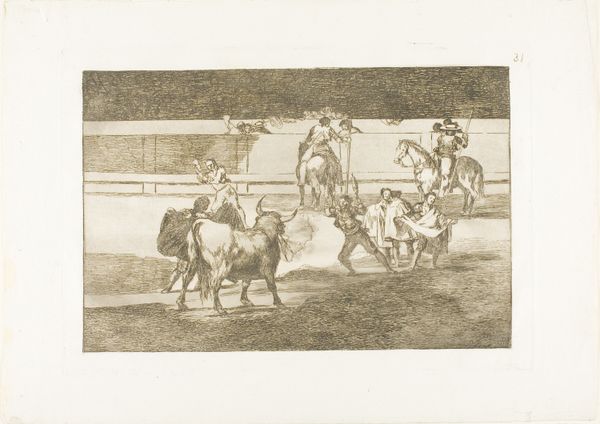
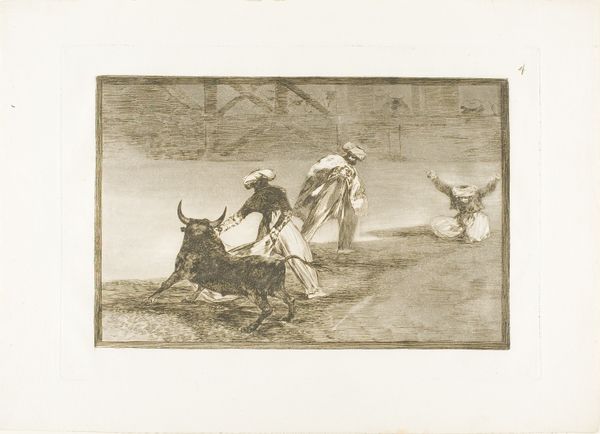
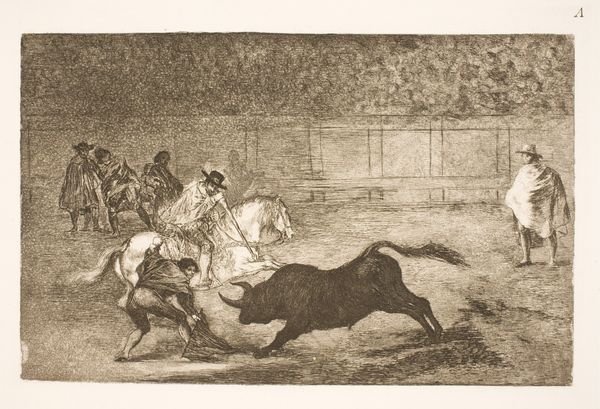
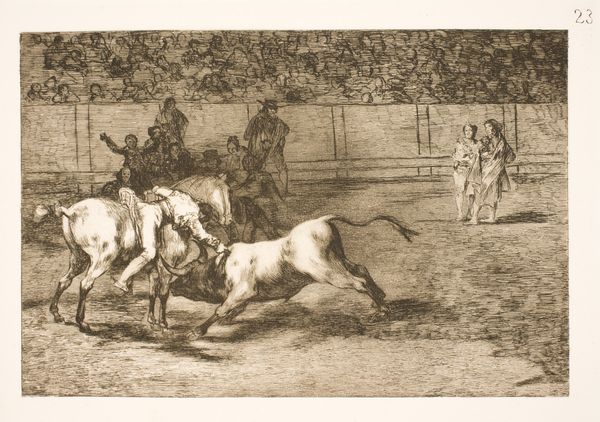
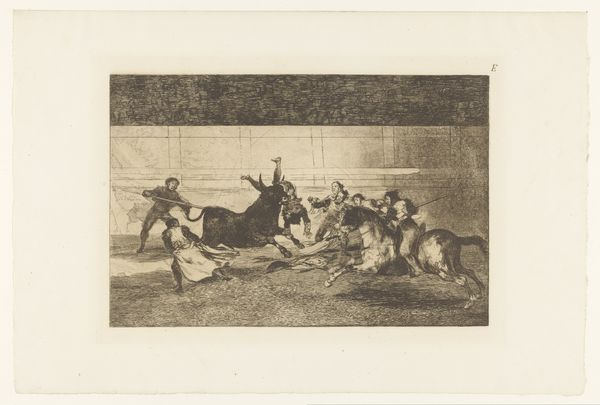
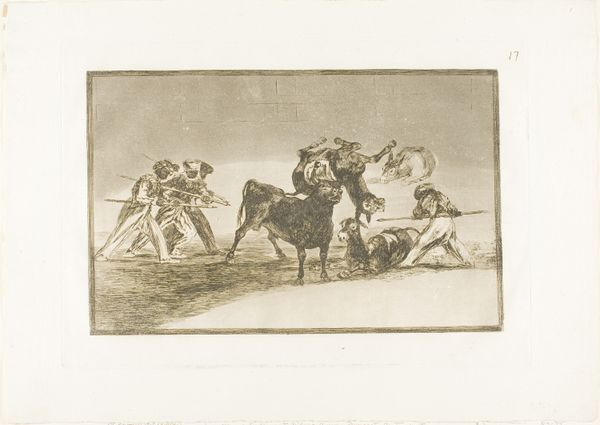
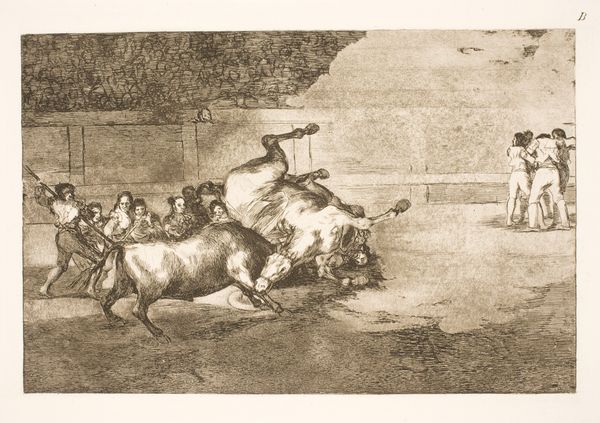
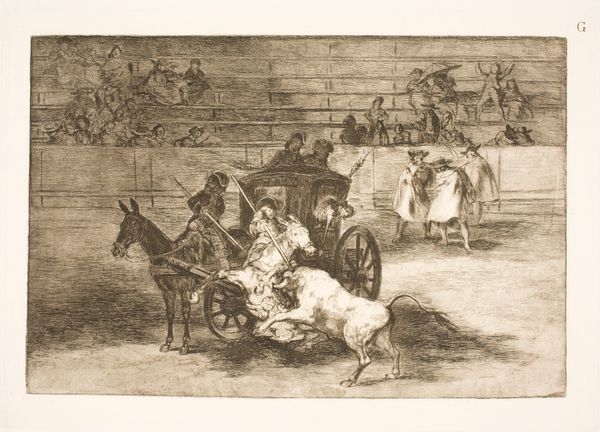
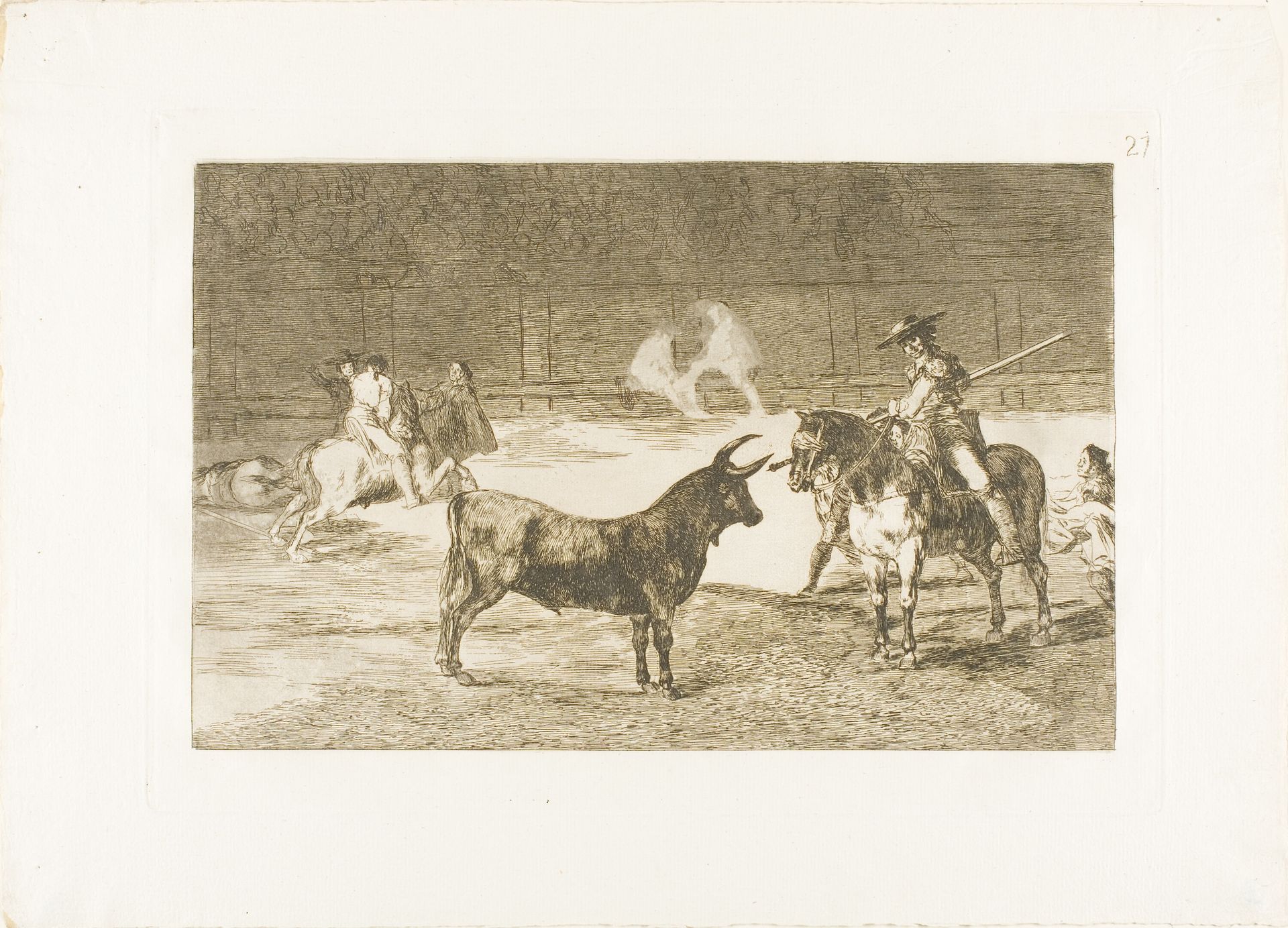
Francisco Goya created this print, "The Celebrated Picador, Fernando del Toro," as part of his series on bullfighting, likely around 1815-1816. At the time, bullfighting was a popular spectacle in Spain, deeply embedded in the nation’s culture and identity. Goya doesn’t just show the action; he explores the rituals, the dangers, and the social dynamics of the bullring. Notice how he uses light and shadow to dramatize the scene, highlighting the picador and the bull while suggesting the charged atmosphere of the arena. Goya was a court painter, but he was also a social critic. His bullfighting series can be read on one level as a straightforward depiction of Spanish traditions. But Goya, known for his critical eye, invites us to consider the violence inherent in the spectacle, and perhaps to question the values of a society that celebrates such events. To understand Goya fully, we look to sources like contemporary newspapers, accounts of bullfights, and studies of Spanish society at the time. Art like this reminds us that history isn't just about dates and names; it's about understanding the complex interplay of culture, power, and representation.
The Celebrated Picador, Fernando del Toro, Draws the Fierce Beast on with His Pique, plate 27 from The Art of Bullfighting
Possibly 1814 - 1816
Artwork details
- Medium
- drawing, print, etching, paper
- Dimensions
- 204 × 320 mm (image); 245 × 352 mm (plate); 321 × 447 mm (sheet)
- Location
- The Art Institute of Chicago
- Copyright
- Public Domain
Tags
Comments
Share your thoughts
About this artwork
Francisco Goya created this print, "The Celebrated Picador, Fernando del Toro," as part of his series on bullfighting, likely around 1815-1816. At the time, bullfighting was a popular spectacle in Spain, deeply embedded in the nation’s culture and identity. Goya doesn’t just show the action; he explores the rituals, the dangers, and the social dynamics of the bullring. Notice how he uses light and shadow to dramatize the scene, highlighting the picador and the bull while suggesting the charged atmosphere of the arena. Goya was a court painter, but he was also a social critic. His bullfighting series can be read on one level as a straightforward depiction of Spanish traditions. But Goya, known for his critical eye, invites us to consider the violence inherent in the spectacle, and perhaps to question the values of a society that celebrates such events. To understand Goya fully, we look to sources like contemporary newspapers, accounts of bullfights, and studies of Spanish society at the time. Art like this reminds us that history isn't just about dates and names; it's about understanding the complex interplay of culture, power, and representation.
Comments
Share your thoughts