1581 - 1633
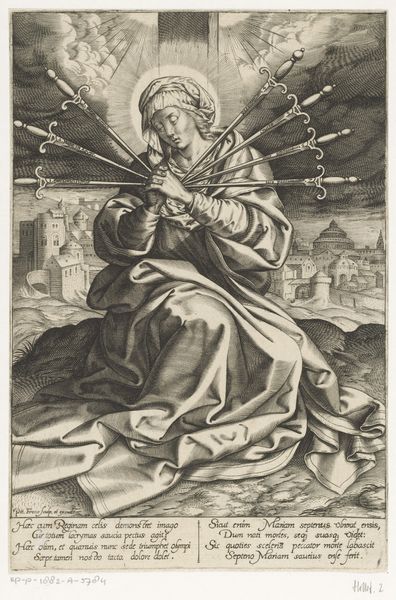
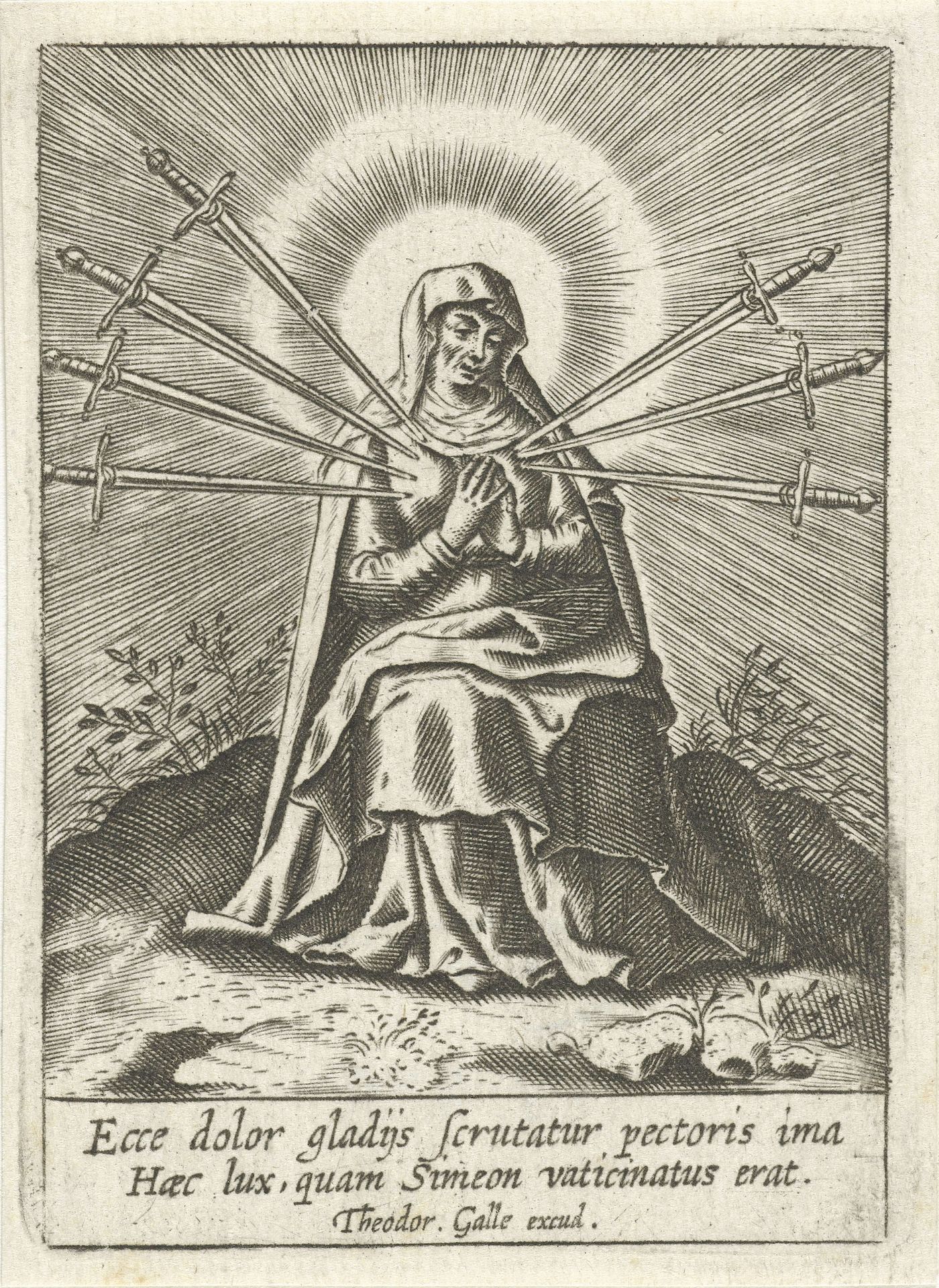
Mater Dolorosa, of Maria van de Zeven Smarten

Theodoor Galle
1571 - 1633Location
RijksmuseumListen to curator's interpretation
Curatorial notes
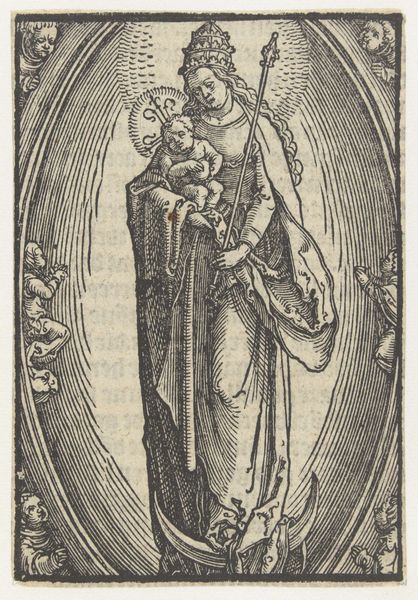
Editor: Here we have Theodoor Galle's "Mater Dolorosa, of Maria van de Zeven Smarten," an engraving dating sometime between 1581 and 1633. It's striking how those seven swords seem to pierce not just her body, but the viewer's soul. What strikes you about the imagery here? Curator: The "Mater Dolorosa," or "Sorrowful Mother," is a potent image steeped in layers of symbolism. Seven swords aren’t merely instruments of physical pain, they're manifestations of grief—prophecies fulfilled, each representing a distinct sorrow in Mary's life. Editor: Prophecies? Curator: Think about the prophecy of Simeon, the flight into Egypt, the loss of the child Jesus in the temple... Each sword evokes a specific trauma, creating a constellation of suffering that viewers over centuries have readily understood. Galle masterfully employs a symbolic language that transcends spoken words. Where else have you encountered that visual vocabulary? Editor: Hmm, in other religious works of the time. Like, martyrdoms… Curator: Exactly. It's a language of collective memory. Notice the radiant light around her? It doesn't negate her suffering but transforms it, alluding to redemption and the hope within profound sorrow. The arrangement isn't arbitrary; it creates a visual harmony out of pain, a baroque technique. Editor: It’s almost as if the image invites contemplation of the convergence of pain and hope… Curator: Indeed. By examining its imagery, we delve into the human condition, navigating the intricacies of faith, grief, and resilience. This emblem encourages reflection, touching on universal human experiences. Editor: That's given me a completely new way to read this image. I won't look at religious art the same way again!