photography
#
portrait
#
17_20th-century
#
pictorialism
#
archive photography
#
photography
#
historical photography
Dimensions: image: 24.3 x 18.8 cm (9 9/16 x 7 3/8 in.) sheet: 25.3 x 20.2 cm (9 15/16 x 7 15/16 in.)
Copyright: National Gallery of Art: CC0 1.0
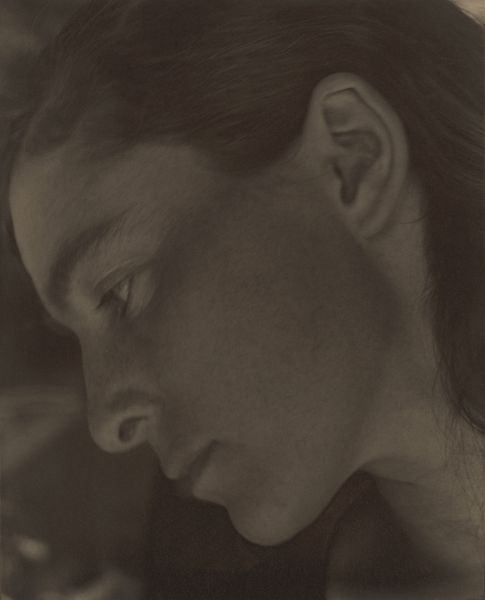
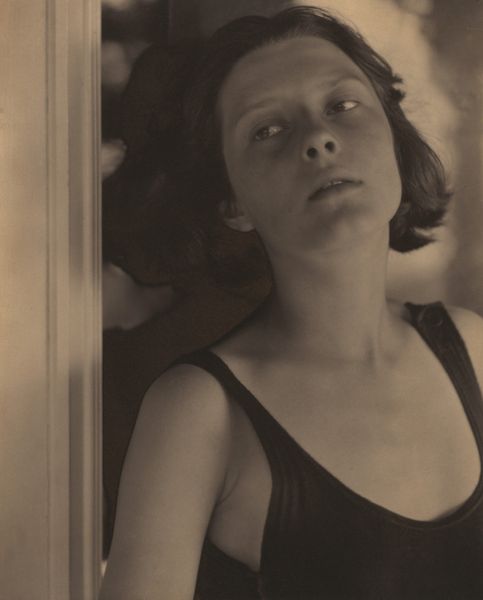
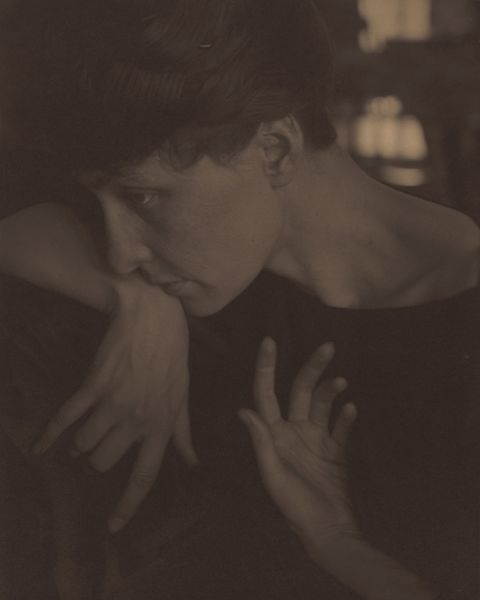
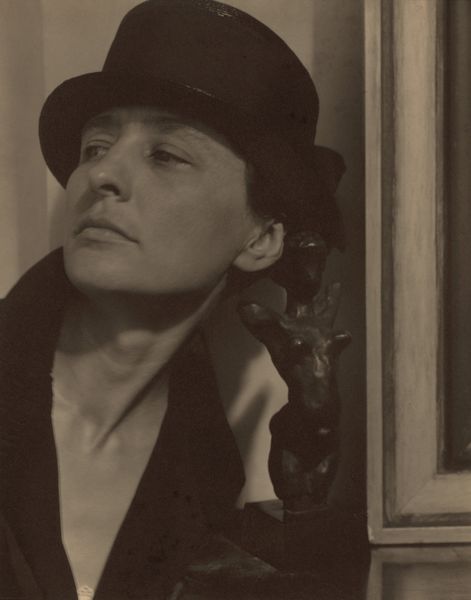
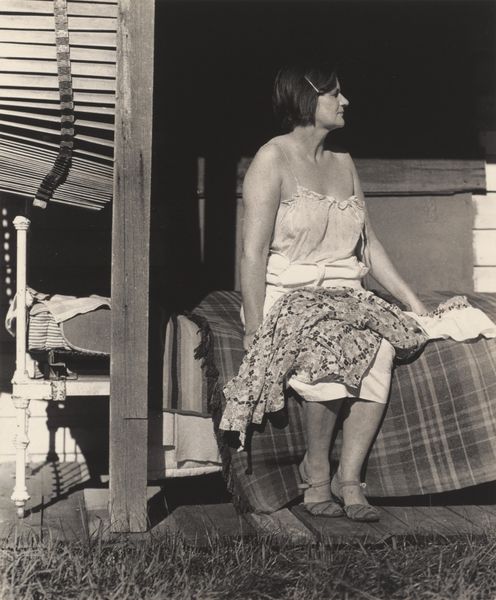
Curator: Alfred Stieglitz captured this portrait, titled "Marie Rapp," in 1914, rendered through the lens of photography. The textures and tones... how do they strike you initially? Editor: The lighting... it’s so delicate. Almost feels like she's caught between a dream and reality. The softness of the photograph lends it such a tender quality. A wistful, melancholic poem in grayscale. Curator: Indeed, that sense of reverie is integral to pictorialism, a movement Stieglitz championed. Pictorialism emphasized artistic effect through manipulation of the photographic process, elevating photography to fine art by utilizing soft focus and painterly effects. Here, consider how the dark, sumptuous bow juxtaposes with the white, seemingly almost mass-produced dress... it creates a fascinating dynamic between the individualized and the commodified. Editor: Absolutely! It also occurs to me that there’s something so staged, yet so raw about this picture. I'm getting the sense that there's an awareness of the photographer. Like she knows she’s performing for the lens and for future audiences. Curator: Stieglitz meticulously controlled his photographic process; developing, printing, and framing were essential to his artistic vision. Also the choice of the sitter. Think about Stieglitz's larger body of work. Rapp almost serves as a template... an archetype of feminine beauty for that era. Her image, in this way, gets wrapped up in constructions of gender and class circulated and reinforced through art at the time. Editor: Exactly! And seeing that construction, yet feeling the humanity... that friction is what makes this image so alive. It makes me question who Marie Rapp actually was. What was she like outside of this crafted portrait? What was the nature of their collaboration? It almost becomes a prompt to spin stories from just this still image. Curator: Precisely! Analyzing such a portrait helps to unveil the social and artistic structures at play during this period. A way to engage and challenge historical narratives through visual media. Editor: Beautiful. It’s always interesting to unpack what remains resonant to contemporary viewers from works such as this portrait. It's the artist and the social scientist that come alive.


 Collect
More like this