

before 1893
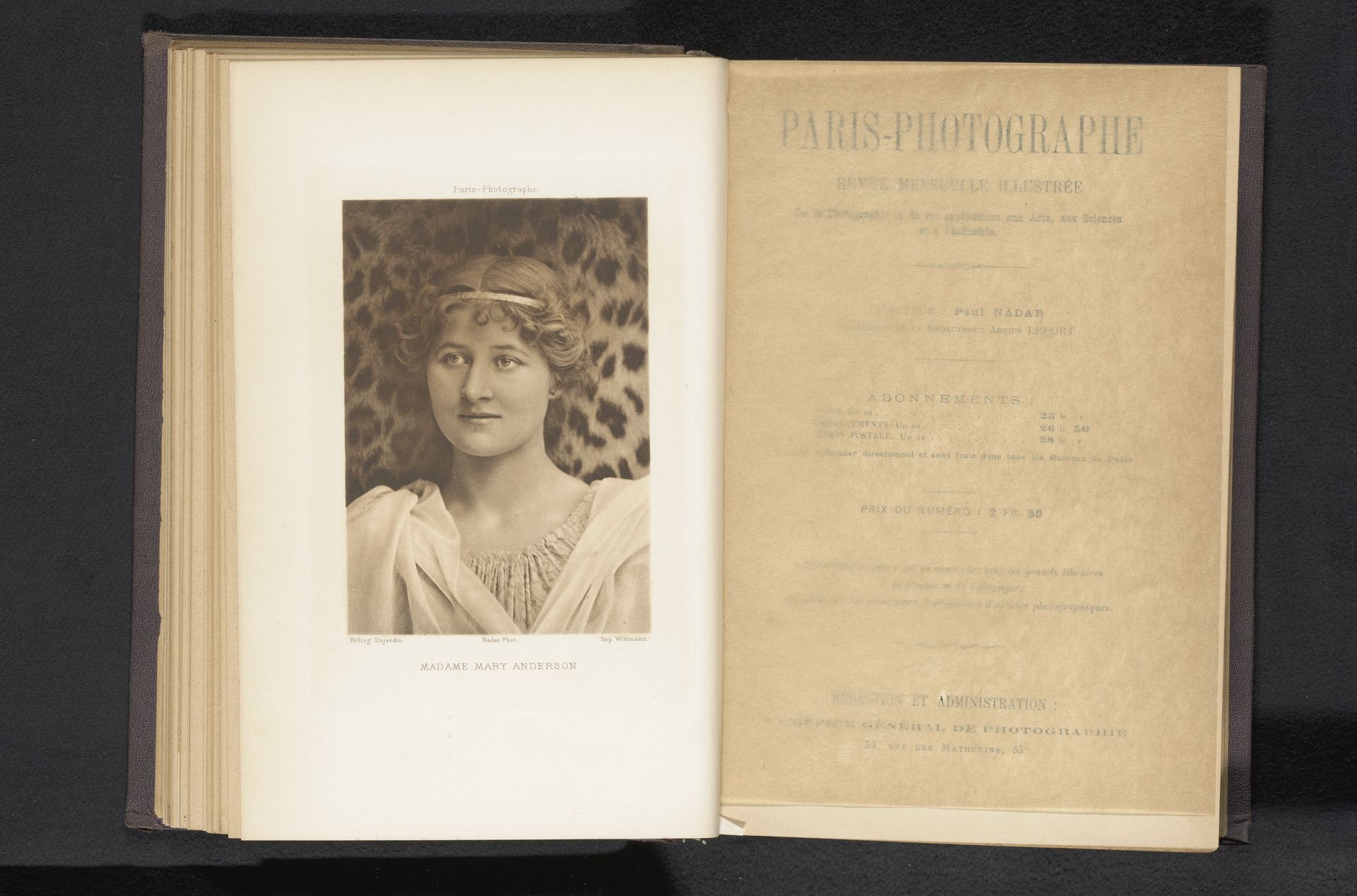
Portret van Mary Anderson

Nadar
1820 - 1910Location
RijksmuseumListen to curator's interpretation
Curatorial notes
This is one of several portraits of the actress Mary Anderson, made by Nadar in Paris. He used the collodion process, which meant coating a glass plate with a light-sensitive emulsion, exposing it in the camera, and then developing it immediately. Photography in the 19th century was as much a chemical process as an aesthetic one. The rich sepia tones are due to the silver salts in the emulsion, which react to light and create a finely detailed image. This print is part of an album, suggesting that Nadar saw photography as a medium for mass production. Unlike painting or sculpture, which bear the direct mark of the artist's hand, photography was considered a more mechanical process, blurring the lines between art and industry. The labor involved was significant, from preparing the chemicals to posing the sitter and making and selling the prints. Nadar's photographs reflect the rise of celebrity culture and the democratization of portraiture in the industrial age, challenging traditional notions of artistic skill.