
Curatorial notes
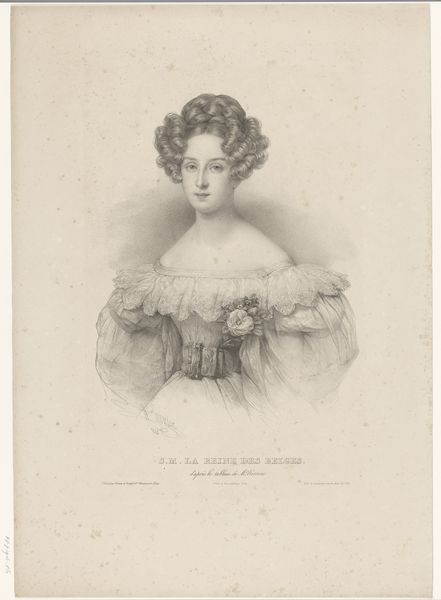
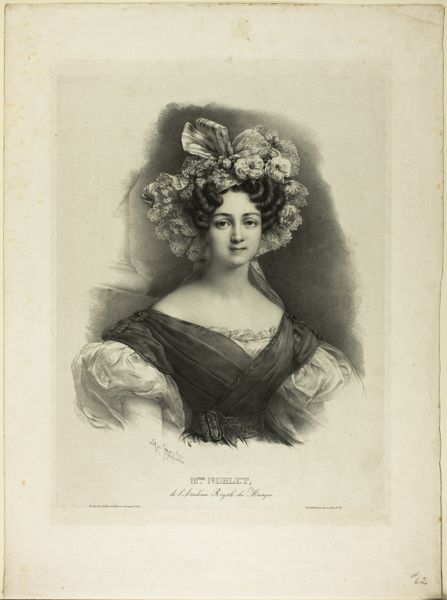
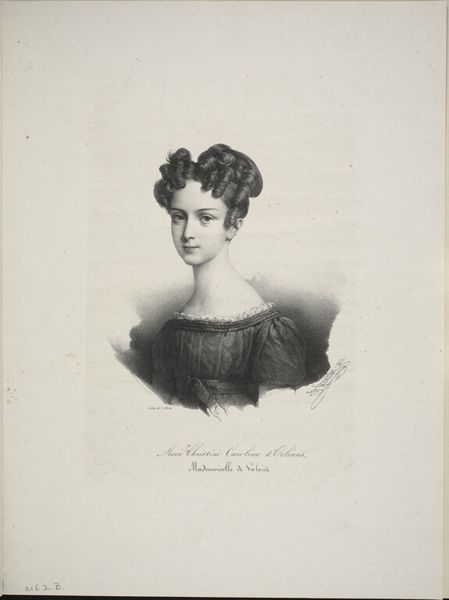
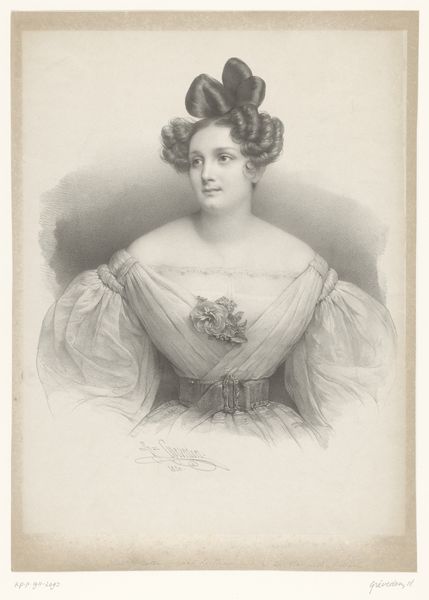
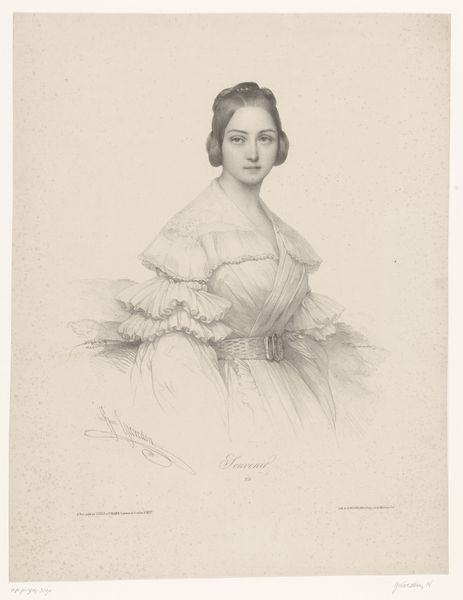
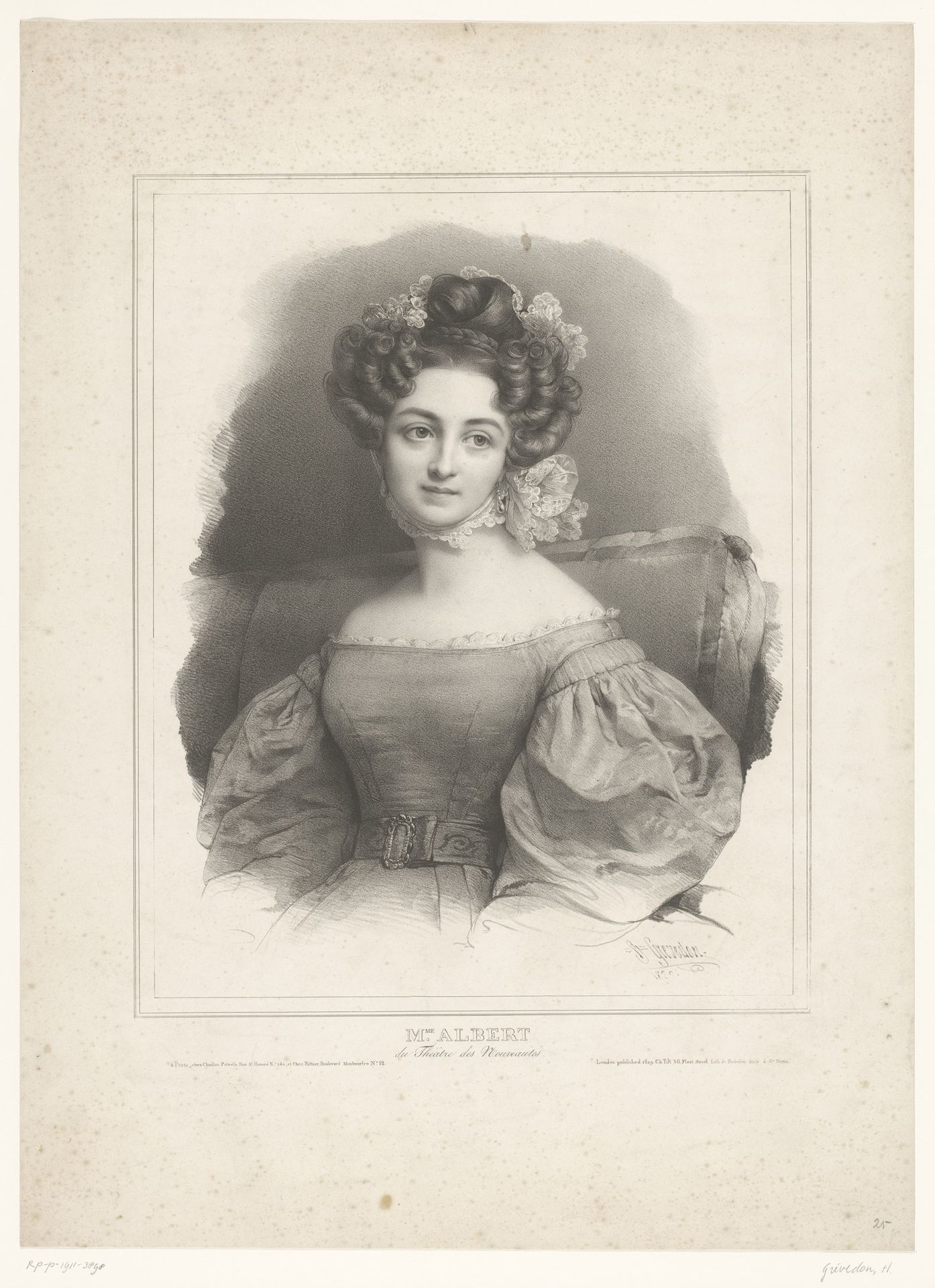
Henri Grevedon's "Portrait of Madame Albert" captures its subject through the delicate medium of lithography, emphasizing line and tonal gradations. The sitter's figure is framed within a rectangle and subtly emerges from a shaded backdrop, creating a play between the sharpness of her features and the softness of the diffused light. Grevedon’s emphasis on line—particularly in the intricate rendering of Madame Albert’s hair and dress—invites us to consider the construction of identity through graphic means. Each curl and fold is meticulously articulated, creating a sense of texture and depth that draws the eye. The composition, carefully balanced between light and shadow, highlights not just her physical appearance but also suggests a certain social position and the values associated with it. Ultimately, the portrait functions as a sign, using the visual language of lithography to communicate notions of beauty, status, and individuality. The interplay between the graphic elements and the social context reveals how portraiture in this era was deeply intertwined with the construction and communication of identity.