drawing, watercolor
#
drawing
#
water colours
#
narrative-art
#
figuration
#
watercolor
#
symbolism
#
watercolor
Dimensions: sheet (irregular): 34.93 × 36.35 cm (13 3/4 × 14 5/16 in.)
Copyright: National Gallery of Art: CC0 1.0
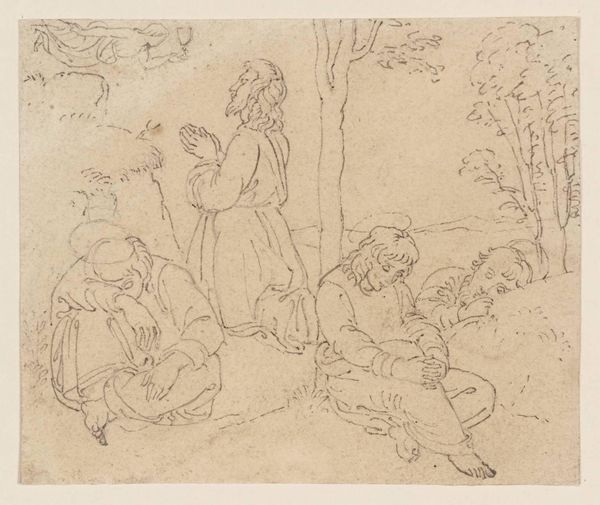
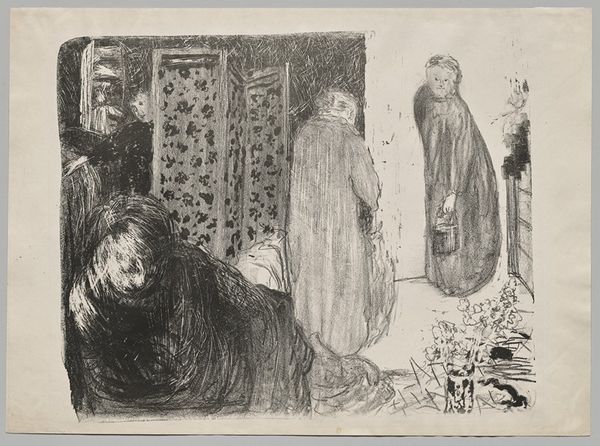
Editor: This is Nellie Thorne’s “Study for a Triptych,” made around 1900. It's a watercolor drawing, and the atmosphere is so intriguing, almost dreamlike. What do you see in this piece? Curator: It's interesting to view this through a historical lens. Thorne was working during a period when women artists were fighting for recognition, often engaging with symbolism and spiritual themes to subvert traditional narratives. Notice how the triptych format itself suggests a connection to religious art, but the imagery is ambiguous. The cloaked figures and soft colors lend an air of mystery. Who do you think was her intended audience for art such as this? Editor: Perhaps a private patron, or maybe she intended to show it at a smaller gallery, something that supported more progressive work? Curator: Precisely. Considering the art market at the turn of the century is essential. Mainstream institutions were largely closed off to women artists exploring such unconventional themes. Did that affect her vision, do you think? Editor: It must have. Maybe that’s why the narrative is so open to interpretation. If it had been for public consumption, she might have felt pressure to be more literal. Curator: Exactly. And the use of watercolor—a medium often associated with amateur art – perhaps a conscious choice to push against established norms. Also, there are elements in this piece of work that resemble certain fraternal organizations that had female adjunct groups during this time. Thorne appears to be tapping into visual imagery to express an affiliation with an alternative approach to organized expression. Editor: So, in a way, this delicate watercolor becomes a quietly radical statement about female artistry and social critique. That's fascinating. Thanks, Nellie Thorne, for this intriguing contribution! Curator: Indeed, thinking about the social and institutional context enriches our understanding so profoundly!
Comments
No comments
Be the first to comment and join the conversation on the ultimate creative platform.
 Collect
 React
React Comment
More like this