drawing, print, etching, engraving
drawing
baroque
dutch-golden-age
etching
dog
old engraving style
landscape
figuration
engraving
Dimensions: height 80 mm, width 115 mm
Copyright: Rijks Museum: Open Domain
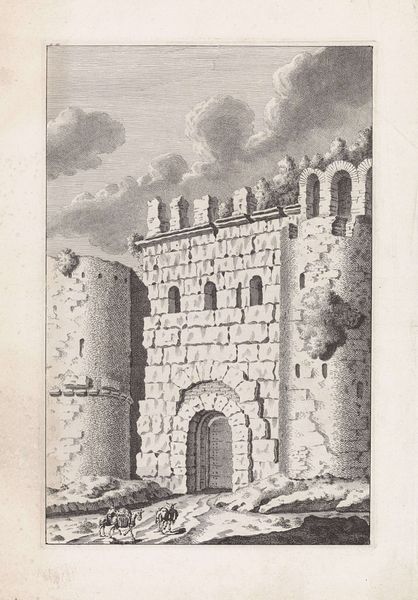
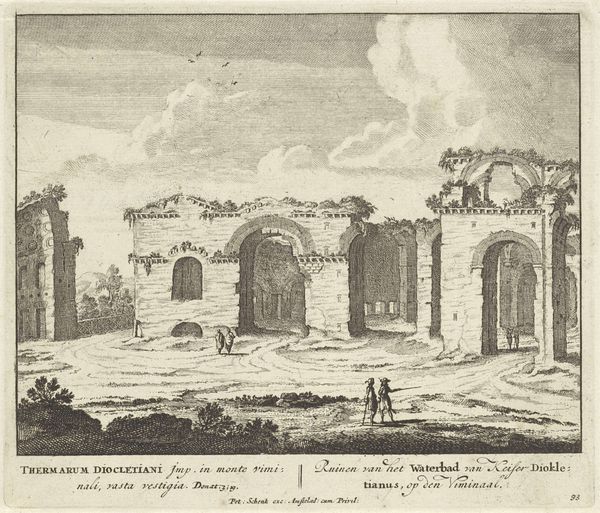
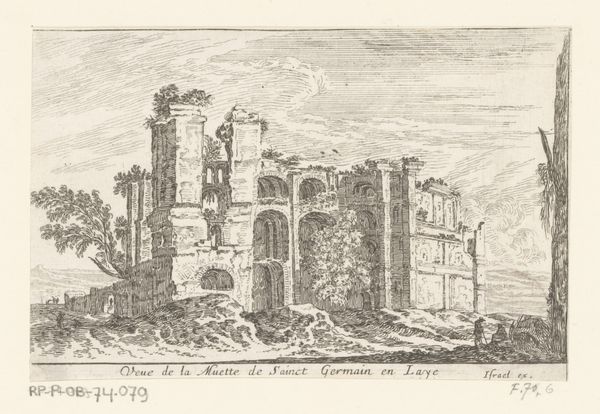
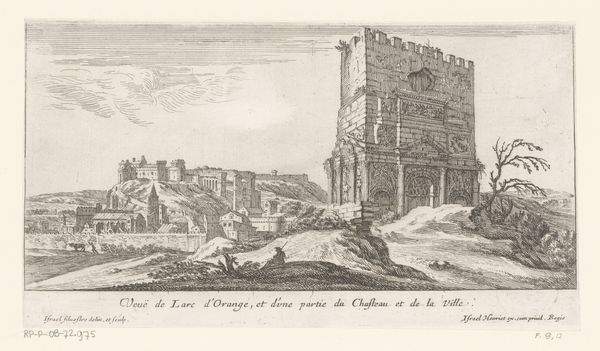
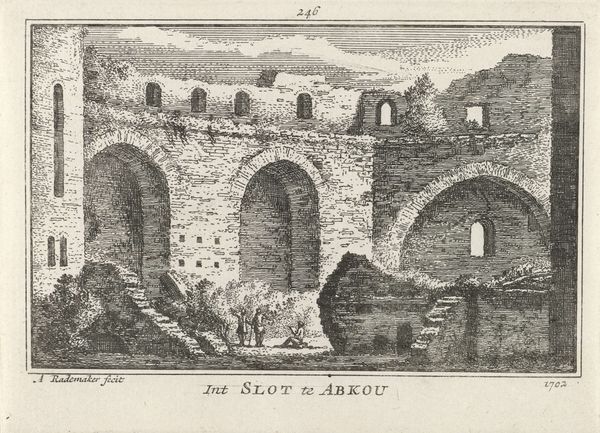
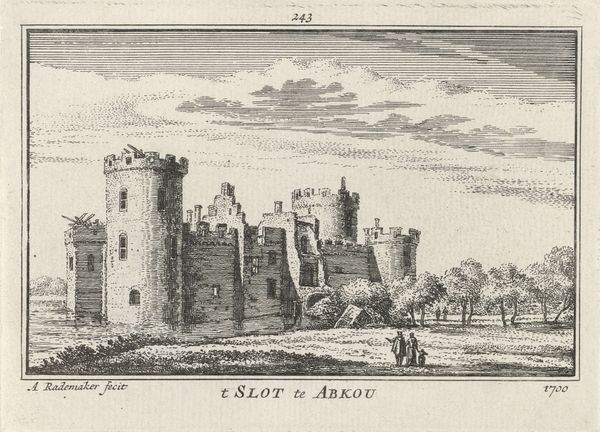
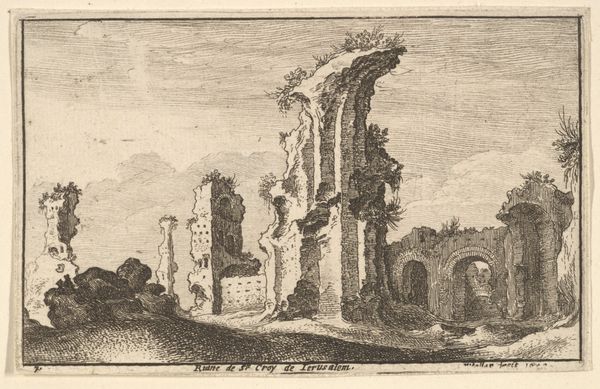
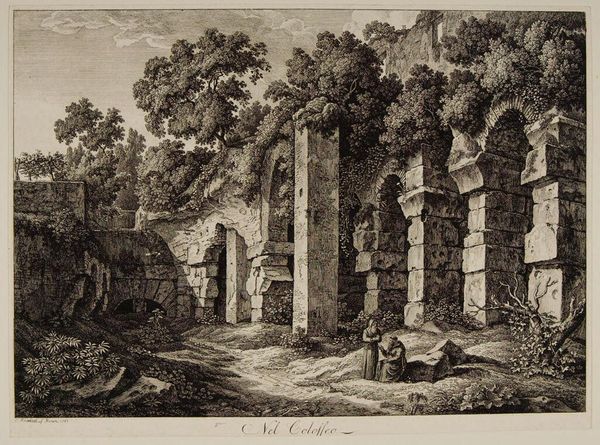
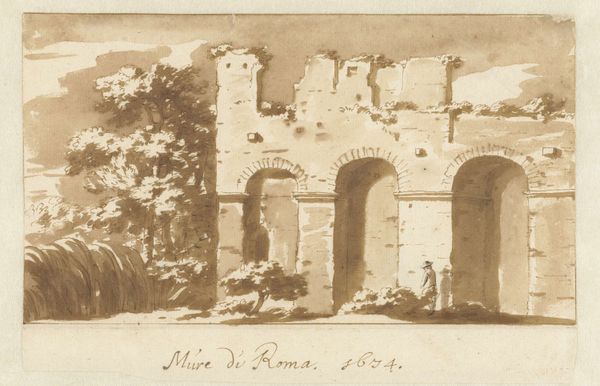
Editor: So, here we have Abraham Rademaker's etching and engraving, "Interior of the Castle at Abcoude," dating from 1727 to 1733. It's… well, it’s a ruin, isn't it? There’s this melancholic feeling about it. The architecture is crumbling, but there’s a weird serenity, almost a beauty in the decay. How do you interpret this work? Curator: Immediately, the interplay of light and shadow commands attention. Rademaker uses hatching and cross-hatching to create a textural richness. Notice the formal geometry of the archways juxtaposed against the organic, almost chaotic lines describing the ruined walls. The formal opposition between structure and disintegration creates a dynamic tension within the composition. How do you respond to this structural interplay? Editor: I hadn’t really thought about it structurally. I was caught up in the sort of romantic feel of the ruin. But you’re right, there is a very deliberate geometric element, fighting against the decay. Curator: Precisely. Consider, too, the meticulous detail given to the depiction of stone, versus the comparatively simpler rendering of the figures and trees. It compels us to examine the relationship between the human element and the architectural, doesn't it? Editor: Absolutely. I guess I was seeing it more as a picturesque scene, but your analysis really brings out the formal elements. The contrast really makes you question what Rademaker is trying to emphasize, the architecture, or the figures within. Curator: The composition suggests neither dominates, but the dialogue between the two provides an intriguing subject for further consideration. Editor: Well, I’ve definitely learned to look beyond the immediate subject and really analyze the relationship between all the compositional elements! Curator: Indeed, the pleasure often lies in decoding the language of form itself.
Comments
No comments
Be the first to comment and join the conversation on the ultimate creative platform.
 React
React Comment