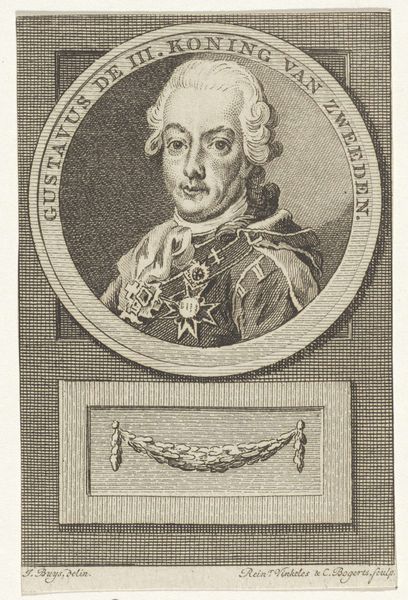
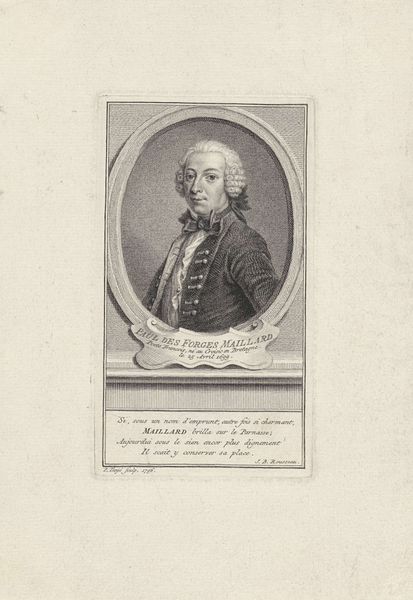
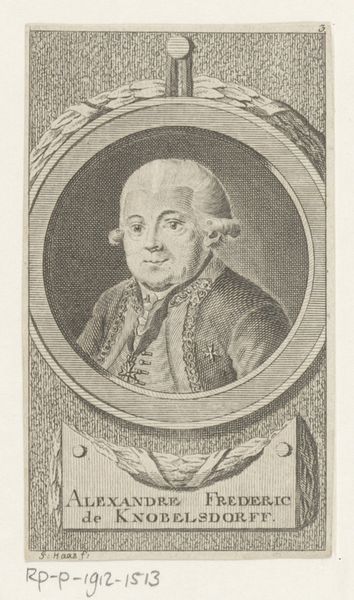
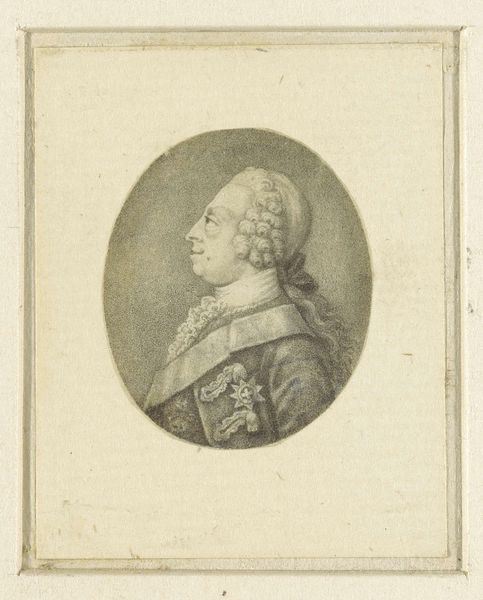
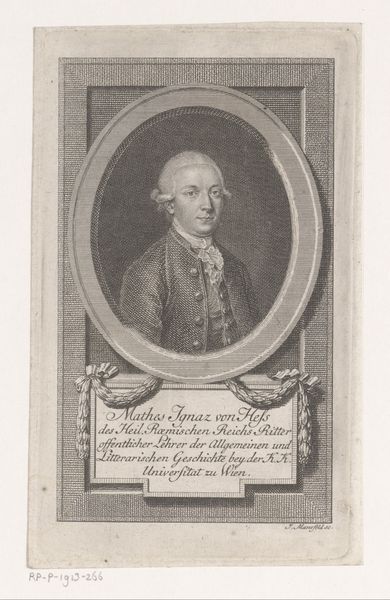
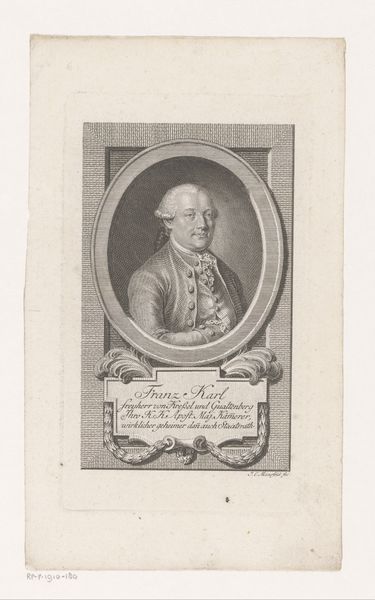
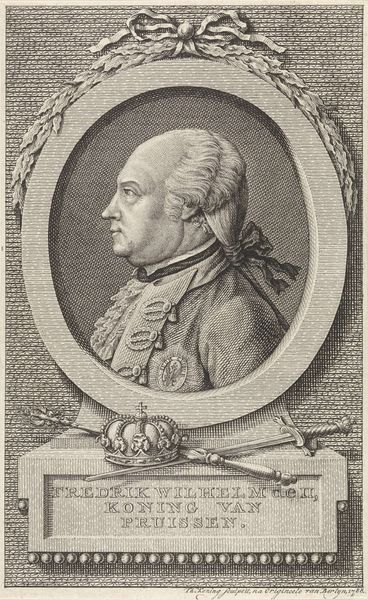
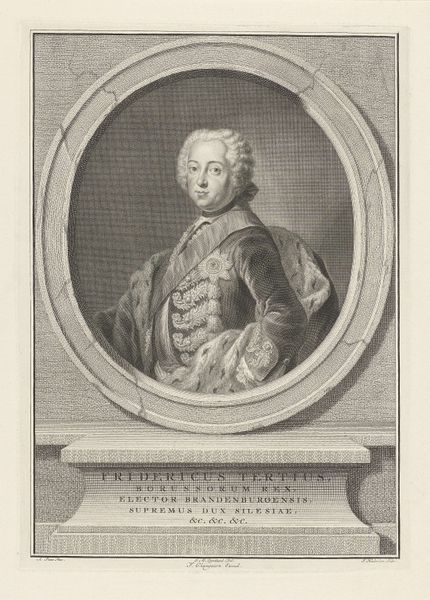
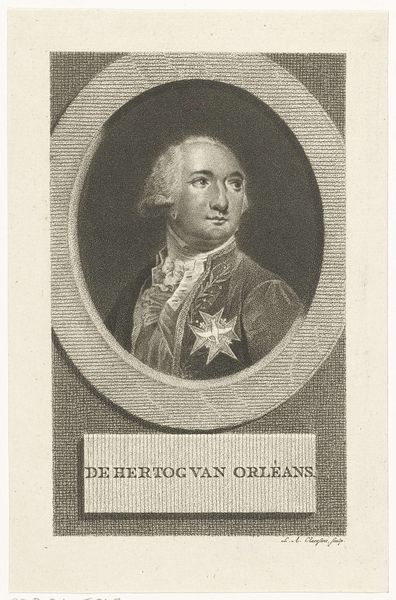
Portret van Stanislaus II Augustus Poniatovski, koning van Polen 1761 - 1795

reiniervinkeles
Rijksmuseum
engraving
neoclacissism
classical-realism
form
line
history-painting
academic-art
engraving
realism
Dimensions: height 237 mm, width 155 mm
Copyright: Rijks Museum: Open Domain
Editor: This is an engraving of Stanislaus II Augustus Poniatowski, King of Poland, made sometime between 1761 and 1795 by Reinier Vinkeles. It has such a formal and almost austere quality. How do you interpret this work? Curator: Well, beyond just seeing a portrait, it's important to consider the power dynamics inherent in representing a monarch, especially within the context of late 18th-century Poland. How do you think this image plays into the construction and maintenance of royal authority? Editor: It definitely projects an image of authority and refinement, but I'm curious how the medium – an engraving – contributes to this effect. Curator: Exactly. Engravings, because they can be widely reproduced, served as a powerful tool for disseminating specific images and, therefore, specific ideas about the monarchy. Consider the Neoclassical style, too – the controlled lines, the emphasis on order. These elements speak to Enlightenment ideals but also legitimize the King's rule through an appeal to history and reason. What social and political tensions might have been present in Poland during the time this portrait circulated? Editor: Poland was facing internal struggles and external pressures, with neighboring powers vying for control. So this image could be interpreted as a deliberate attempt to project strength and stability. Curator: Precisely. Think about how representations of leaders today operate in a similar way. Consider the staging and lighting choices present in a portrait of a modern-day president or prime minister. The parallels are often striking. What do you think of how portraits serve to cement and question power? Editor: I never thought about historical portraits in terms of activism. Thinking of it as strategic communication to promote a leader during political tensions is fascinating. I'll never see these kinds of formal portraits the same way. Curator: That's the goal – to connect the historical with the contemporary and see art as a reflection of and participant in broader societal forces.
Comments
No comments
Be the first to comment and join the conversation on the ultimate creative platform.
 React
React Comment