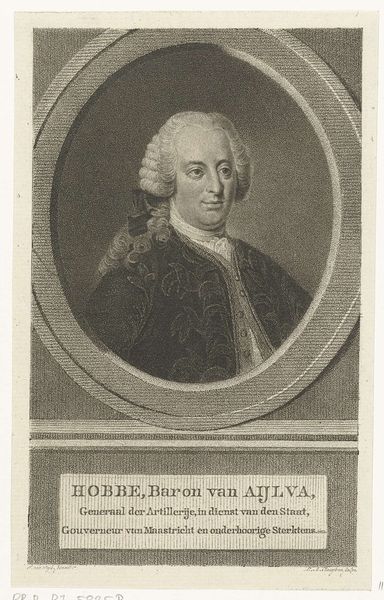
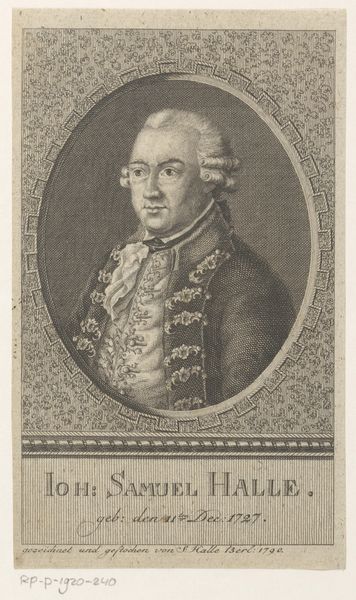
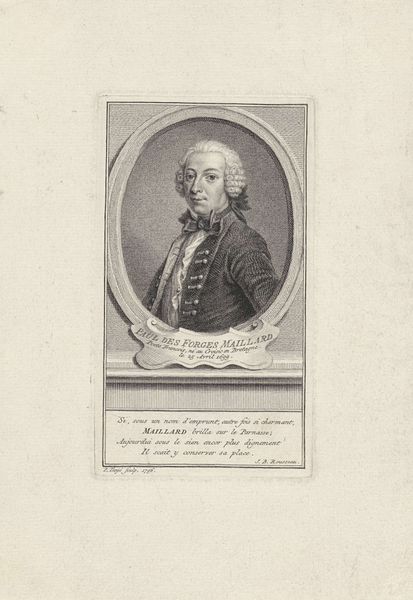
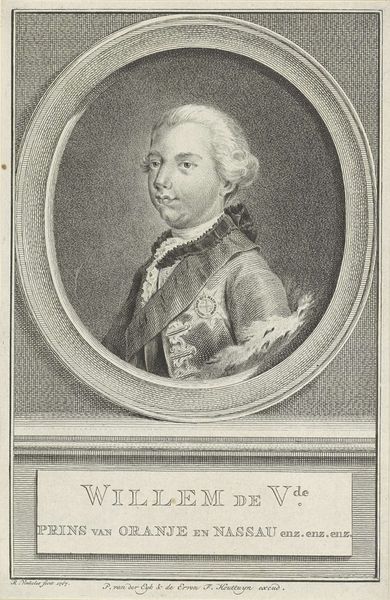
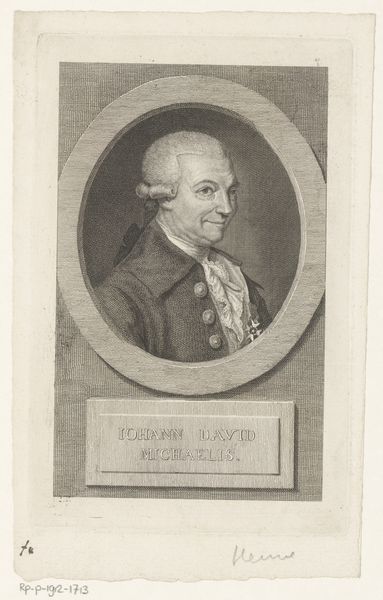
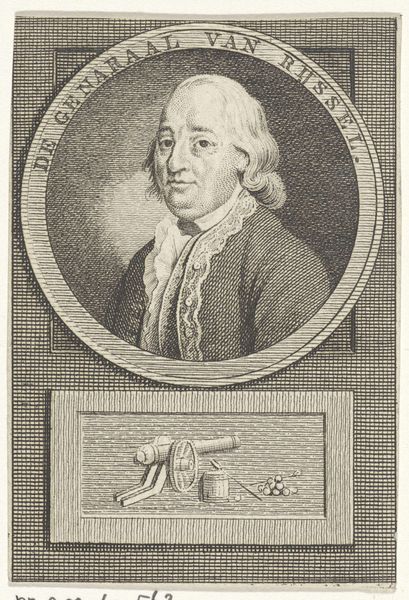
print, engraving
portrait
neoclacissism
history-painting
engraving
Dimensions: height 178 mm, width 117 mm
Copyright: Rijks Museum: Open Domain
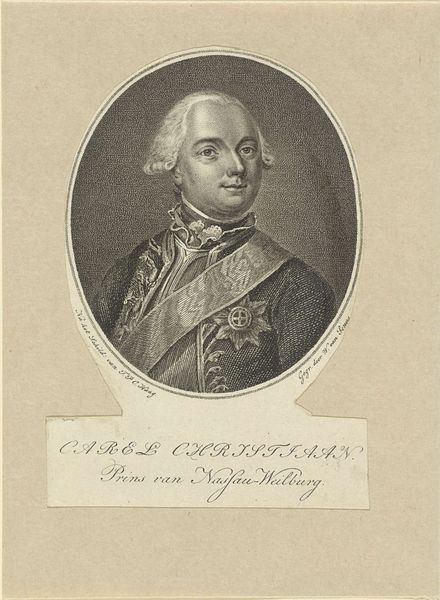
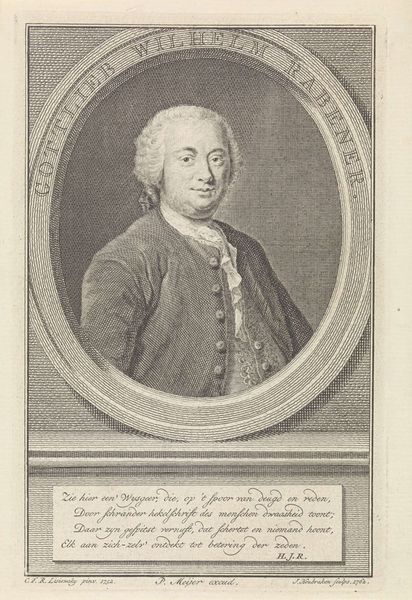
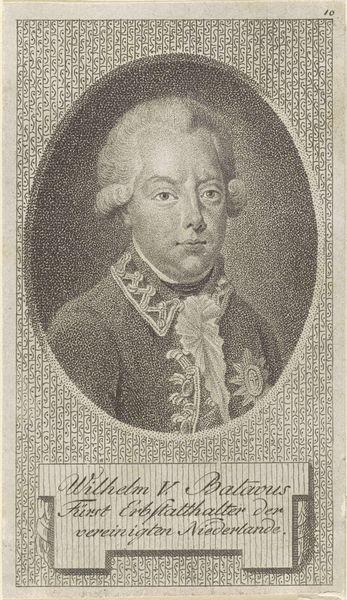
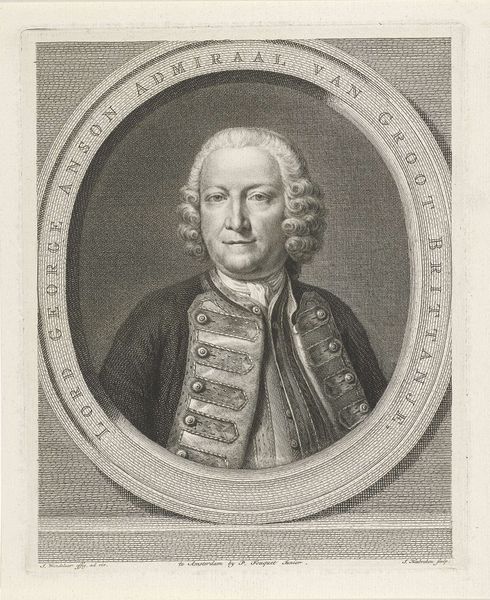
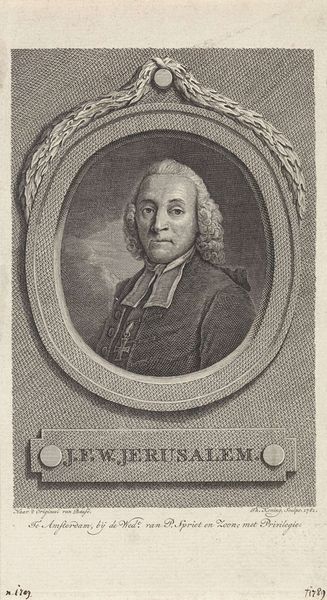
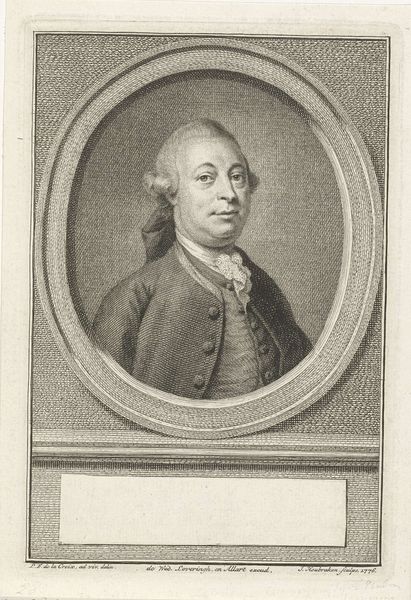
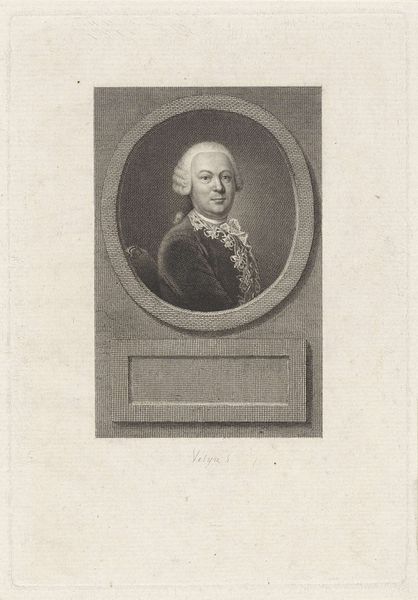
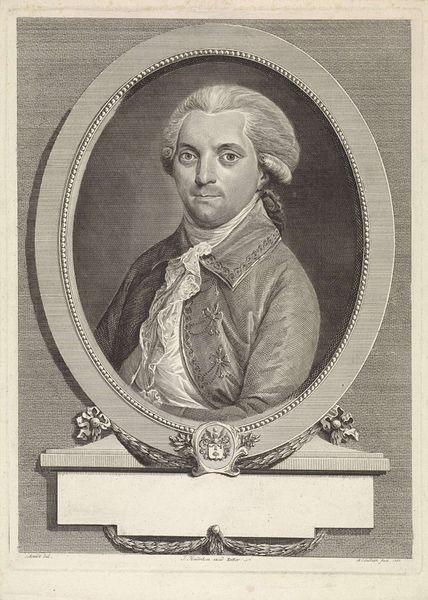
Lambertus Antonius Claessens made this small portrait of Louis Philip II, Duke of Orléans as an etching. The process of etching is fascinating. The artist would have coated a metal plate with a waxy, acid-resistant substance, then scratched an image into the wax. The plate is then immersed in acid, which bites into the exposed metal, creating lines. Ink is then applied to the plate, filling these lines, and the surface is wiped clean. Finally, the plate is pressed onto paper, transferring the inked image. The resulting print has a unique, slightly raised texture that's different from a simple drawing. Consider the labor involved in creating this small portrait and the level of skill required. Before photography, printmaking was essential for disseminating images of important people. This etching isn’t just a likeness of a Duke; it’s a testament to the power of reproducible imagery. It’s an early form of mass media, connecting to wider issues of politics, labor, and consumption.
Comments
No comments
Be the first to comment and join the conversation on the ultimate creative platform.
 React
React Comment