About this artwork
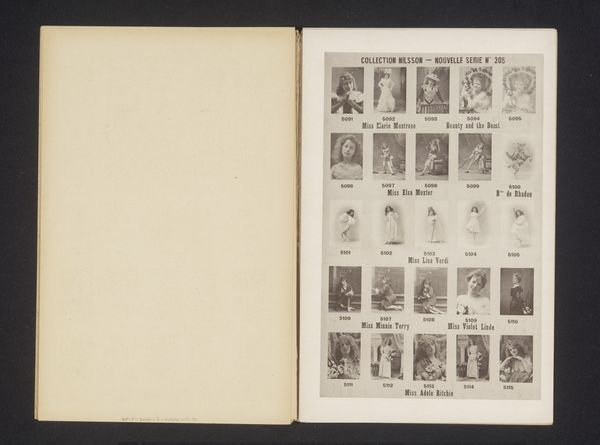
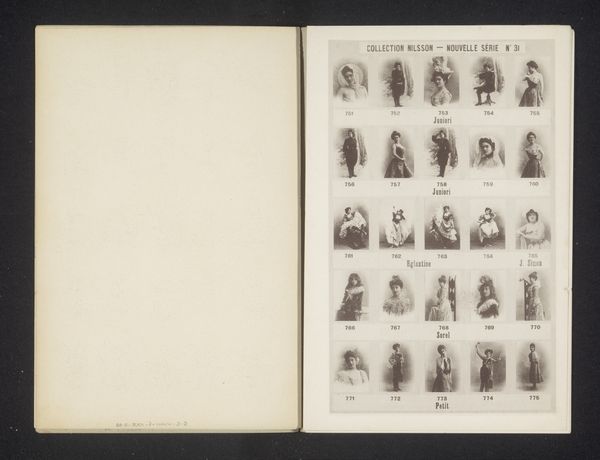
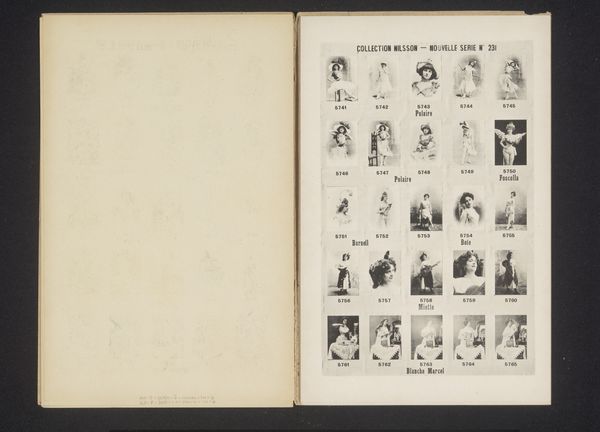
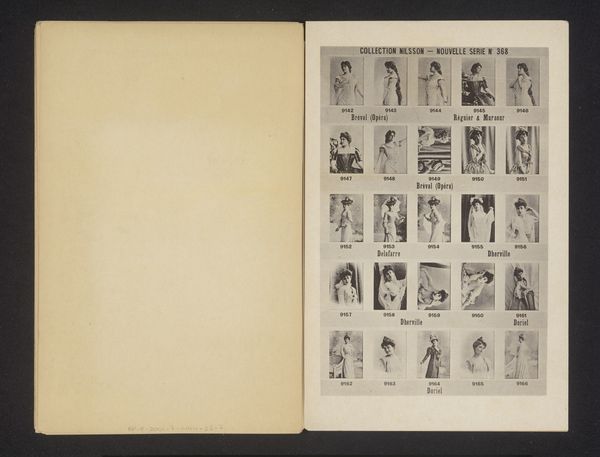
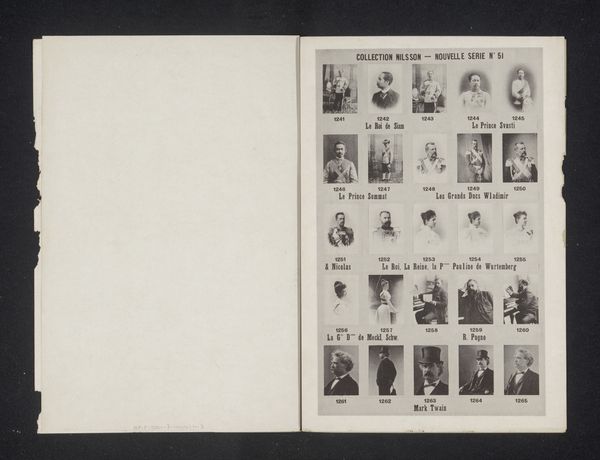
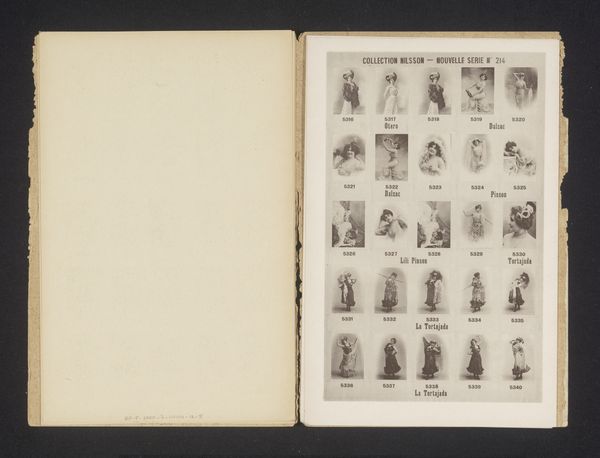
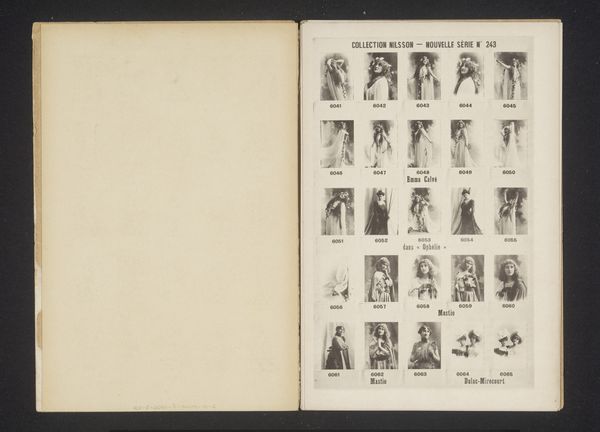
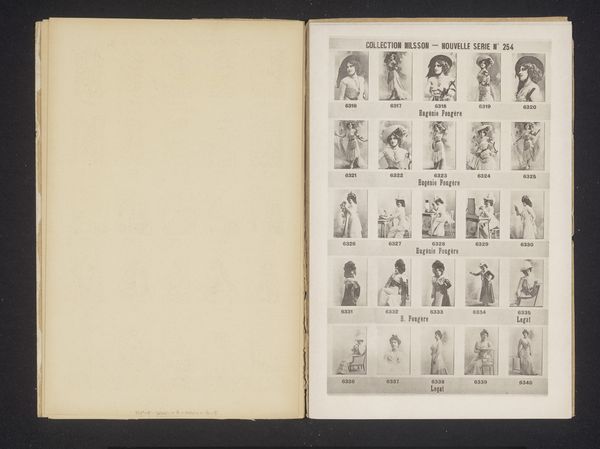
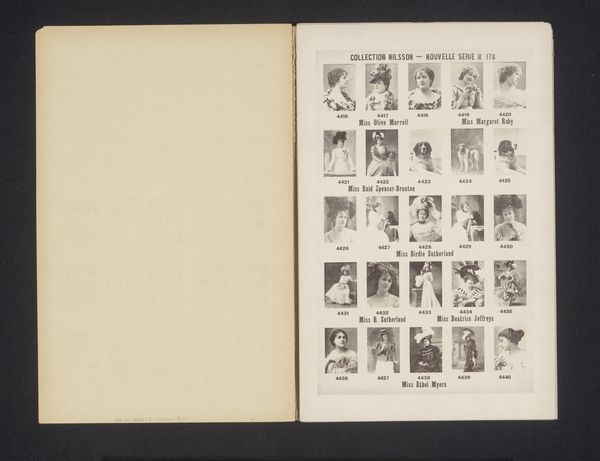
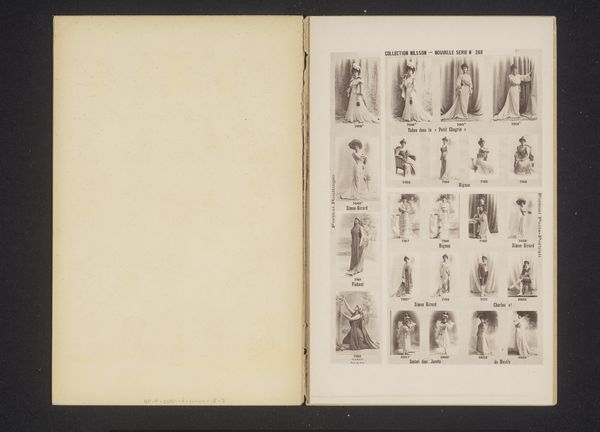
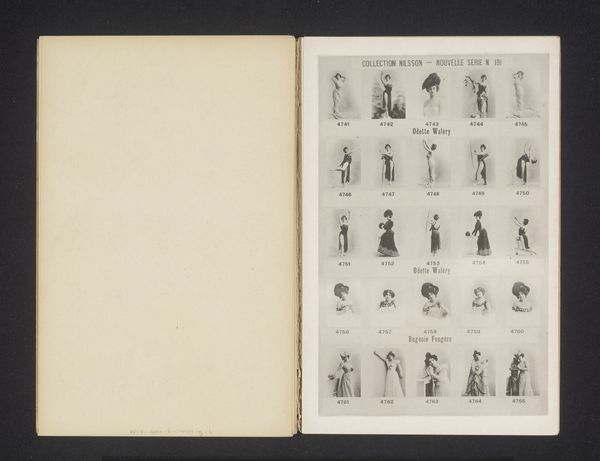
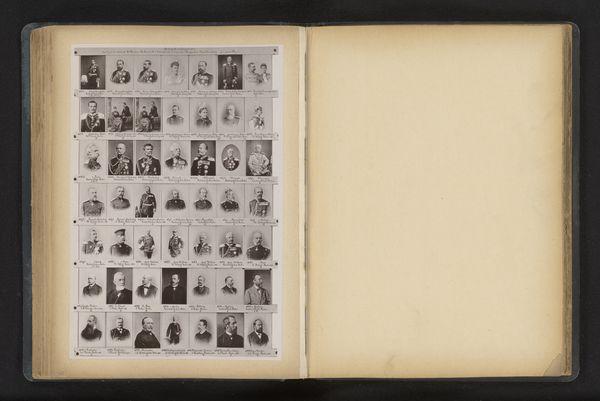
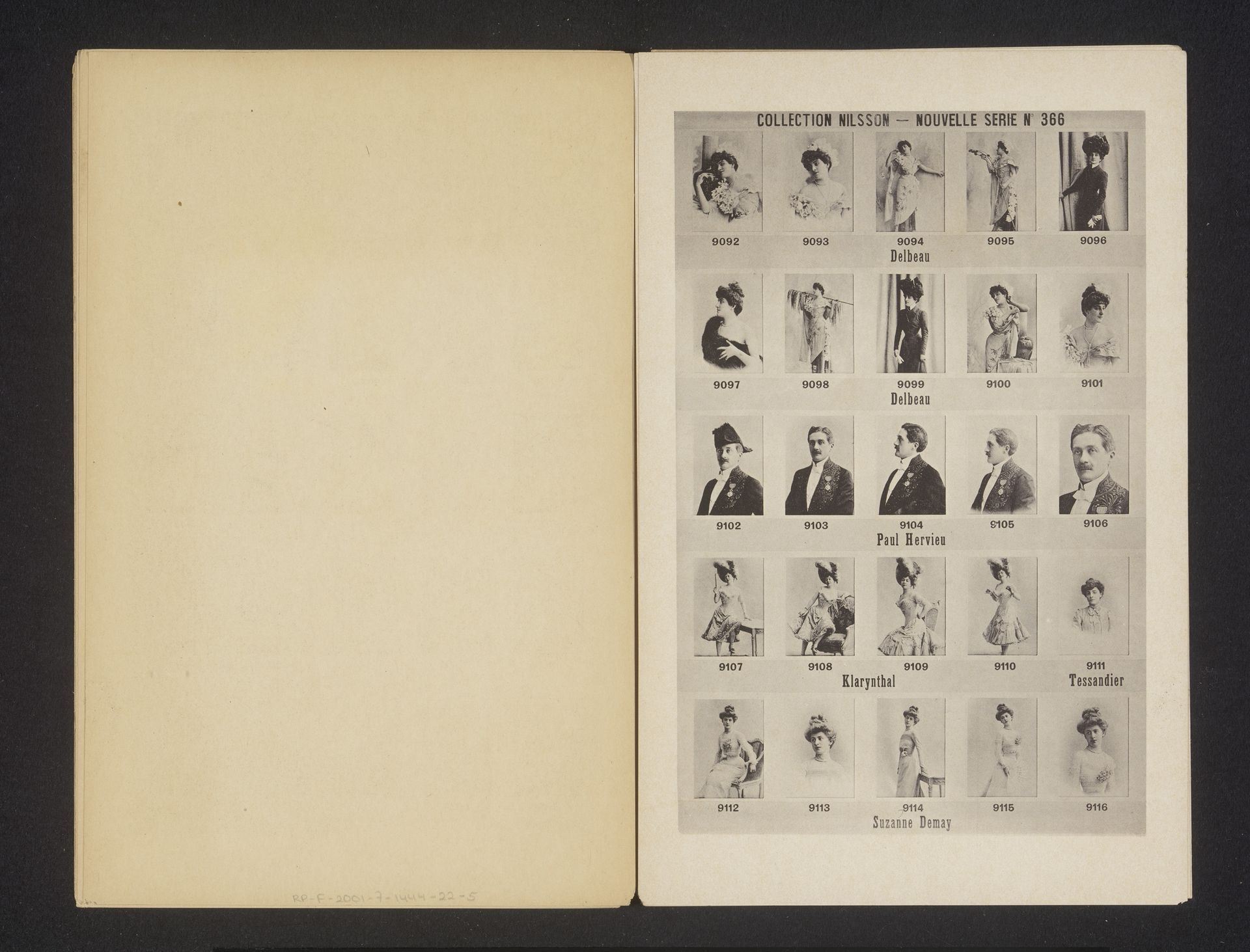
This is an unbound page, created at an unknown date by an anonymous artist, bearing twenty-five small portraits printed on a grid. This page is part of ‘Collection Nilsson – Nouvelle Serie N. 366’ and offers a fascinating insight into the visual culture of its time. The portraits, likely photographs, depict individuals from various walks of life. We can see performers like Delbeau, authors like Paul Herieu, and others, perhaps socialites or members of the bourgeoisie. The arrangement of these images in a grid format speaks to the growing culture of celebrity and the mass reproduction of images, likely in France, given that the text is in French. These kinds of images might have circulated as postcards or been collected in albums, functioning as a form of social currency. To fully understand the significance of this page, one would need to delve into archives of popular culture. What were the publications of the day? How did figures like these participate in public discourse? This page is a rich source of insight into the social structures of its time.
25 portretten van Delbeau, Paul Hervieu, Klarynthal, Tessandier en Suzanne Demay
before 1900

Artwork details
- Medium
- print, photography, albumen-print
- Dimensions
- height 240 mm, width 154 mm
- Copyright
- Rijks Museum: Open Domain
Tags
Comments
Share your thoughts
About this artwork
This is an unbound page, created at an unknown date by an anonymous artist, bearing twenty-five small portraits printed on a grid. This page is part of ‘Collection Nilsson – Nouvelle Serie N. 366’ and offers a fascinating insight into the visual culture of its time. The portraits, likely photographs, depict individuals from various walks of life. We can see performers like Delbeau, authors like Paul Herieu, and others, perhaps socialites or members of the bourgeoisie. The arrangement of these images in a grid format speaks to the growing culture of celebrity and the mass reproduction of images, likely in France, given that the text is in French. These kinds of images might have circulated as postcards or been collected in albums, functioning as a form of social currency. To fully understand the significance of this page, one would need to delve into archives of popular culture. What were the publications of the day? How did figures like these participate in public discourse? This page is a rich source of insight into the social structures of its time.
Comments
Share your thoughts