About this artwork
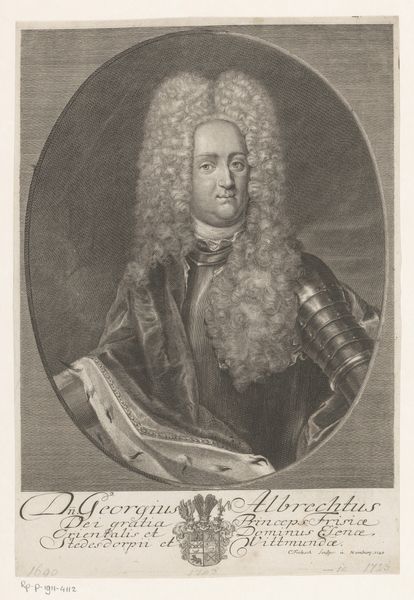
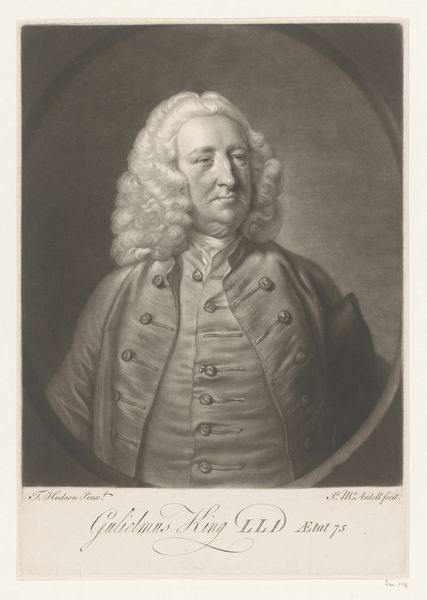
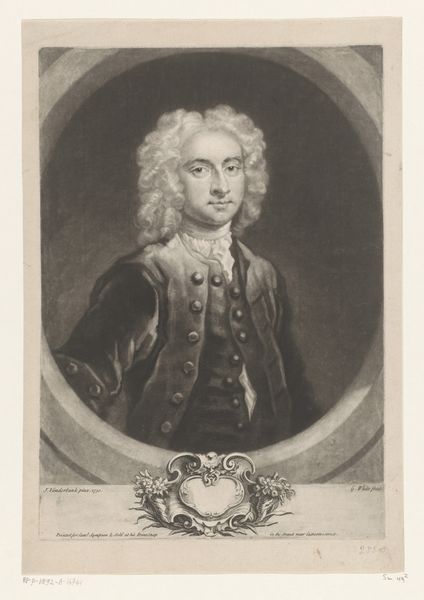
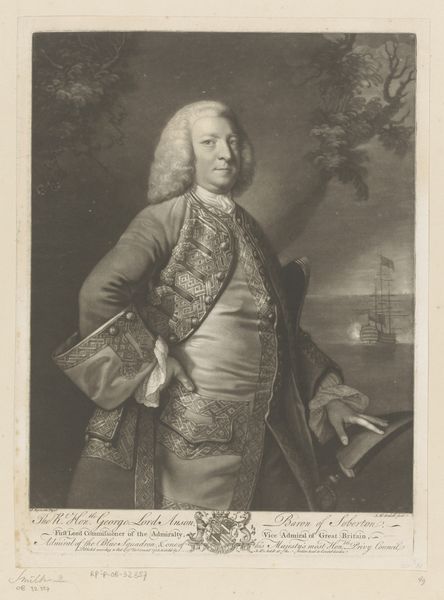
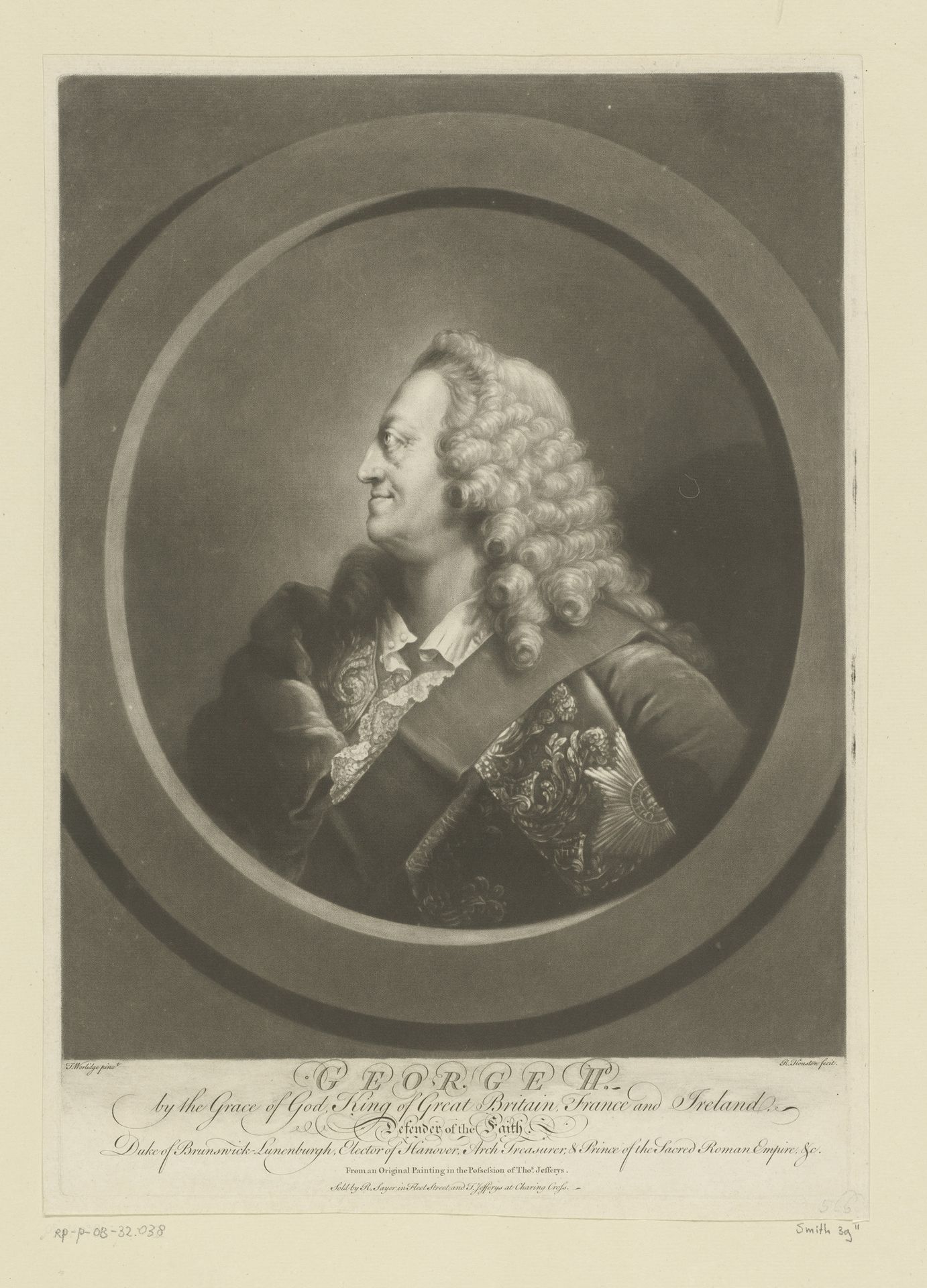
This is Richard Houston’s portrait of George II, King of Great Britain, France and Ireland, made sometime in the mid-18th century. Portraits of monarchs can often tell us more than just what they looked like. They were carefully constructed to project power, legitimacy, and cultural values. George II, despite being British royalty, was German by birth, and his reign occurred during a period of significant social and political change, including the rise of the British Empire and the Jacobite rebellions. Note how Houston captures George’s gaze, his elaborate wig, and the opulent attire, all serving to reinforce his status and authority. Yet, there’s also a sense of the personal, a glimpse of the man behind the crown. The portrait becomes a site where public image meets private identity, reflecting the complexities of leadership and representation in a rapidly changing world. The emotional depth and historical context invite us to consider the human dimensions of power and the narratives we construct around our leaders.
Portret van George II, koning van Groot-Brittannië
1753 - 1775

Richard Houston
1721 - 1775Location
RijksmuseumArtwork details
- Dimensions
- height 395 mm, width 277 mm
- Location
- Rijksmuseum
- Copyright
- Rijks Museum: Open Domain
Comments
Share your thoughts
About this artwork
This is Richard Houston’s portrait of George II, King of Great Britain, France and Ireland, made sometime in the mid-18th century. Portraits of monarchs can often tell us more than just what they looked like. They were carefully constructed to project power, legitimacy, and cultural values. George II, despite being British royalty, was German by birth, and his reign occurred during a period of significant social and political change, including the rise of the British Empire and the Jacobite rebellions. Note how Houston captures George’s gaze, his elaborate wig, and the opulent attire, all serving to reinforce his status and authority. Yet, there’s also a sense of the personal, a glimpse of the man behind the crown. The portrait becomes a site where public image meets private identity, reflecting the complexities of leadership and representation in a rapidly changing world. The emotional depth and historical context invite us to consider the human dimensions of power and the narratives we construct around our leaders.
Comments
Share your thoughts