1786 - 1854


Listen to curator's interpretation
Curatorial notes
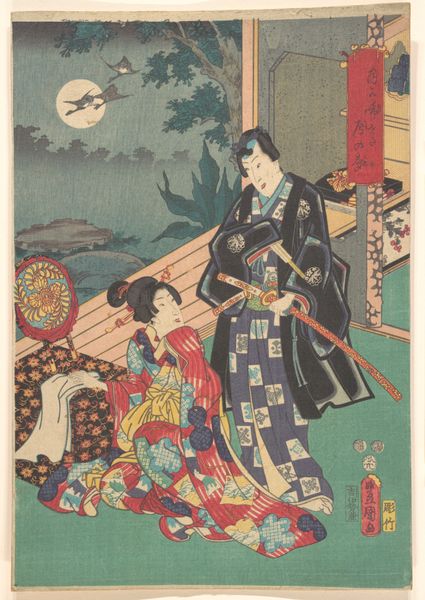
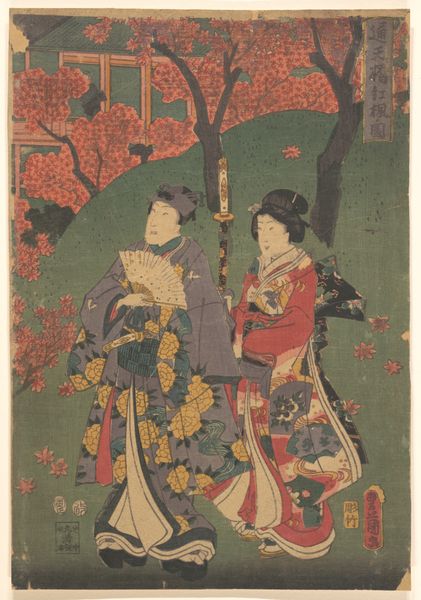
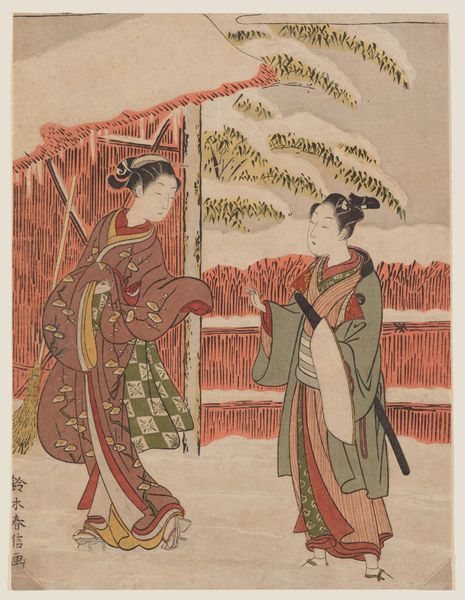
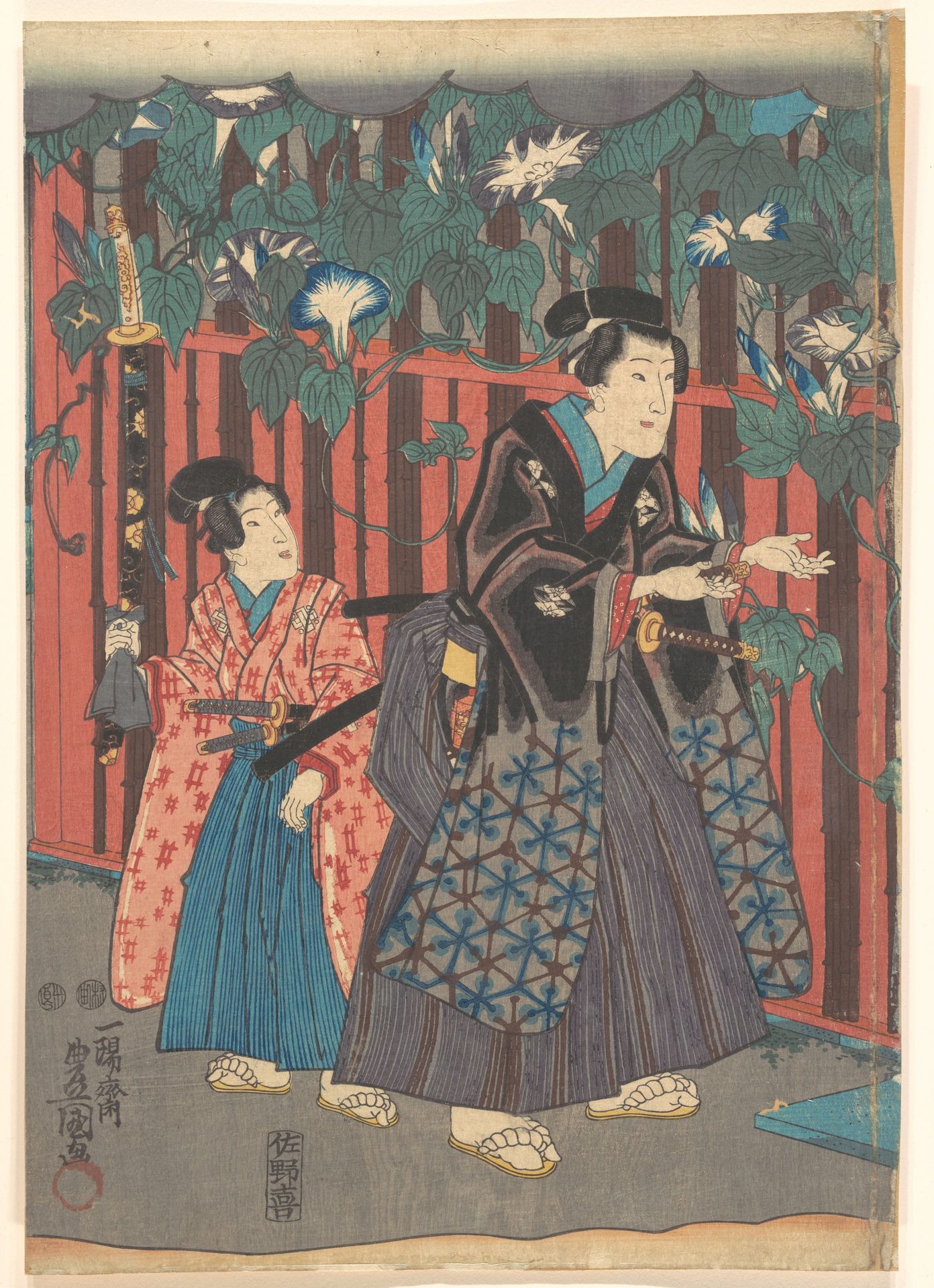
This woodblock print was created by Utagawa Kunisada, active in Japan in the late eighteenth and mid-nineteenth century. Here, morning glory vines climb a red fence, framing two figures who seem to be in a theatrical setting. The morning glory, or asagao, enjoyed a surge of popularity in Japanese gardens during the Edo period. These flowers appear in art as symbols of the fleeting nature of beauty. One also sees the sword, a signifier of the samurai class, and together with the kimono patterns they create a semiotic constellation that speaks to identity and status. Consider the act of framing itself – the way the flowers and fence guide our gaze. Across cultures, the use of botanical elements to surround and soften a scene can be traced through classical Roman frescoes, where vines adorned walls, symbolizing prosperity. This motif has resurfaced, evolved, and taken on new meanings, engaging viewers on a subconscious level and leaving an emotional impact on the soul.