![[Confederate Trestle Work on Southside Railroad, Virginia] by Andrew Joseph Russell](https://d2w8kbdekdi1gv.cloudfront.net/eyJidWNrZXQiOiAiYXJ0ZXJhLWltYWdlcy1idWNrZXQiLCAia2V5IjogImFydHdvcmtzLzQ2MGY4NTdmLTFhOWUtNGU5Yi04ZmYxLWE3YTdkMmQxYTAxNC80NjBmODU3Zi0xYTllLTRlOWItOGZmMS1hN2E3ZDJkMWEwMTRfZnVsbC5qcGciLCAiZWRpdHMiOiB7InJlc2l6ZSI6IHsid2lkdGgiOiAxOTIwLCAiaGVpZ2h0IjogMTkyMCwgImZpdCI6ICJpbnNpZGUifX19)
About this artwork
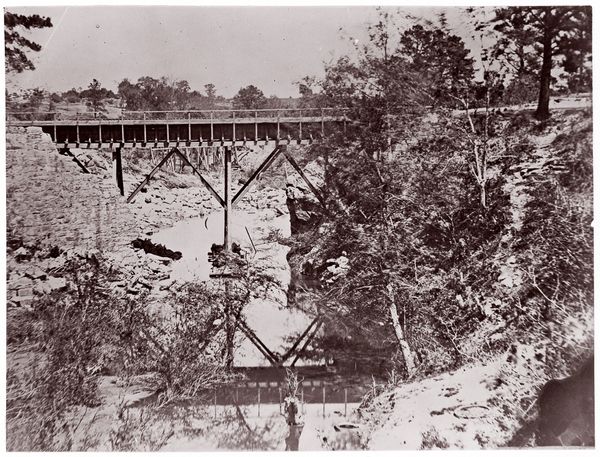
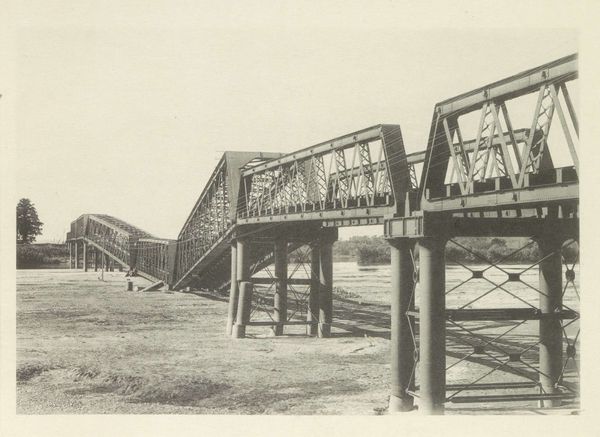
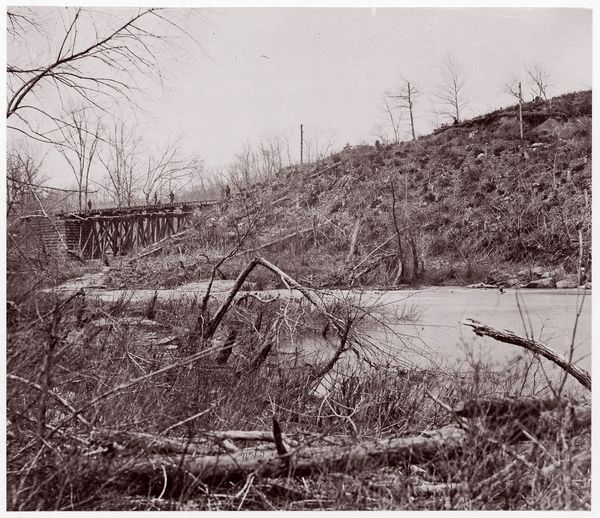
Andrew Joseph Russell captured this stark image of the Confederate Trestle Work on the Southside Railroad in Virginia with a camera. Here, the bridge looms, a symbol of both connection and vulnerability. Its skeletal frame evokes the Tower of Babel, embodying human ambition destined for ruin. The broken trestle speaks of a fractured society, mirroring the Tower's collapse. Throughout history, broken bridges carry profound symbolic weight, signifying disrupted connections and failed aspirations. Consider the Ponte Vecchio in Florence, spared from destruction in World War II, it became a symbol of resilience and continuity, in stark contrast to this scene. The trestle’s desolate state elicits a collective memory of conflict and division, stirring emotions buried deep within our cultural psyche. This image serves as a potent reminder of the cyclical nature of history, where structures of unity can crumble, leaving behind the haunting echoes of what once was.
[Confederate Trestle Work on Southside Railroad, Virginia]
1861 - 1865

Andrew Joseph Russell
1830 - 1902
The Metropolitan Museum of Art
Metropolitan Museum of Art, New York, NYArtwork details
- Dimensions
- 15.2 x 21.1 cm (6 x 8 5/16 in.)
- Location
- Metropolitan Museum of Art, New York, NY
- Copyright
- Public Domain
Comments
Share your thoughts
About this artwork
Andrew Joseph Russell captured this stark image of the Confederate Trestle Work on the Southside Railroad in Virginia with a camera. Here, the bridge looms, a symbol of both connection and vulnerability. Its skeletal frame evokes the Tower of Babel, embodying human ambition destined for ruin. The broken trestle speaks of a fractured society, mirroring the Tower's collapse. Throughout history, broken bridges carry profound symbolic weight, signifying disrupted connections and failed aspirations. Consider the Ponte Vecchio in Florence, spared from destruction in World War II, it became a symbol of resilience and continuity, in stark contrast to this scene. The trestle’s desolate state elicits a collective memory of conflict and division, stirring emotions buried deep within our cultural psyche. This image serves as a potent reminder of the cyclical nature of history, where structures of unity can crumble, leaving behind the haunting echoes of what once was.
Comments
Share your thoughts