engraving
#
portrait
#
baroque
#
history-painting
#
engraving
Dimensions: height 161 mm, width 117 mm
Copyright: Rijks Museum: Open Domain
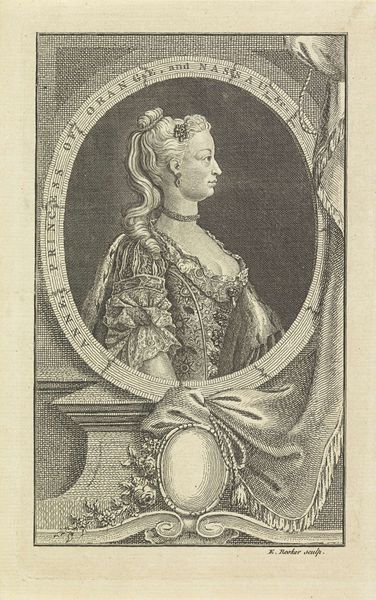
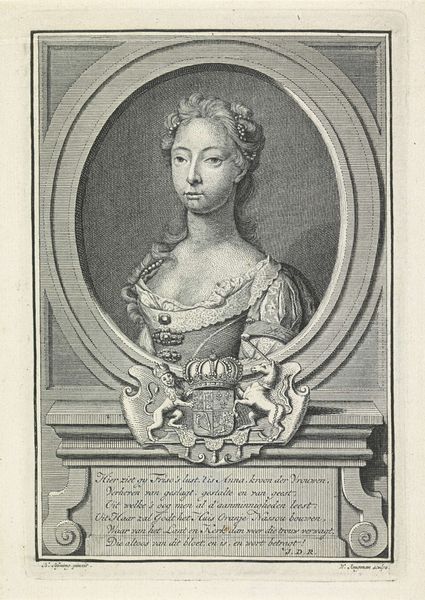
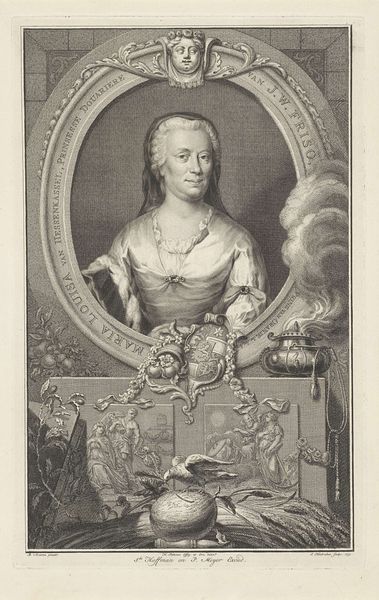
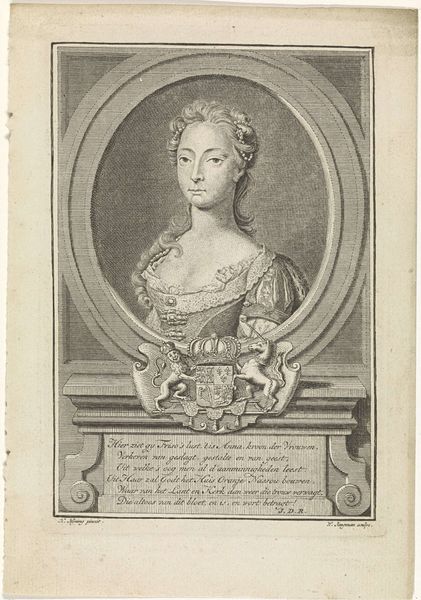
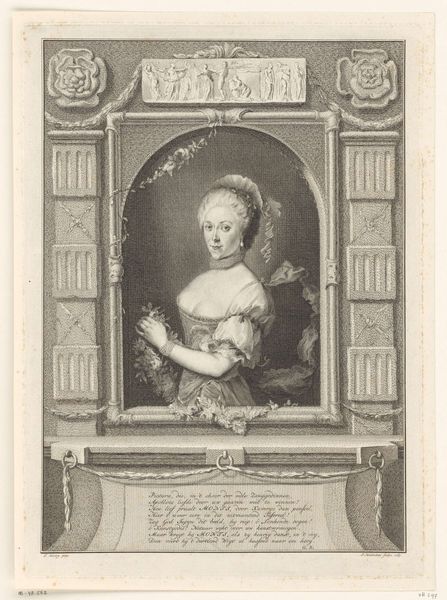
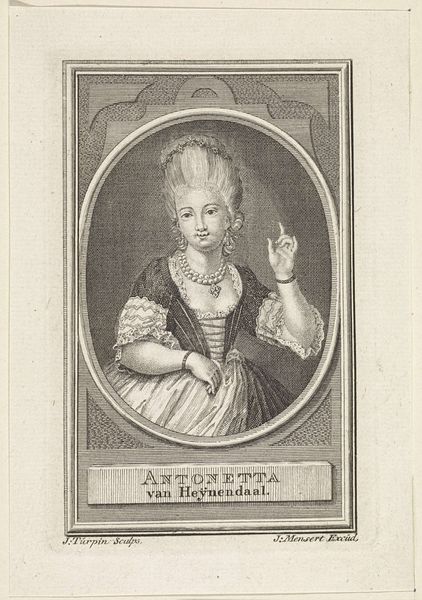
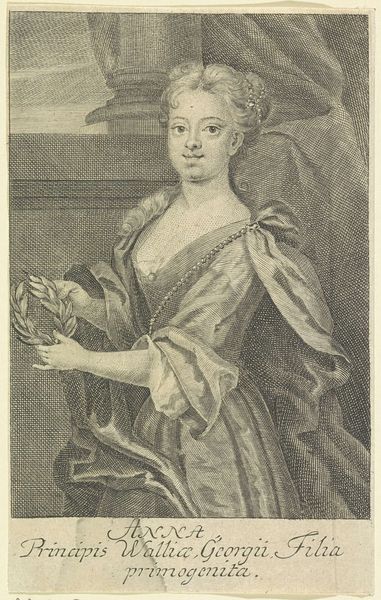
Editor: This engraving, titled "Portret van Carolina, prinses van Oranje-Nassau," was created in 1752 by Frans de Bakker. The subject looks…regal, but also somewhat confined by the ornate frame and inscription. What story do you think this portrait is trying to tell? Curator: It's important to recognize the Baroque style’s function here—to convey power and lineage. While seemingly simple, portraiture in the 18th century was deeply political. How do you think Carolina’s identity as a woman in power during that era impacts how we should read this piece? Editor: I guess it emphasizes the limitations she faced, even within royalty. The engraving almost feels like she’s being presented as a symbol, more than as an individual. Is the inscription related? Curator: Absolutely. It explicitly connects Carolina to the legacy of the House of Orange and British Royalty, underscoring the importance of dynastic succession and the roles expected of women in preserving political stability. What is really striking here is to recognize that the work is in fact meant to emphasize her importance in perpetuating the male blood line in this time period. Editor: So, the portrait isn’t just about capturing her likeness; it’s about solidifying her place within a patriarchal system. Curator: Exactly. Consider also that engravings allowed for wider distribution, turning Carolina’s image into a form of propaganda, subtly reinforcing the status quo. How might the average citizen have perceived this image in 1752? Editor: Perhaps it was meant to inspire loyalty, to assure the public of a strong and stable future under Orange rule? I see this artwork less as an art piece, but more as a socio-historical narrative frozen in time, full of ideas about power and gender roles. Curator: Precisely. This is exactly what thinking about the art and broader implications is all about.
Comments
No comments
Be the first to comment and join the conversation on the ultimate creative platform.
 Collect
 React
React Comment
More like this