1774
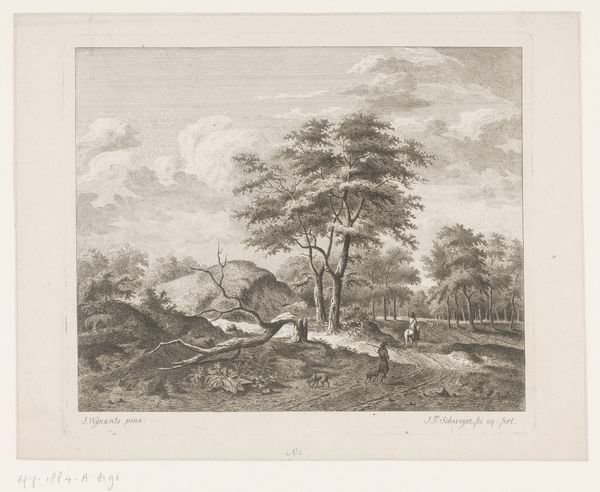
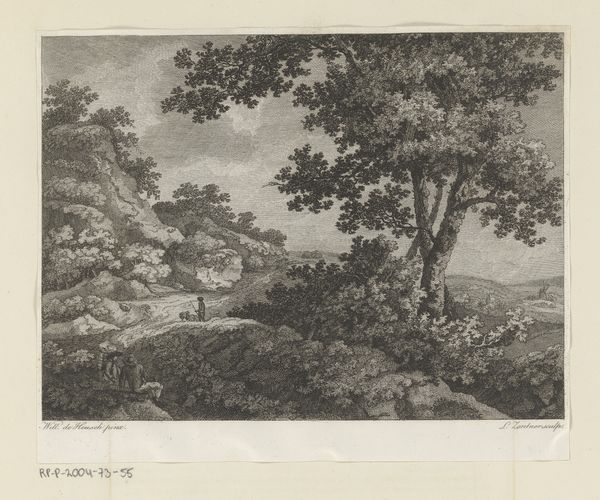
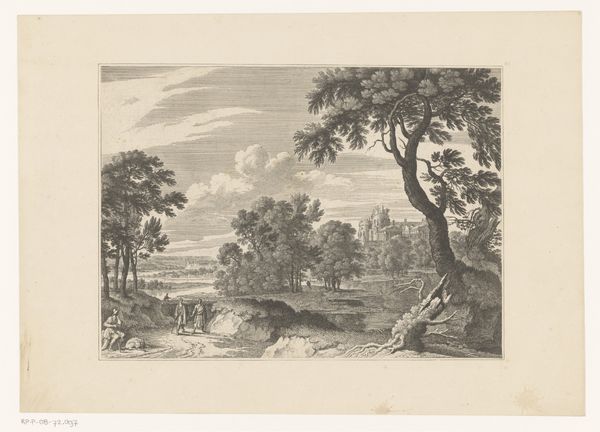
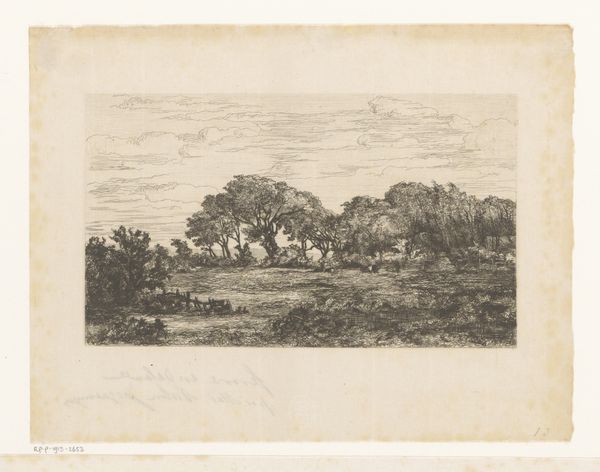
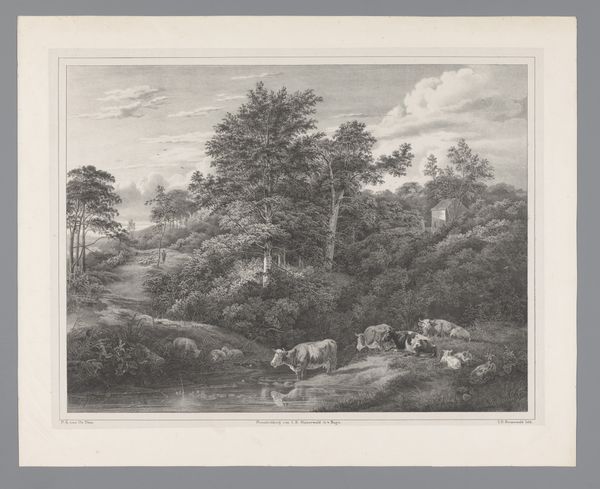
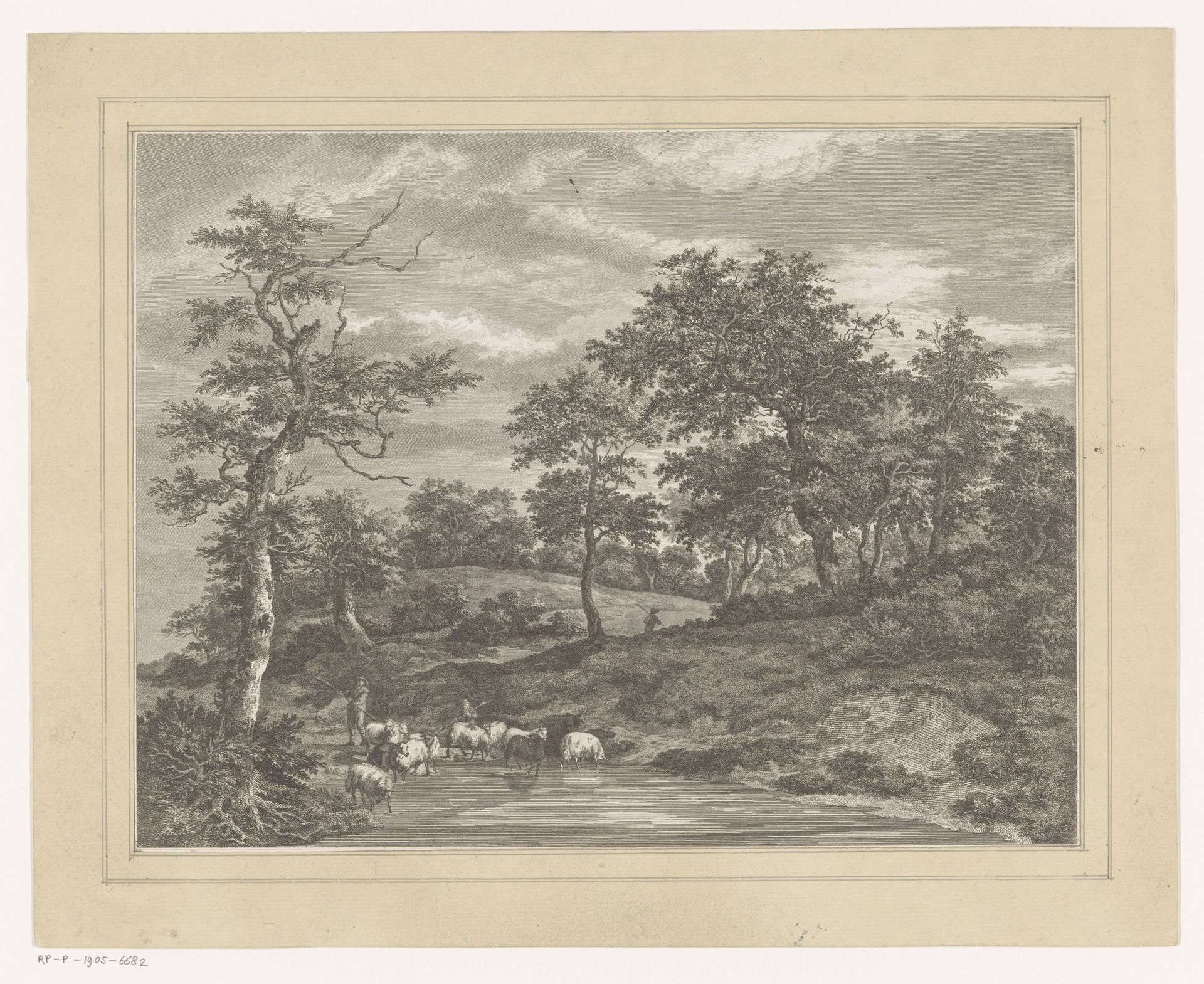
Boslandschap met herder bij een vijver

Listen to curator's interpretation
Curatorial notes
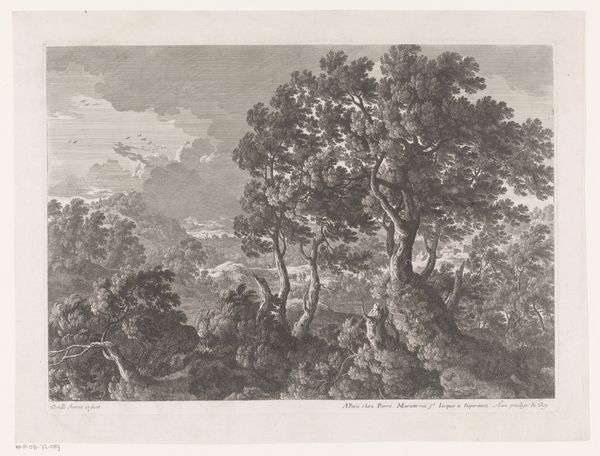
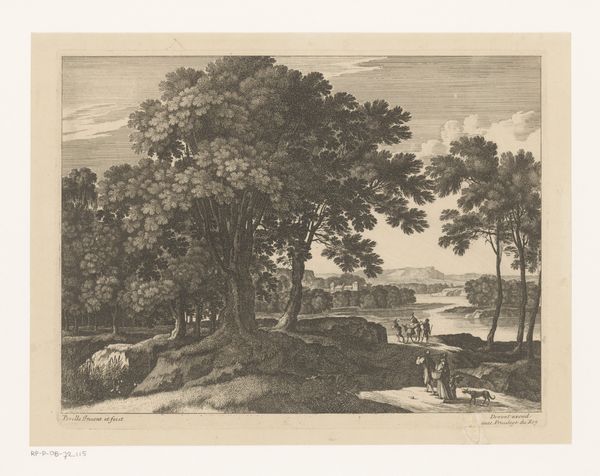
Curator: Allow me to introduce "Boslandschap met herder bij een vijver," or "Wooded Landscape with Shepherd by a Pool," an engraving made in 1774, crafted by Louis Joseph Masquelier. Editor: Well, my first thought is that it’s remarkably still. A tranquil scene rendered in such precise detail. Almost dreamlike. Curator: The stillness aligns with the Neoclassical sensibilities of the time. Masquelier demonstrates a keen awareness of line and form, using engraving to create a highly structured composition. Notice how the trees frame the central scene. Editor: And the interplay of light and shadow enhances the sense of depth. But I wonder, to what extent does this idealized vision reflect the realities of pastoral life in that era? Were such scenes common or was this purely aspirational? Curator: Good questions. This kind of imagery served a function. Neoclassical art frequently invoked pastoral scenes, and it presented a purified vision of life close to nature. Its political context should not be ignored; an engraving was infinitely more reproducible than an oil painting. This made the image widely accessible to society. Editor: Absolutely, it's like mass producing "utopia" - for whom, and for what purpose? The humble shepherd becomes symbolic, part of a larger sociopolitical narrative. Curator: Indeed. Moreover, observe the engraving itself. Its material qualities contribute to the work’s aesthetic value, highlighting technical precision but lacking warmth perhaps? Editor: I agree; that meticulous control might feel sterile to some modern viewers. But the historical insight into its Neoclassical origins helps contextualize my own perspective. Curator: Precisely, the form guides our experience. The way the engraving medium emphasizes linear clarity impacts how we perceive the work and understand the period it represents. Editor: Thank you for revealing the method in the artist’s meticulousness! Curator: And thank you for prompting considerations beyond form. Art is always more expansive with multiple voices joining in!