About this artwork
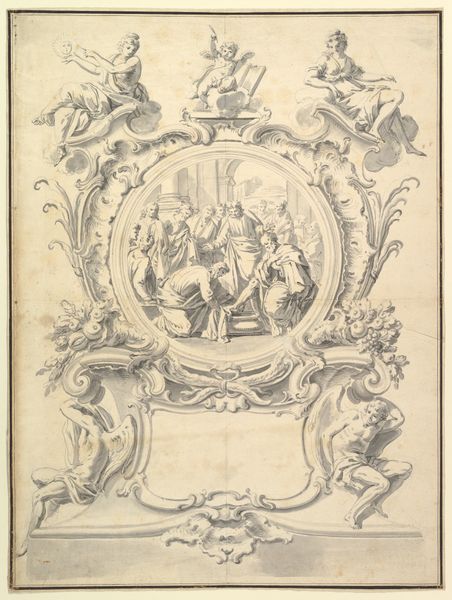
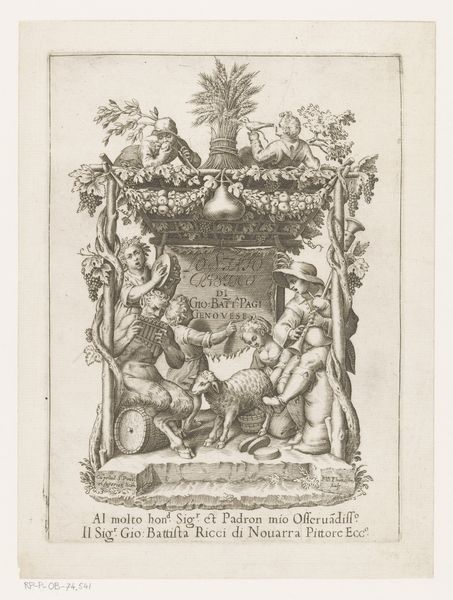
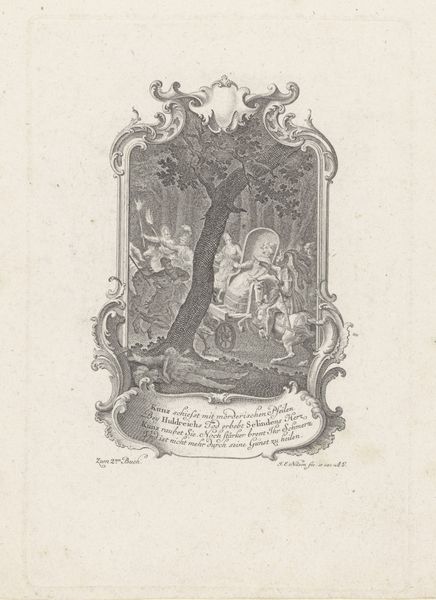
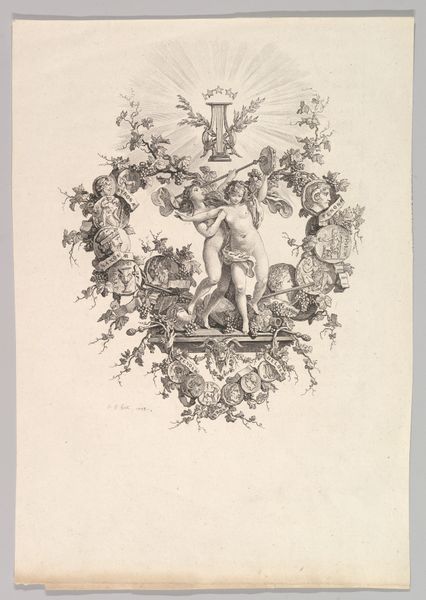
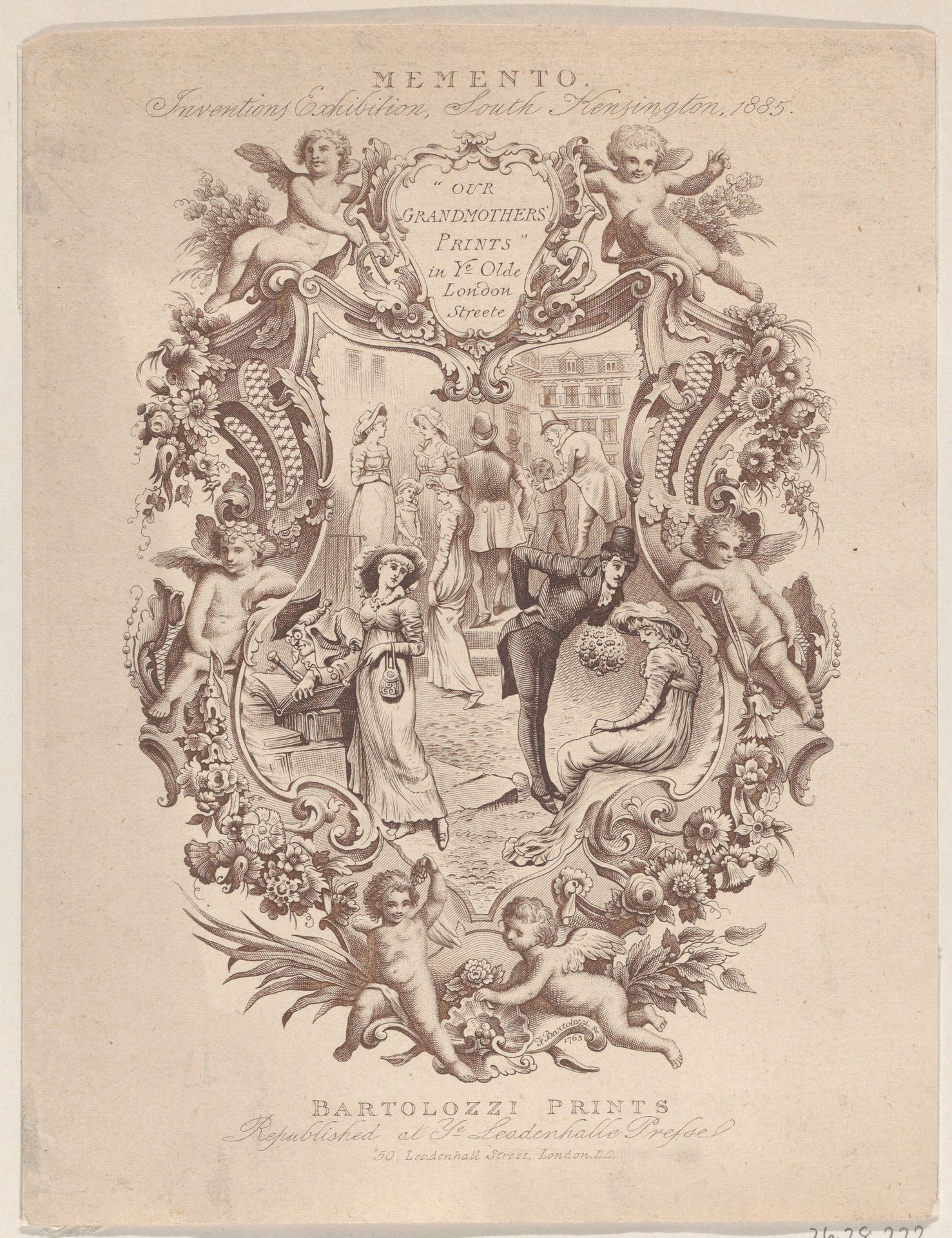
This is an advertisement for the "Memento" exhibition, South Kensington, 1885, showcasing prints "in Ye Olde London Streete." The print revives the aesthetic of Francesco Bartolozzi, an artist who died seventy years prior, and speaks to a Victorian fascination with the past. The image, replete with cherubs and floral ornamentation, frames scenes of leisure and social interaction. The figures, all white, are depicted in what would have been fashionable dress, emphasizing the period’s rigid class structure. A striking feature is the inscription "Our Grandmothers' Prints," evoking nostalgia and the sentimentalization of history. This appeal to an imagined past idealizes the role of women within domestic and decorative spheres. What are the implications of idealizing the past, especially in an era marked by industrial progress and social change? Consider how historical narratives are constructed and whose stories are being told and remembered. As you reflect on the advertisement, what feelings does it stir within you about our relationship to history, identity, and representation?
Advertisement for Memento, Inventions Exhibition, South Kensington, 1885
1880 - 1890

Francesco Bartolozzi
1728 - 1815
The Metropolitan Museum of Art
Metropolitan Museum of Art, New York, NYArtwork details
- Medium
- drawing, print, engraving
- Dimensions
- Sheet: 7 1/8 × 5 1/2 in. (18.1 × 13.9 cm)
- Location
- Metropolitan Museum of Art, New York, NY
- Copyright
- Public Domain
Tags
Comments
Share your thoughts
About this artwork
This is an advertisement for the "Memento" exhibition, South Kensington, 1885, showcasing prints "in Ye Olde London Streete." The print revives the aesthetic of Francesco Bartolozzi, an artist who died seventy years prior, and speaks to a Victorian fascination with the past. The image, replete with cherubs and floral ornamentation, frames scenes of leisure and social interaction. The figures, all white, are depicted in what would have been fashionable dress, emphasizing the period’s rigid class structure. A striking feature is the inscription "Our Grandmothers' Prints," evoking nostalgia and the sentimentalization of history. This appeal to an imagined past idealizes the role of women within domestic and decorative spheres. What are the implications of idealizing the past, especially in an era marked by industrial progress and social change? Consider how historical narratives are constructed and whose stories are being told and remembered. As you reflect on the advertisement, what feelings does it stir within you about our relationship to history, identity, and representation?
Comments
Share your thoughts