drawing, print, etching, engraving
#
drawing
#
pen drawing
#
dutch-golden-age
# print
#
etching
#
landscape
#
geometric
#
line
#
cityscape
#
engraving
Dimensions: height 400 mm, width 540 mm
Copyright: Rijks Museum: Open Domain
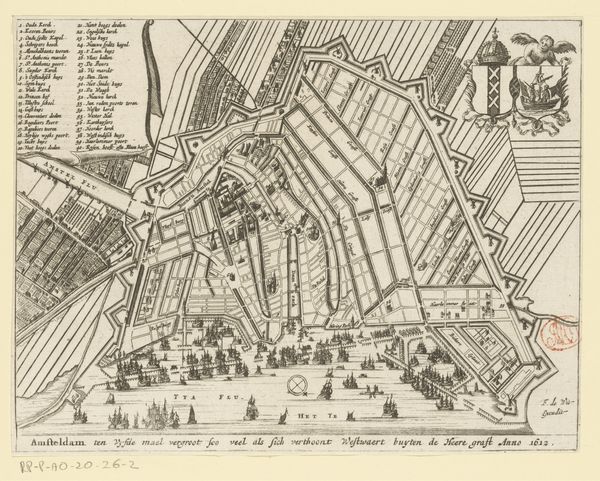
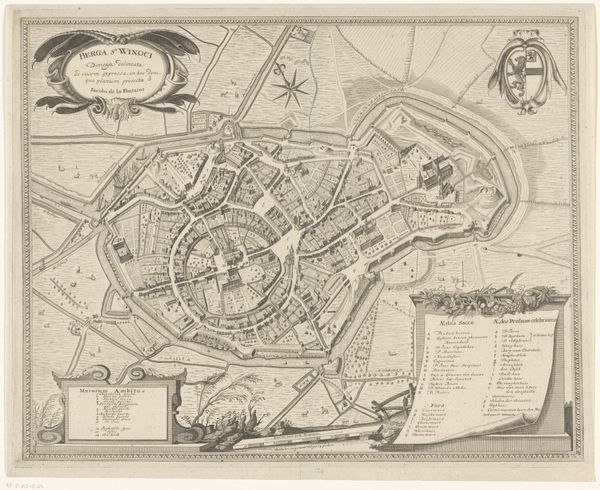
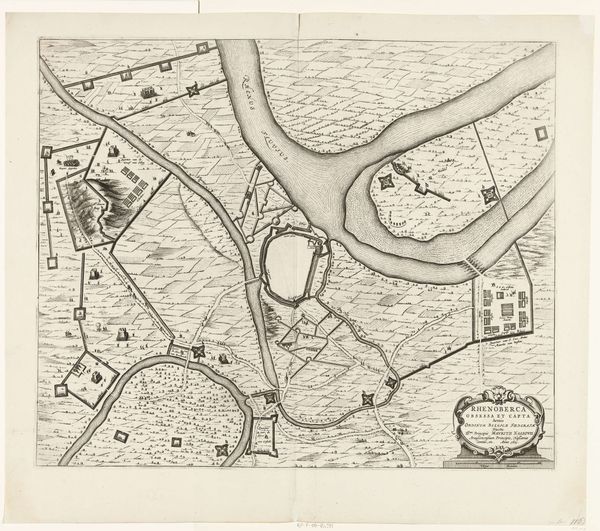
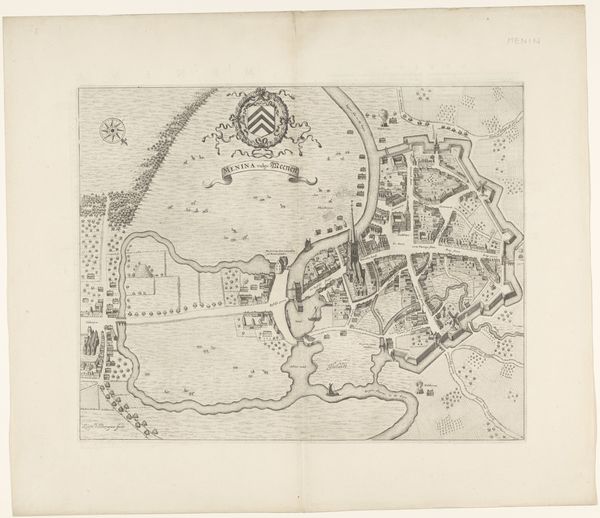
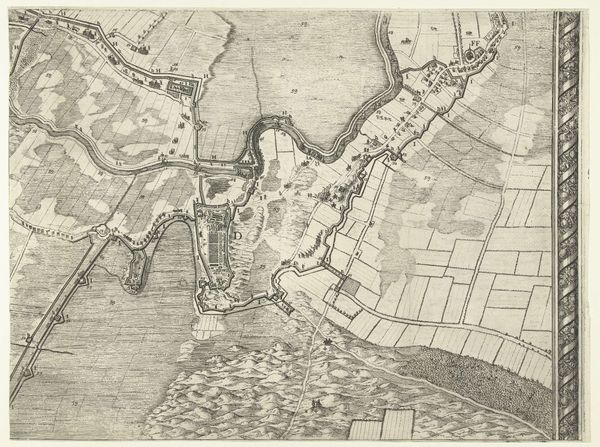
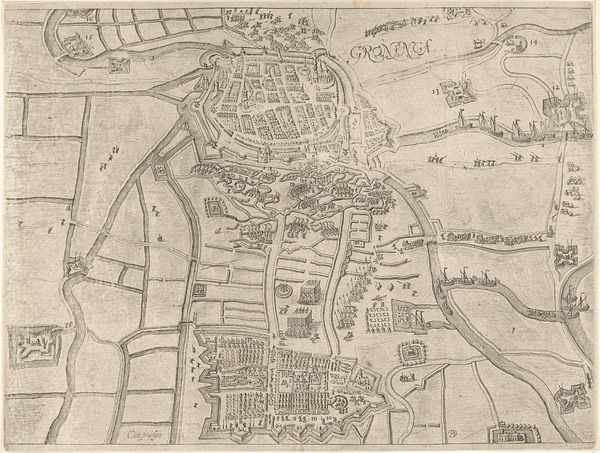
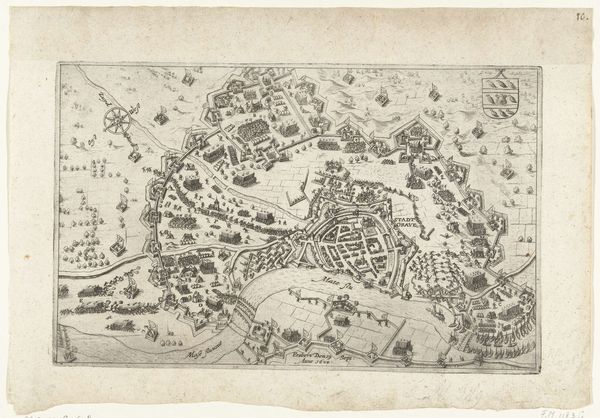
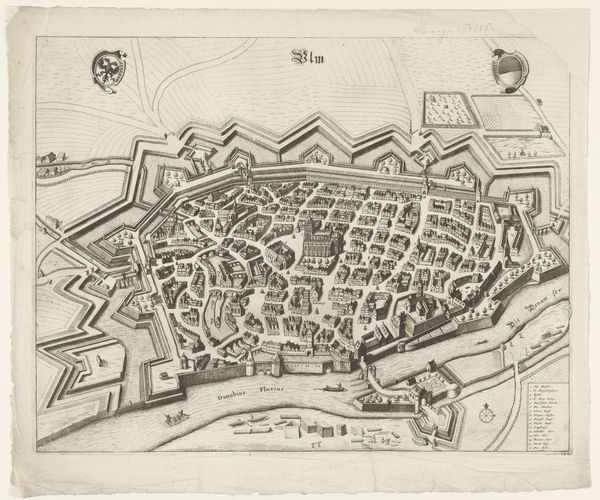
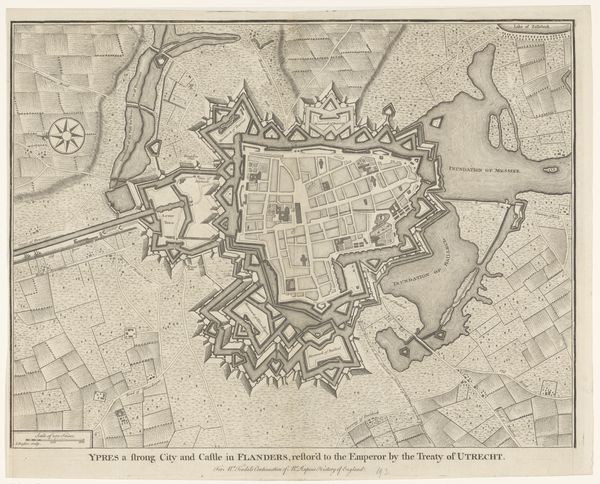
Balthasar Florisz. van Berckenrode made this engraving of the Siege of Breda in 1637 using the technique of etching. The original copperplate would have been coated with a waxy, acid-resistant substance called 'ground.' Then, the artist would have used a sharp needle to scratch away the ground, exposing the metal beneath, and dipped the plate in acid, which bit into the lines. The incised plate would be inked, the surface wiped clean, and then pressed onto paper, transferring the image. This process allowed for relatively quick reproduction, making images like this accessible to a wide audience. The social significance of this map lies in its function as both documentation and propaganda, carefully crafted to portray military events with precision. The making of such images would have involved a division of labor, with specialized artisans contributing to different stages of the process. Ultimately, this print reminds us that even seemingly straightforward images are the result of complex material processes and social contexts.
Comments
No comments
Be the first to comment and join the conversation on the ultimate creative platform.
 Collect
 React
React Comment
More like this