About this artwork
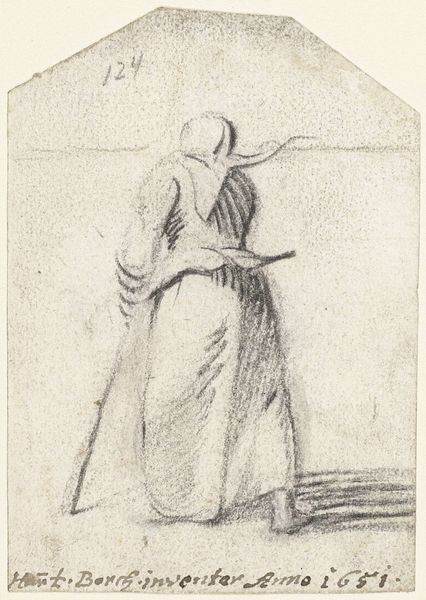
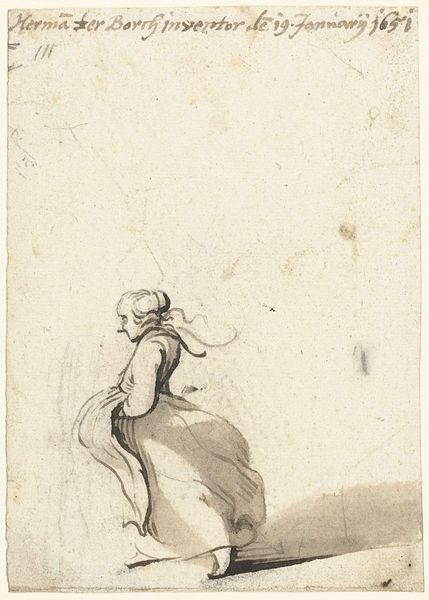
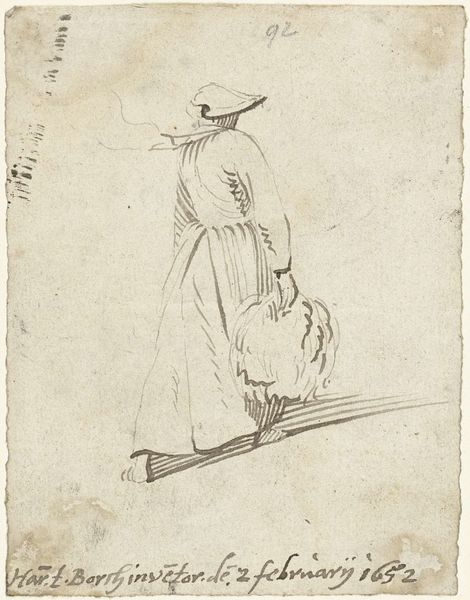
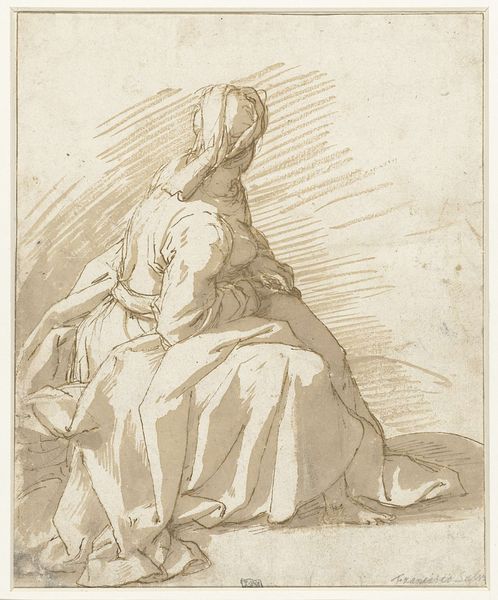
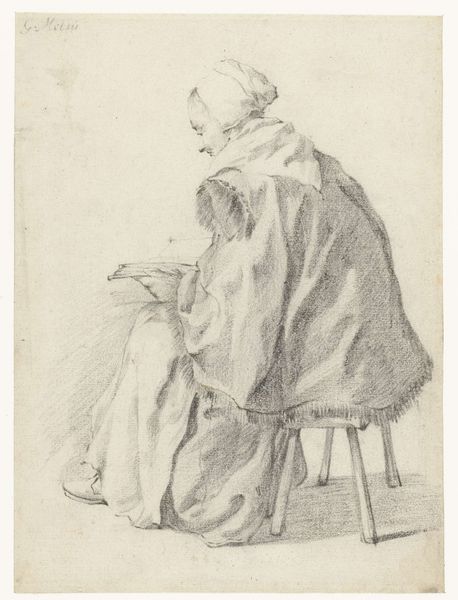
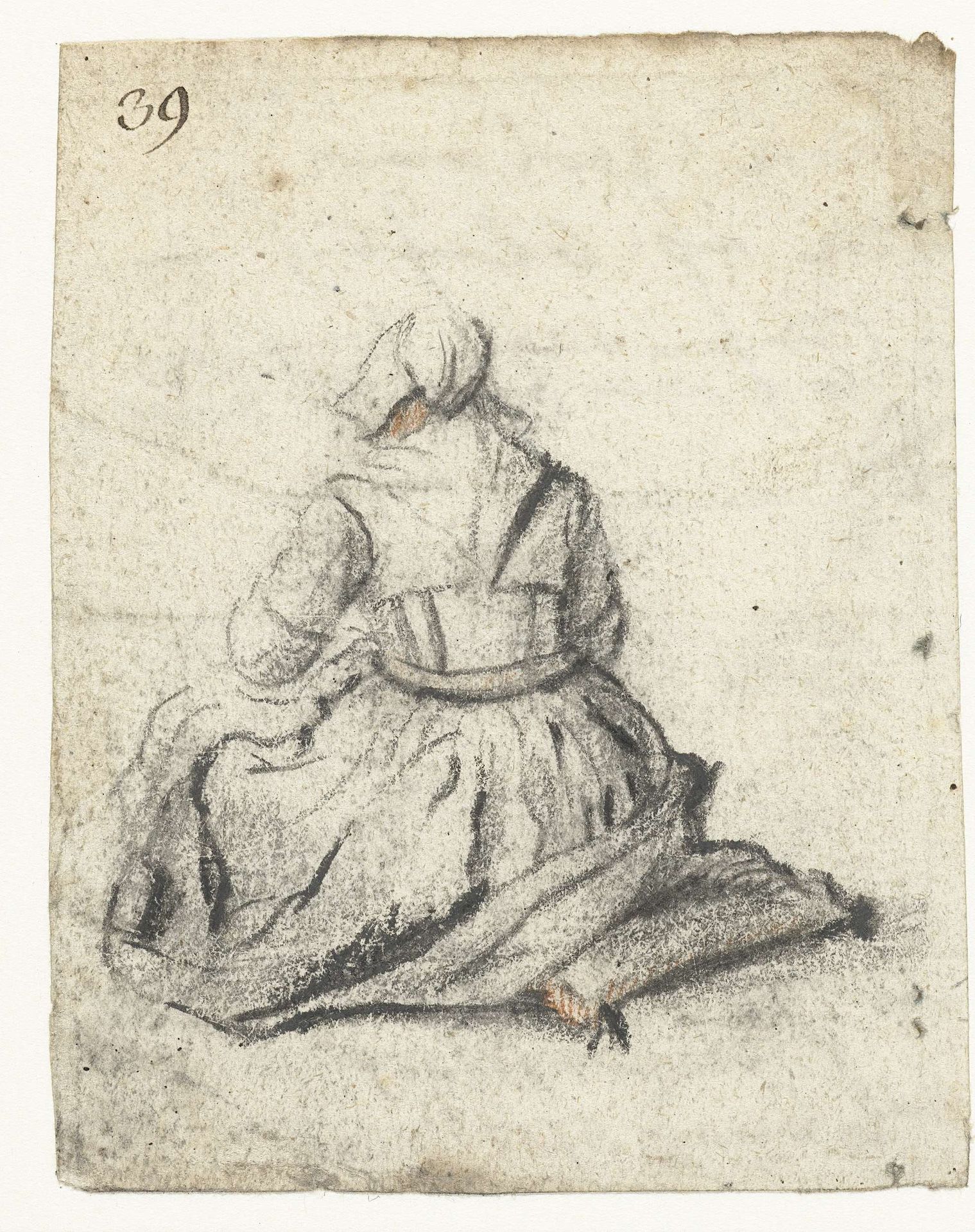
Harmen ter Borch rendered this intimate drawing of a woman seated on a cushion sometime in the mid-17th century. Her turned back and modest attire evoke an air of domesticity, yet also hint at hidden depths. Consider the averted gaze. Throughout history, in various cultures, turning away has signified not just modesty but also introspection, a retreat into one's inner world. We see echoes of this in countless portraits where the subject’s eyes, averted or downcast, invite contemplation. The very act of concealing invites curiosity and projects an enigmatic quality. The image resonates with archetypal themes of privacy and contemplation. It reflects a recurring motif in art, highlighting the emotional complexity of the human experience. This motif continues its dance through time, each iteration echoing yet transforming the last.
Vrouw zittend op een kussen, van achteren
c. 1650

Harmen ter Borch
1638 - 1677Location
RijksmuseumArtwork details
- Medium
- drawing, paper, charcoal
- Dimensions
- height 90 mm, width 71 mm
- Location
- Rijksmuseum
- Copyright
- Rijks Museum: Open Domain
Tags
Comments
Share your thoughts
About this artwork
Harmen ter Borch rendered this intimate drawing of a woman seated on a cushion sometime in the mid-17th century. Her turned back and modest attire evoke an air of domesticity, yet also hint at hidden depths. Consider the averted gaze. Throughout history, in various cultures, turning away has signified not just modesty but also introspection, a retreat into one's inner world. We see echoes of this in countless portraits where the subject’s eyes, averted or downcast, invite contemplation. The very act of concealing invites curiosity and projects an enigmatic quality. The image resonates with archetypal themes of privacy and contemplation. It reflects a recurring motif in art, highlighting the emotional complexity of the human experience. This motif continues its dance through time, each iteration echoing yet transforming the last.
Comments
Share your thoughts