Dimensions: 13 3/8 × 8 7/8 in. (34 × 22.6 cm) (image, vertical ōban)
Copyright: Public Domain
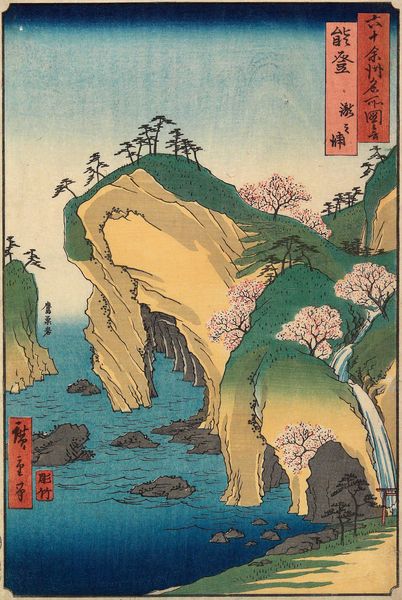
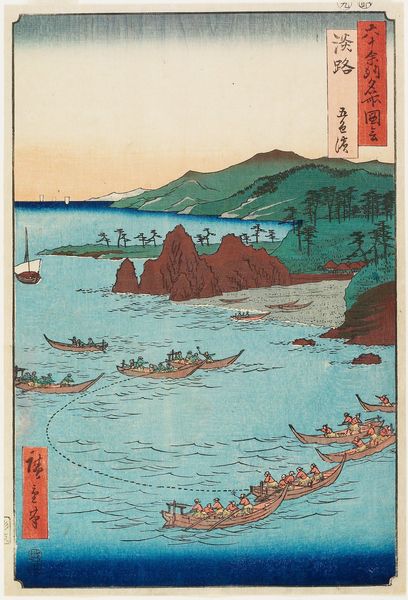
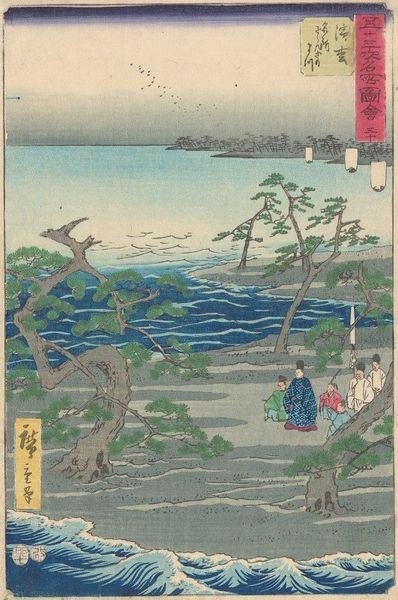
Editor: So, here we have "Double Sword Stone at Bōnoura Beach," possibly from 1856, by Utagawa Hiroshige, a woodblock print. I’m struck by how these massive rock formations dominate the scene, yet there's also a feeling of serenity. What stories or cultural weight do you think these iconic images carry? Curator: Indeed. The ‘Double Sword Stone’ itself becomes a powerful symbol. Think of swords; they evoke notions of protection, strength, but also division. Given the period, Japan was transitioning, wrestling with opening to the West. Editor: So, the "division" of the sword… could that relate to a societal split? Curator: Perhaps, but also consider the inherent symbolism of rocks and water in Japanese art. Rocks represent permanence, the unchanging, while water embodies fluidity and change. These ‘swords’ piercing the sea might visually encapsulate the tension between tradition and the inevitable flow of modernity. Notice the boats as well – what might they represent? Editor: Maybe the human element, navigating those turbulent waters? And I guess the trees clinging to the rocks could be a symbol of resilience? Curator: Precisely! Consider how landscapes were often used to subtly express socio-political anxieties and hopes. This print, seemingly a serene scene, may be charged with complex emotional and cultural undercurrents. What is revealed, and what is hidden? Editor: I hadn't thought about it that way at all! It's fascinating how much depth a simple landscape print can hold. Thank you! Curator: My pleasure. It's in understanding these visual languages that we unlock deeper meaning.
Comments

minneapolisinstituteofart about 2 years ago
⋮
Located in southwest Kyñshñ, the southern most of the Japan's four main islands, Bønoura Beach faces the East China Sea. Towering rock formations, named "double sword stones," are a popular destination among visitors to the area. In the foreground, Hiroshige depicts a small boat approaching the rocks with two tourists on board. Seated beneath a parasol, they gazed admiringly up at the fantastic sight. Although Hiroshige exaggerated the rocks a bit, he well represented the scenic beauty of the area.


Join the conversation
Join millions of artists and users on Artera today and experience the ultimate creative platform.
 Collect
More like this