1875
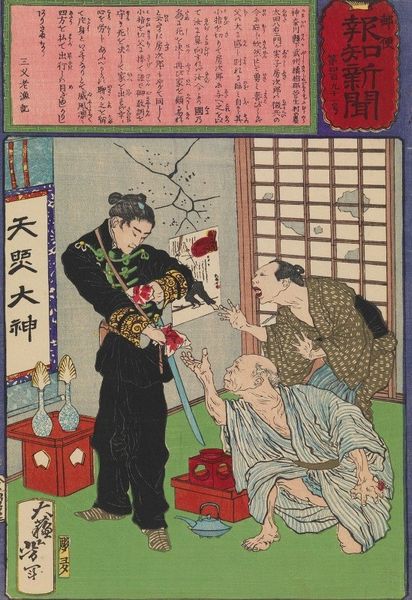
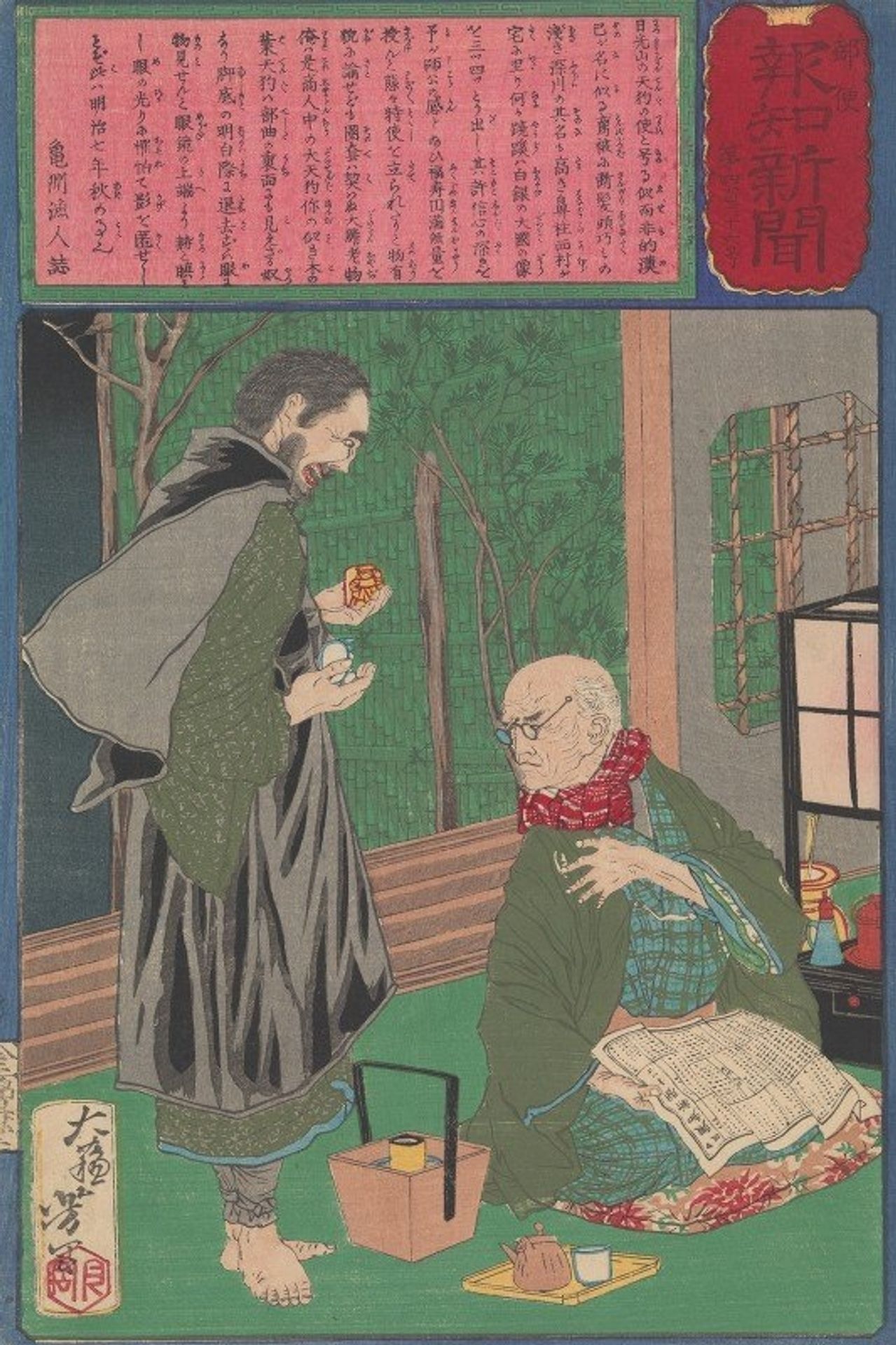
The Celebrated Dealer Nishimura Exposing an Art Forger

Listen to curator's interpretation
Curatorial notes
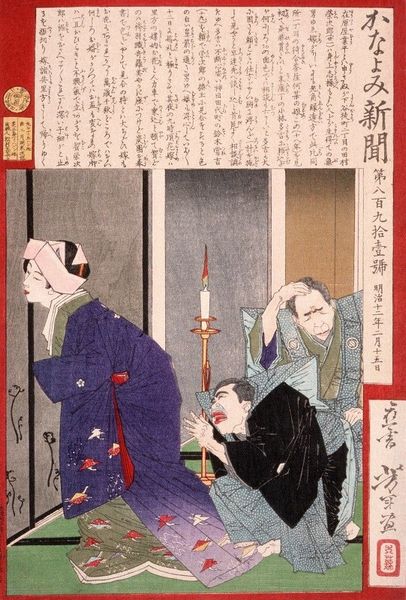
Curator: This is "The Celebrated Dealer Nishimura Exposing an Art Forger", a woodblock print by Tsukioka Yoshitoshi from 1875. The expressions are what grab me first; such exaggerated emotion! Editor: Exactly! It’s a stage drama rendered on paper. The lighting and bamboo screen imply secrecy. The forger appears distraught, cornered, as Nishimura seems smugly self-assured, wouldn’t you say? Curator: Smug is a bit harsh. Perhaps he’s feeling… vindicated? Like he’s restored order. But look at the way the colors clash, that vivid red scarf against the muted greens. It suggests conflict, agitation. I almost feel bad for the poor forger. Editor: That's a powerful read, because Yoshitoshi uses *ukiyo-e*, a popular art form traditionally focused on courtesans and actors, to address contemporary issues of fraud and deception. Nishimura here isn’t just a dealer; he represents truth prevailing. Curator: So, you see it as more of a morality play than a simple genre scene. Interesting. And the detail—look at the individual strands of hair on the forger’s head! Yoshitoshi had a knack for capturing the psychological essence of his subjects, don't you think? Editor: Absolutely. Consider the sociopolitical context. The Meiji Restoration aimed for rapid modernization, which also meant facing issues of authenticity, tradition versus progress, the role of the artist in a changing society, and perhaps even critiquing this obsession with "originality" as a construct, a valuable market differentiator that this print highlights. Curator: I like your reading about this play with societal values. To me, this artwork is compelling also because of Yoshitoshi's willingness to use a familiar art form to address less traditional subject matter. Editor: It definitely challenges viewers to look beyond surface appearances and question societal values of authenticity and perception. Curator: Well, that definitely leaves us both thinking, right? There’s more to this picture than meets the eye. Editor: Absolutely! These echoes from the past always speak to our current struggles to come to grips with rapidly transforming societal and moral landscapes.