1929
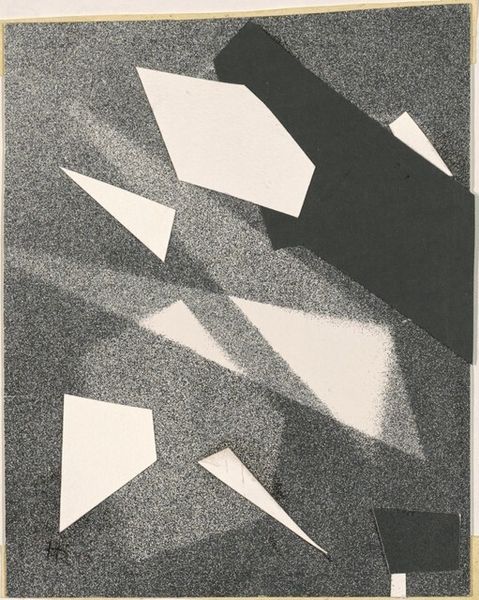
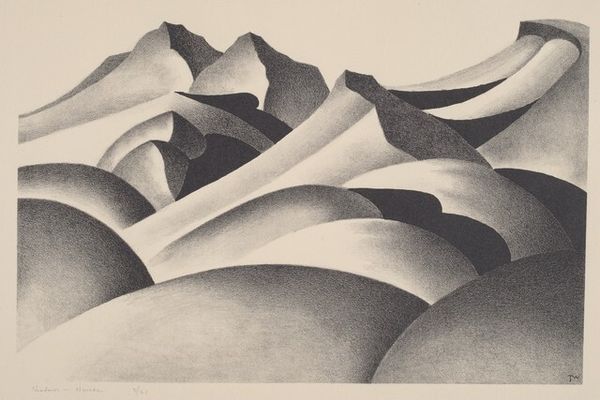
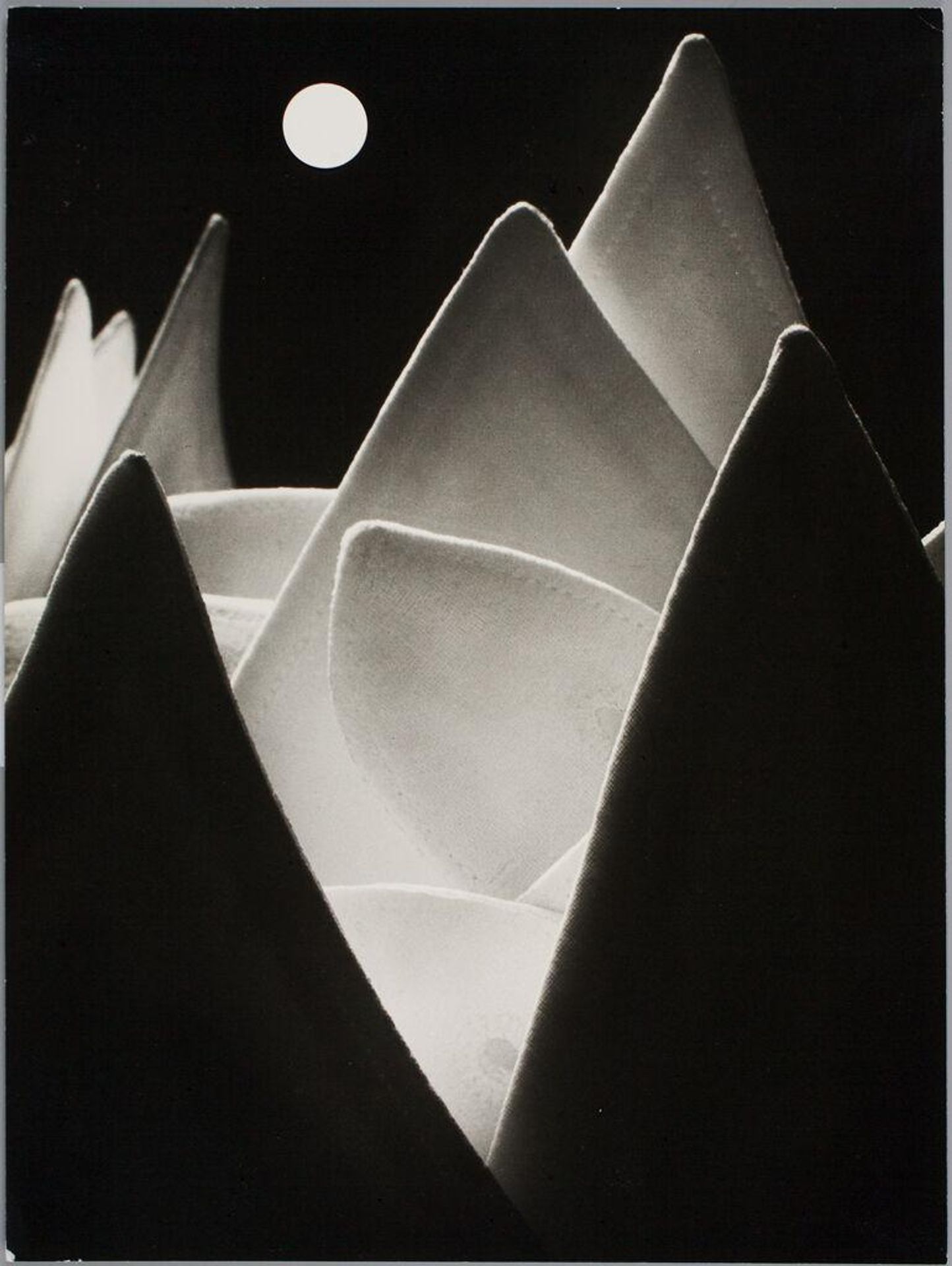
Moon Landscape

Listen to curator's interpretation
Curatorial notes
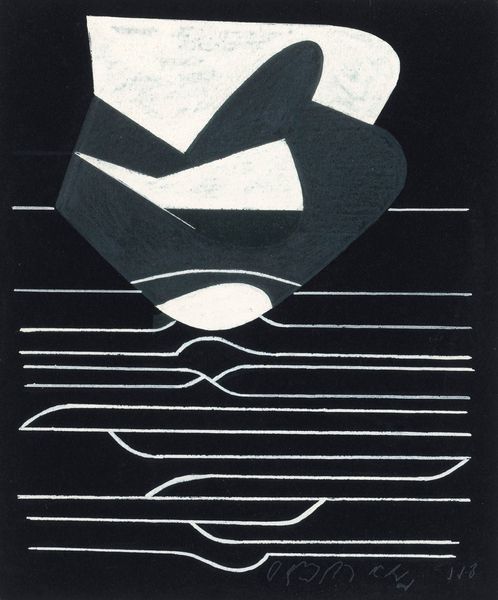
Curator: The Harvard Art Museums hold this intriguing black and white image called "Moon Landscape" by Eugen Wiškovský. Editor: It's strikingly simple and yet profoundly unsettling; it projects both serenity and a sense of the uncanny. Curator: The abstract shapes mimic a mountain range under a full moon. Yet, the forms feel artificial, almost like paper cutouts arranged in a miniature stage set. Editor: Perhaps it evokes a collective longing for the sublime, channeled through the starkness of modernist aesthetics and the socio-political need for escapism. The stark monochrome palette definitely amplifies the starkness. Curator: I agree, there is a feeling that the stark landscape and the symbol of the moon resonate with many cultural memories, a kind of timeless, mythic imagery. Editor: Ultimately, it's a powerful juxtaposition; the familiar lunar symbol, recontextualized, questions the boundaries between reality and representation. Curator: A quiet contemplation on universal themes made personal through its unique composition. Editor: A perfect example of how art mirrors, and often anticipates, the shifting landscape of our inner and outer worlds.