1939
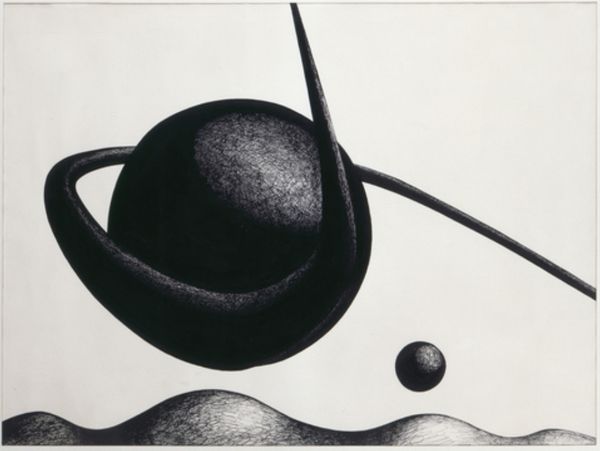
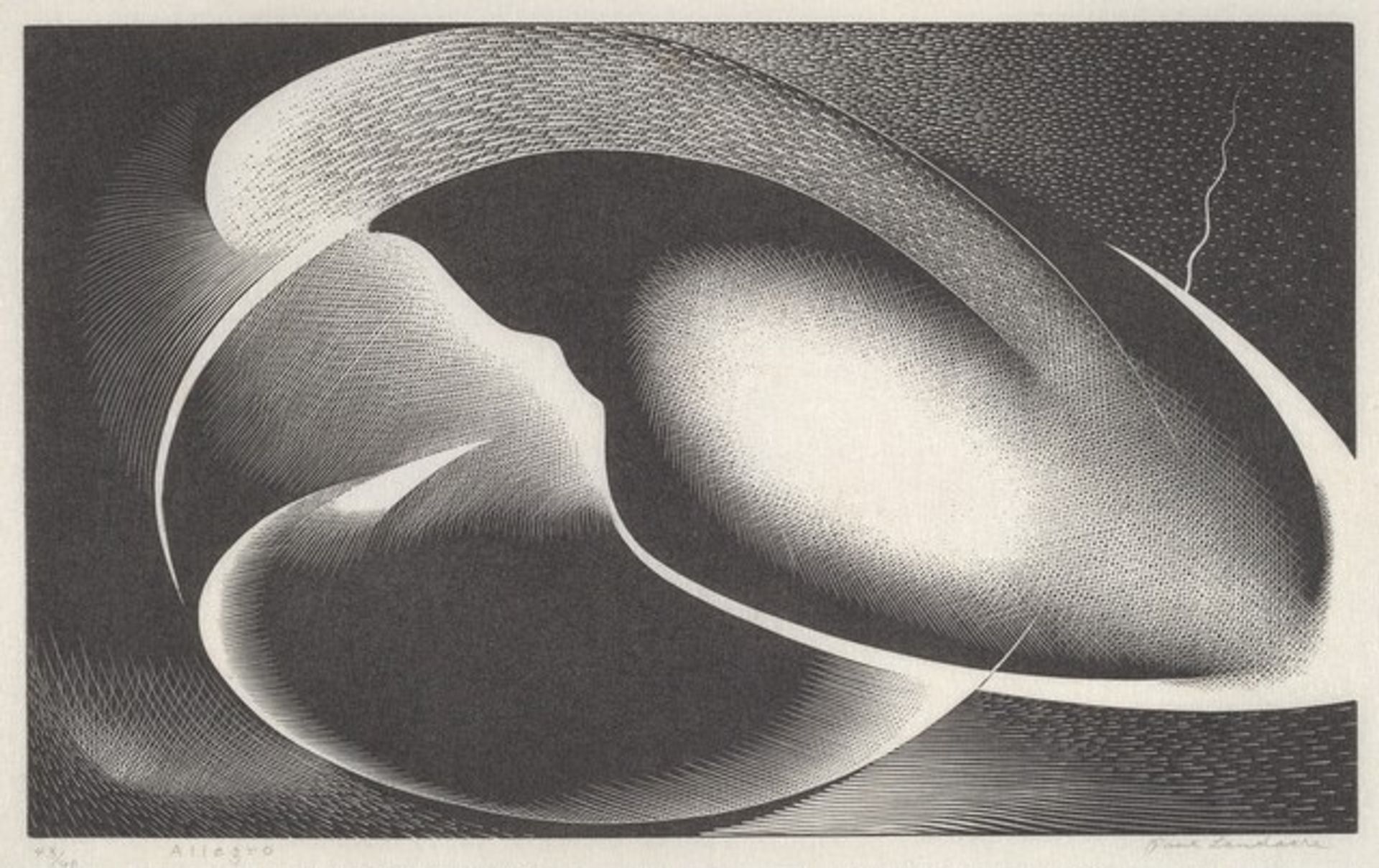
Allegro


Listen to curator's interpretation
Curatorial notes
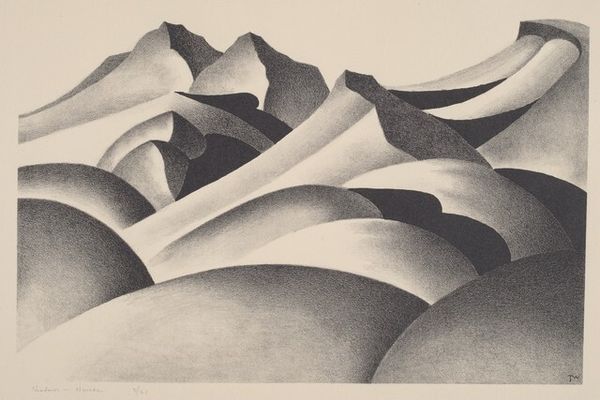
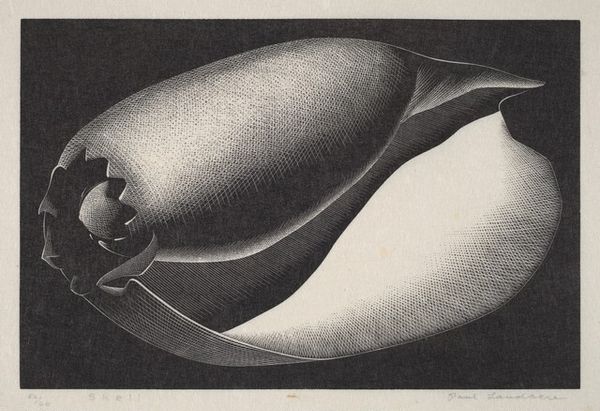
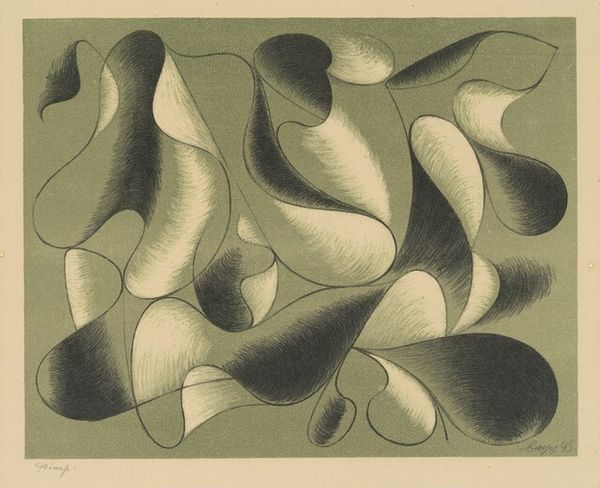
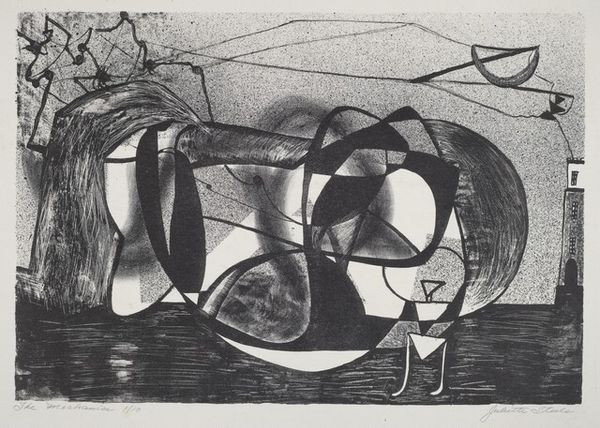
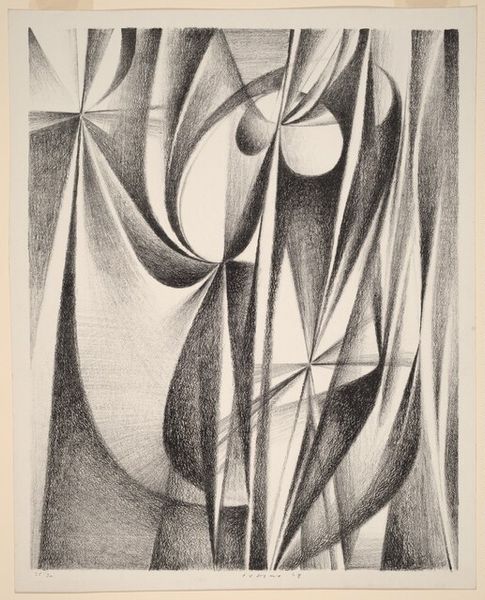
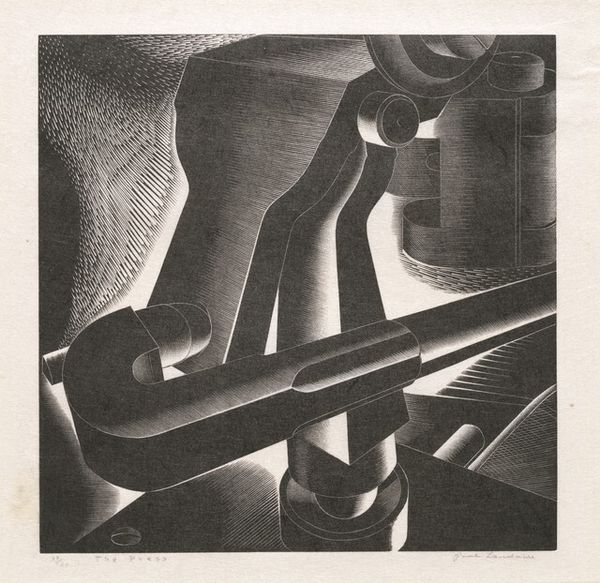
Paul Landacre created the wood engraving, Allegro, in the mid-20th century, a period marked by significant social and political change, including the rise of modernism and the aftermath of the Great Depression. Landacre's choice of wood engraving, a meticulous and labor-intensive process, speaks to a broader artistic engagement with craftsmanship during a time of increasing industrialization. In the black and white Allegro, Landacre’s abstract forms convey a sense of movement and energy. The title itself, borrowed from musical terminology, suggests a lively tempo. Yet, the absence of human figures prompts a reflection on the relationship between abstraction and the human experience. Landacre once said of his work: "I am trying to express... the feeling of space." This pursuit resonates with a desire to transcend social and economic constraints through art. Allegro's formal dynamism offers a space for viewers to contemplate their own place within a rapidly changing world.