About this artwork
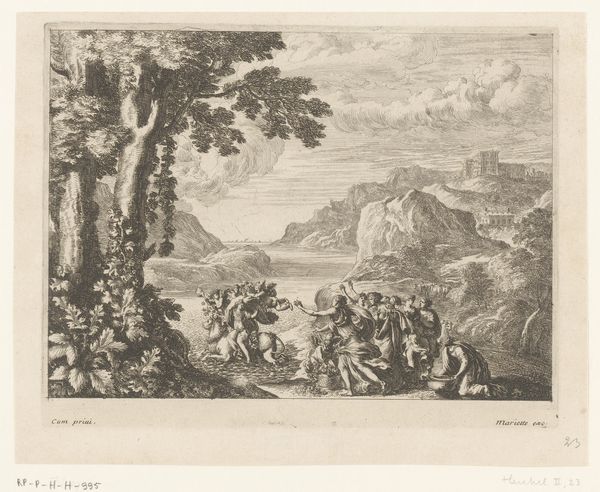
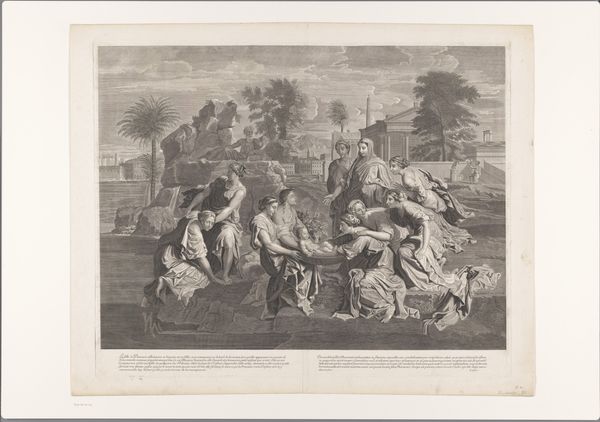
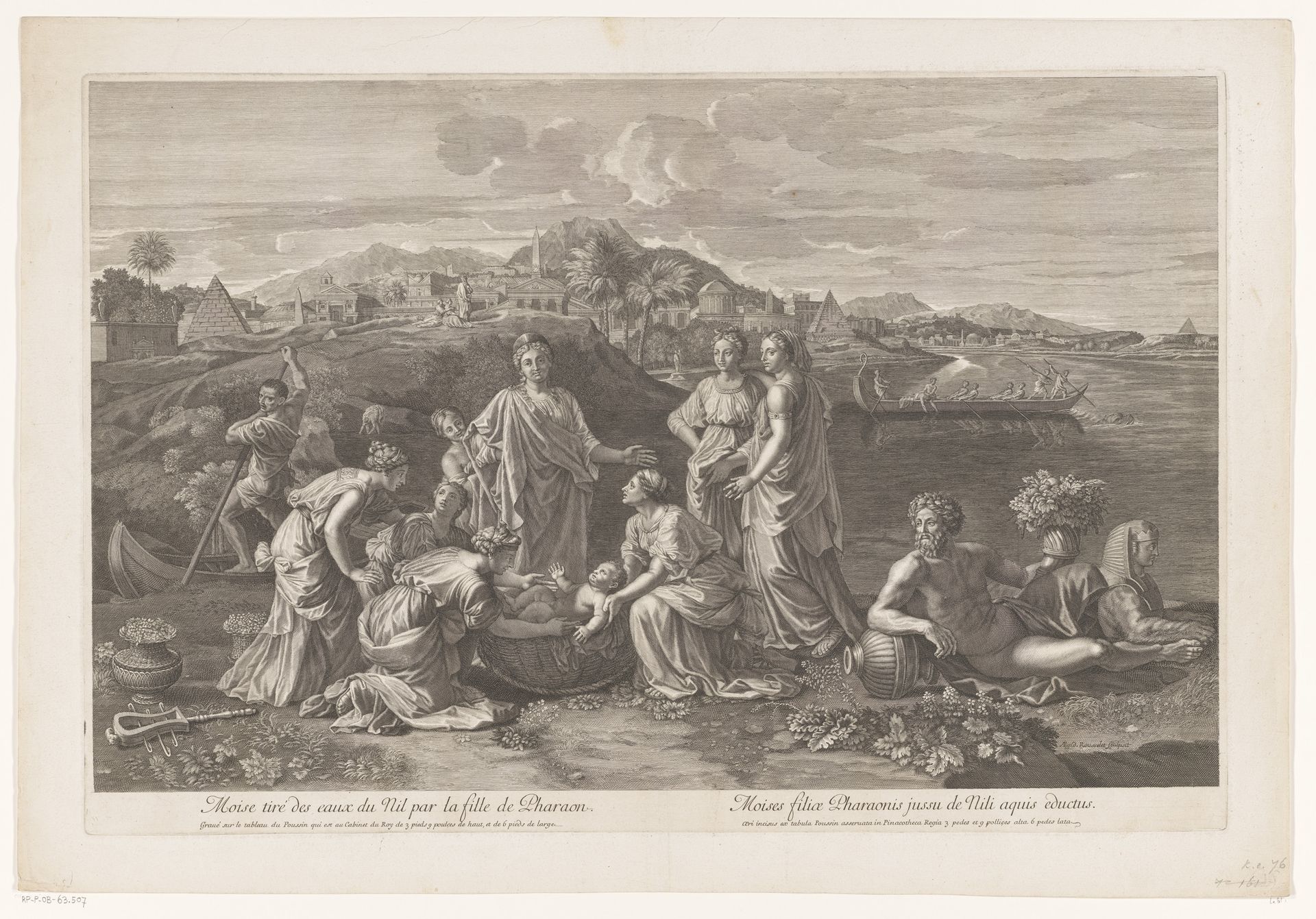
This print, made by Gilles Rousselet, depicts the moment Moses is found by the Pharaoh's daughter. Observe how the artist anchors the scene with the allegorical figure of the river Nile, accompanied by a sphinx. This motif of the river god can be traced back to ancient Greece and Rome, embodying the life-giving and destructive forces of nature. We see this archetype echoed throughout history, whether in the form of sculptures adorning fountains or personifications in Renaissance paintings. The sphinx too, a hybrid creature of human intellect and animal strength, transcends time and cultures. Consider how these symbols, deeply embedded in our collective memory, elicit a powerful subconscious response. The image evokes an emotional blend of hope, fear, and the precariousness of life. These archetypes endure, resurfacing in art across millennia, continually shaping our understanding of ourselves and the world around us.
Mozes wordt gevonden door de dochter van de farao
1620 - 1686

Gilles Rousselet
1614 - 1686Location
RijksmuseumArtwork details
- Medium
- print, etching, engraving
- Dimensions
- height 422 mm, width 631 mm
- Location
- Rijksmuseum
- Copyright
- Rijks Museum: Open Domain
Tags
narrative-art
baroque
etching
old engraving style
landscape
figuration
islamic-art
history-painting
engraving
Comments
Be the first to share your thoughts about this work.
About this artwork
This print, made by Gilles Rousselet, depicts the moment Moses is found by the Pharaoh's daughter. Observe how the artist anchors the scene with the allegorical figure of the river Nile, accompanied by a sphinx. This motif of the river god can be traced back to ancient Greece and Rome, embodying the life-giving and destructive forces of nature. We see this archetype echoed throughout history, whether in the form of sculptures adorning fountains or personifications in Renaissance paintings. The sphinx too, a hybrid creature of human intellect and animal strength, transcends time and cultures. Consider how these symbols, deeply embedded in our collective memory, elicit a powerful subconscious response. The image evokes an emotional blend of hope, fear, and the precariousness of life. These archetypes endure, resurfacing in art across millennia, continually shaping our understanding of ourselves and the world around us.
Comments
Be the first to share your thoughts about this work.