About this artwork
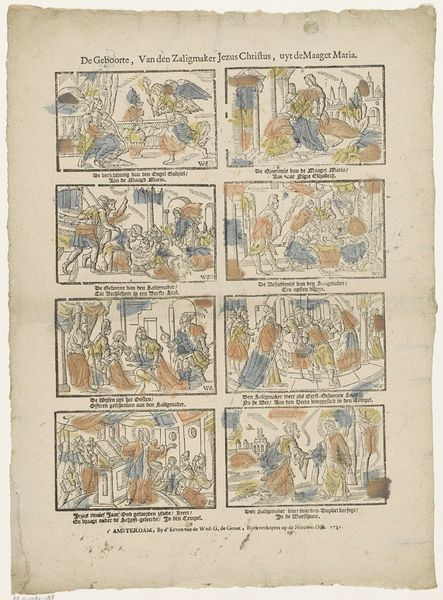
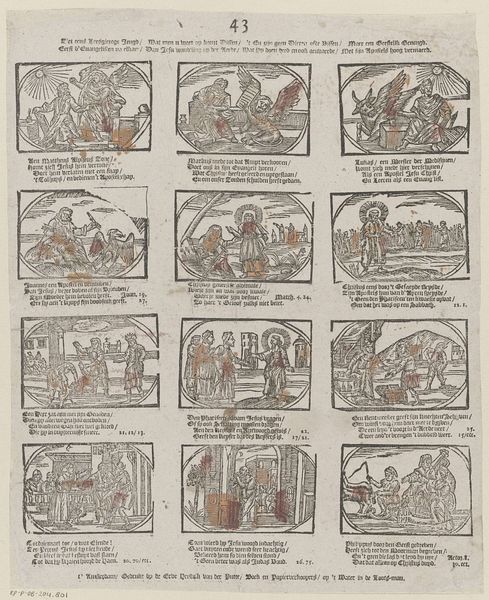
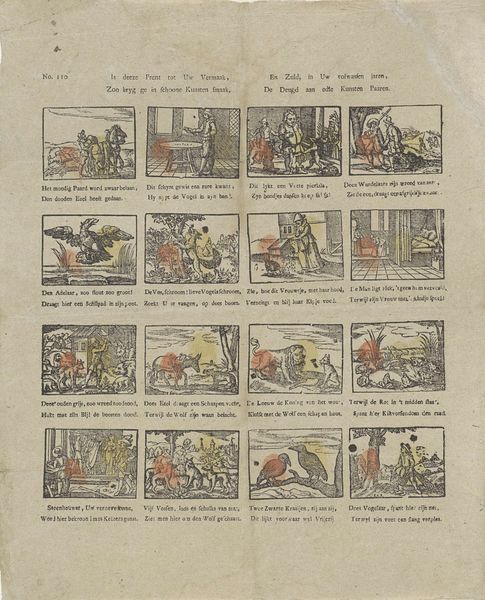
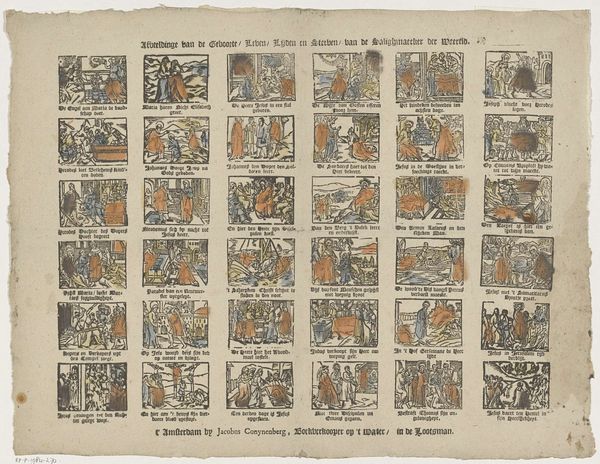
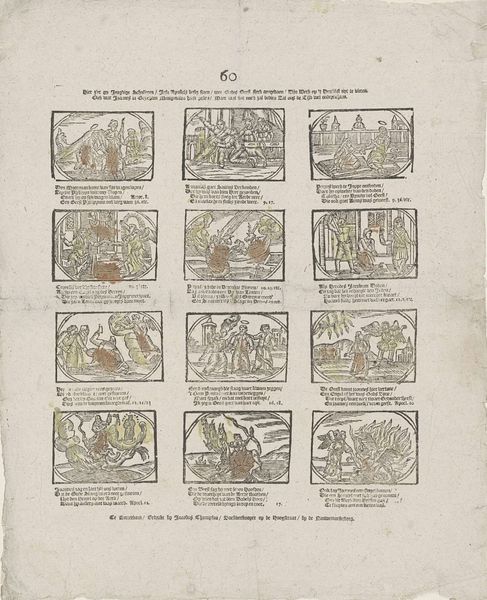
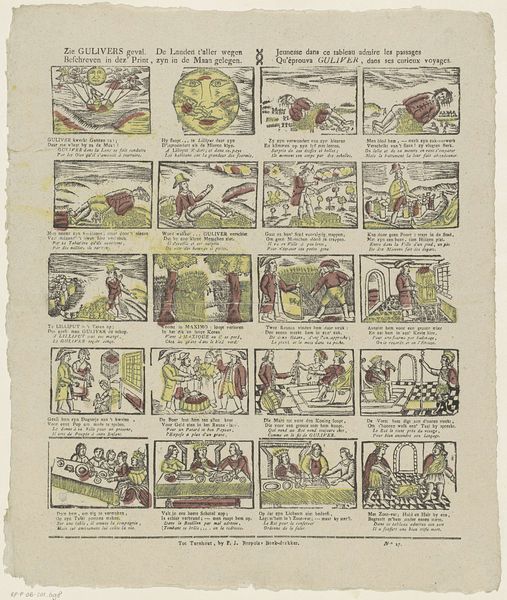
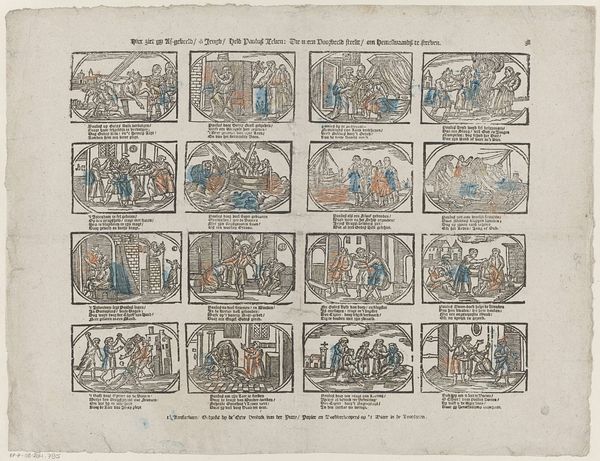
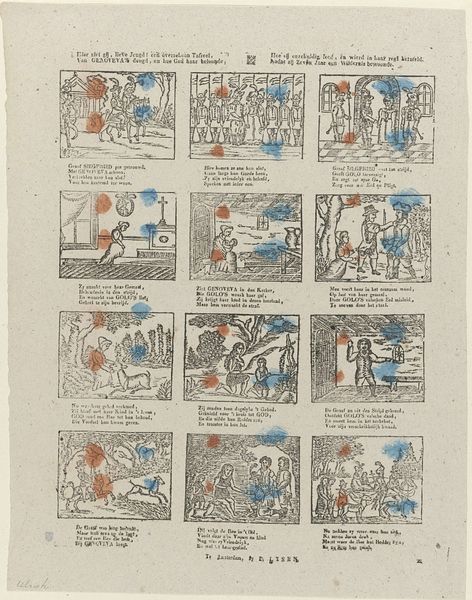
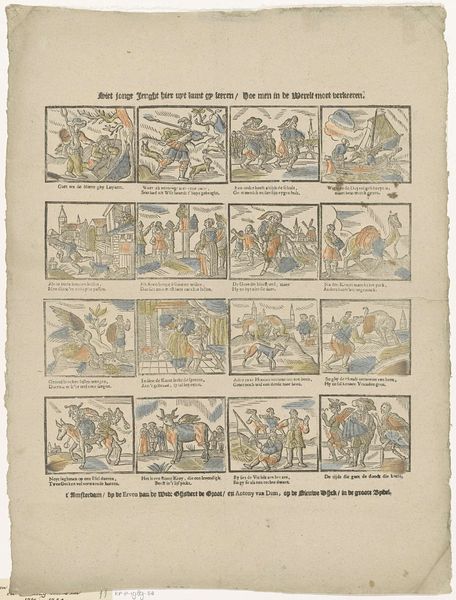
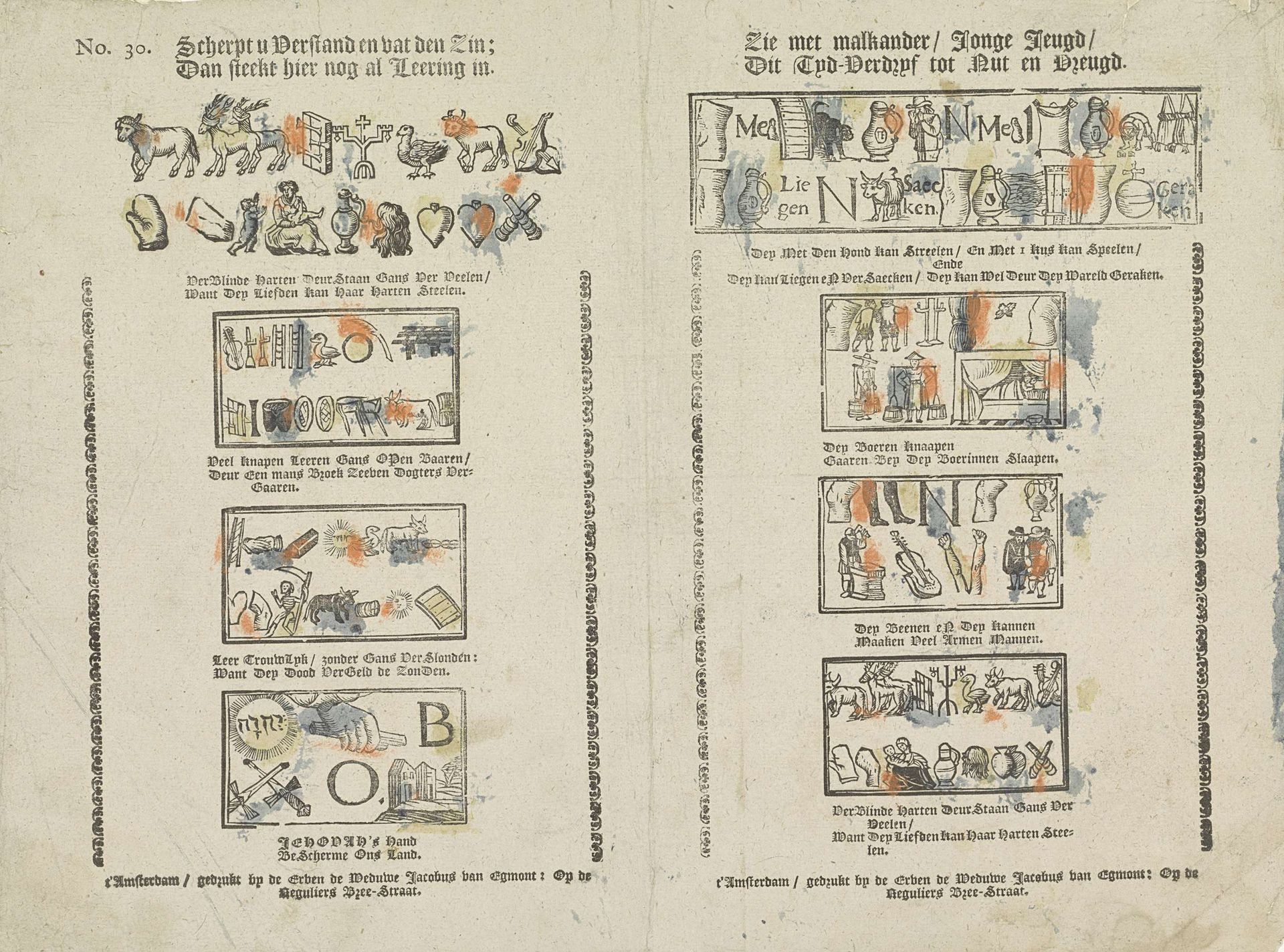
This is a colorful print made by Erven de Weduwe Jacobus van Egmont. It resides in the Rijksmuseum. In a time when literacy was not widespread, prints like this served as both entertainment and education, especially for young audiences. We can see how the print contains a series of images and corresponding phrases, presented almost like rebuses or visual puzzles. This interplay between image and text invited viewers to engage actively, deciphering meanings and learning through visual association. These word games use familiar imagery to help the viewer understand how language functions. It taught young people to read and write, while also teaching them about the world around them. The artist uses familiar images such as animals, objects, and people, reflecting the everyday realities of 18th century Dutch society. In doing so, she's creating a visual language, one that speaks to shared cultural values and beliefs. It’s a very tactile experience, not just of seeing, but of mentally piecing together the puzzle of image and text. The artist encourages us to sharpen our minds, and find instruction and pleasure in the shared experience of viewing.
Scherpt u verstand en vat den zin; / Dan steekt hier nog al leering in / Ziet met malkander / jonge Jeugd / Dit tyd-verdryf tot nut en vreugd
1761 - 1804

Erven de Weduwe Jacobus van Egmont
@ervendeweduwejacobusvanegmontLocation
RijksmuseumArtwork details
- Medium
- print, engraving
- Dimensions
- height 303 mm, width 409 mm
- Location
- Rijksmuseum
- Copyright
- Rijks Museum: Open Domain
Tags
Comments
Share your thoughts
About this artwork
This is a colorful print made by Erven de Weduwe Jacobus van Egmont. It resides in the Rijksmuseum. In a time when literacy was not widespread, prints like this served as both entertainment and education, especially for young audiences. We can see how the print contains a series of images and corresponding phrases, presented almost like rebuses or visual puzzles. This interplay between image and text invited viewers to engage actively, deciphering meanings and learning through visual association. These word games use familiar imagery to help the viewer understand how language functions. It taught young people to read and write, while also teaching them about the world around them. The artist uses familiar images such as animals, objects, and people, reflecting the everyday realities of 18th century Dutch society. In doing so, she's creating a visual language, one that speaks to shared cultural values and beliefs. It’s a very tactile experience, not just of seeing, but of mentally piecing together the puzzle of image and text. The artist encourages us to sharpen our minds, and find instruction and pleasure in the shared experience of viewing.
Comments
Share your thoughts