1616
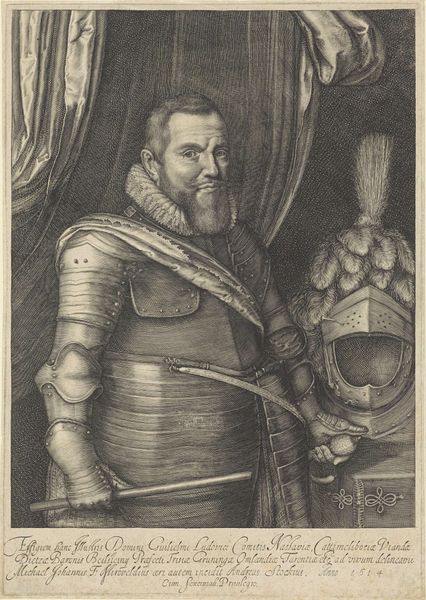
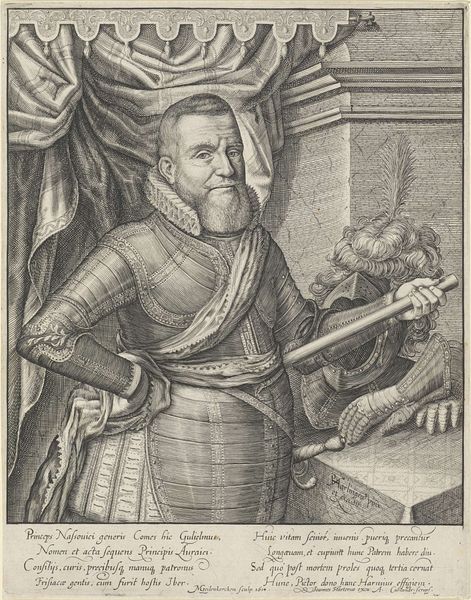
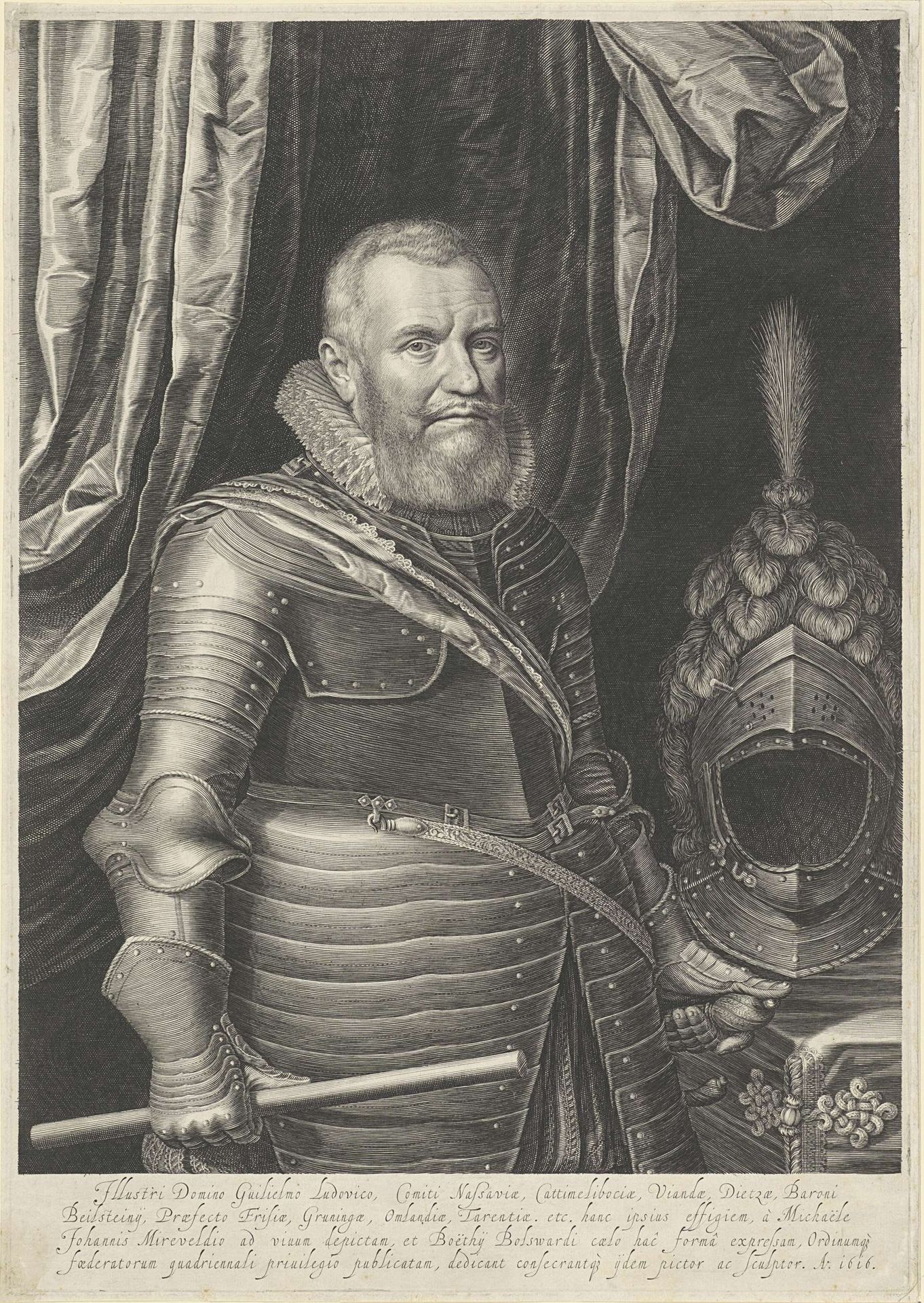
Portret van Willem Lodewijk, graaf van Nassau-Dillenburg

Boëtius Adamsz. Bolswert
@boetiusadamszbolswertLocation
RijksmuseumListen to curator's interpretation
Curatorial notes
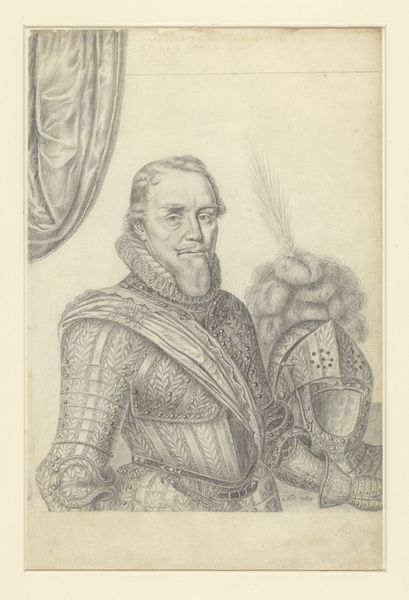
This is Boëtius Adamsz. Bolswert's portrait of Willem Lodewijk, graaf van Nassau-Dillenburg, etched on paper. The eye is drawn to the stark contrast of light and shadow, which animates the subject's armor and the heavy drapery behind him. Notice how Bolswert uses line and texture to convey not just the likeness of Willem Lodewijk but also the weight of his status. The intricate detailing on the armor and the helmet, rendered with fine lines, suggests an interest in material culture and the semiotics of power. The formal construction, with its meticulous attention to detail, reinforces the cultural codes of nobility and military prowess. The portrait isn't just a representation; it's a carefully constructed sign, laden with meaning and designed to project authority. Consider how Bolswert uses hatching and cross-hatching to create a sense of depth and volume, turning a flat surface into a display of three-dimensional presence. The image, in its totality, functions as a tableau of identity.