About this artwork
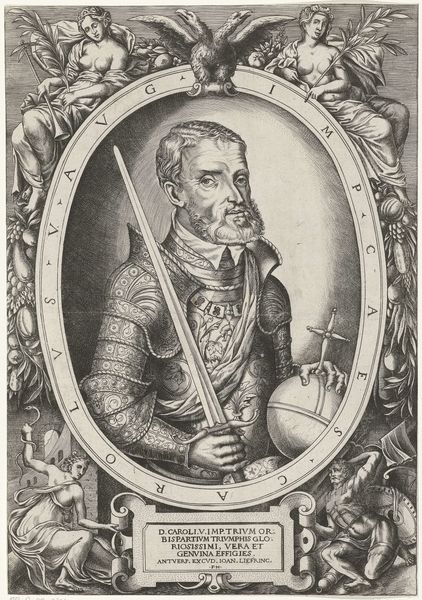
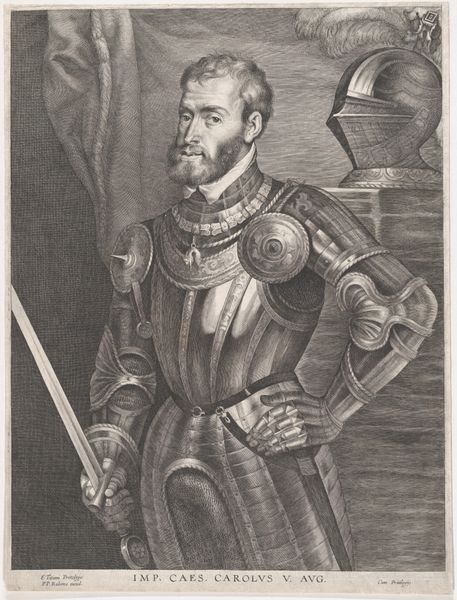
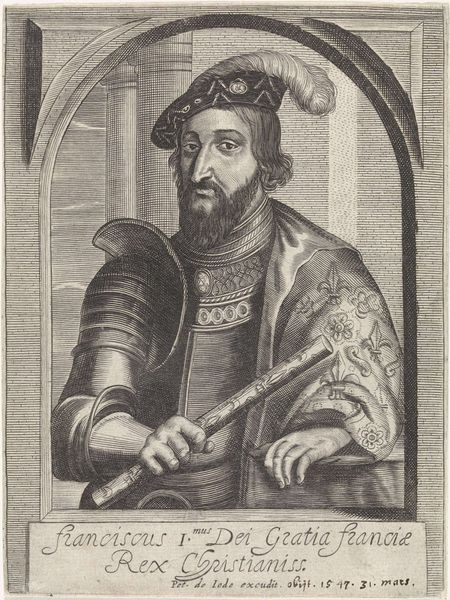
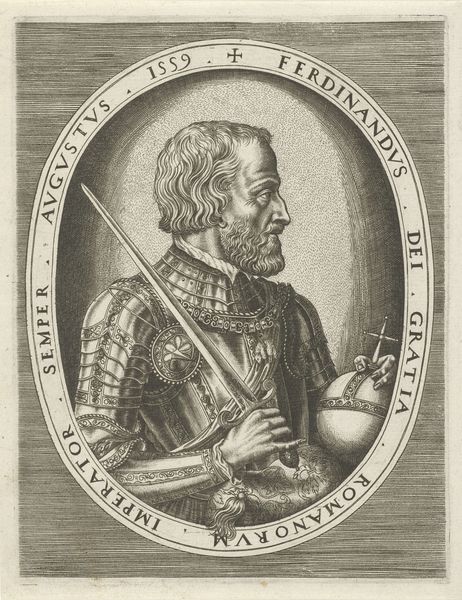
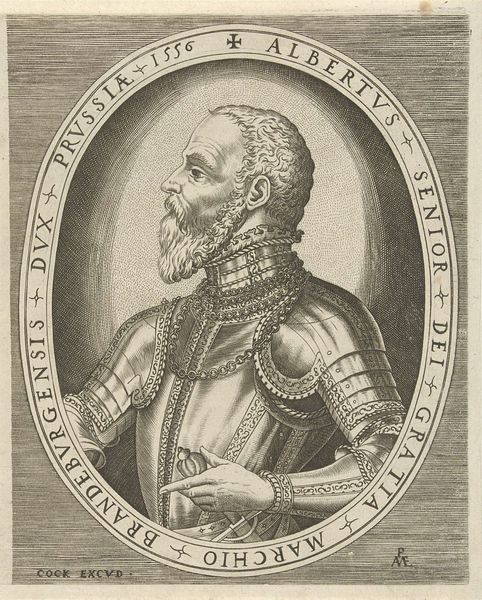
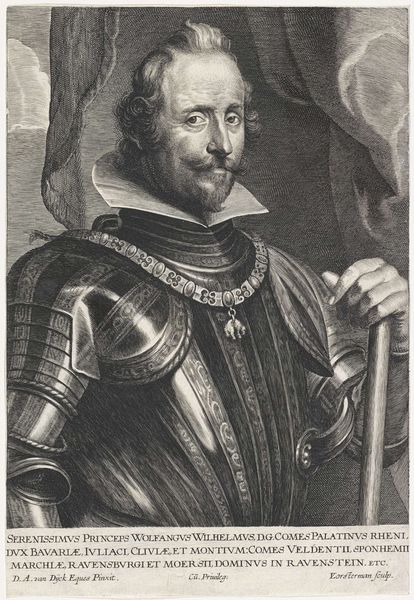
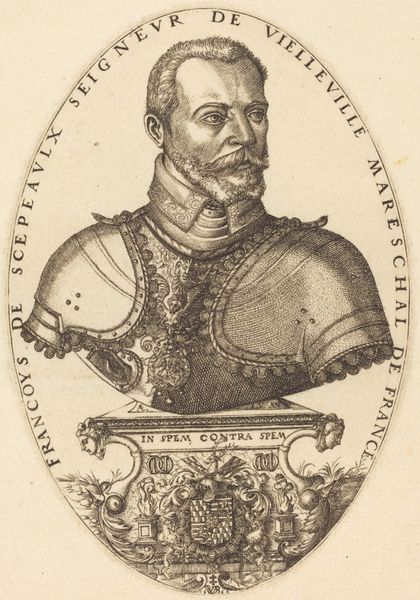
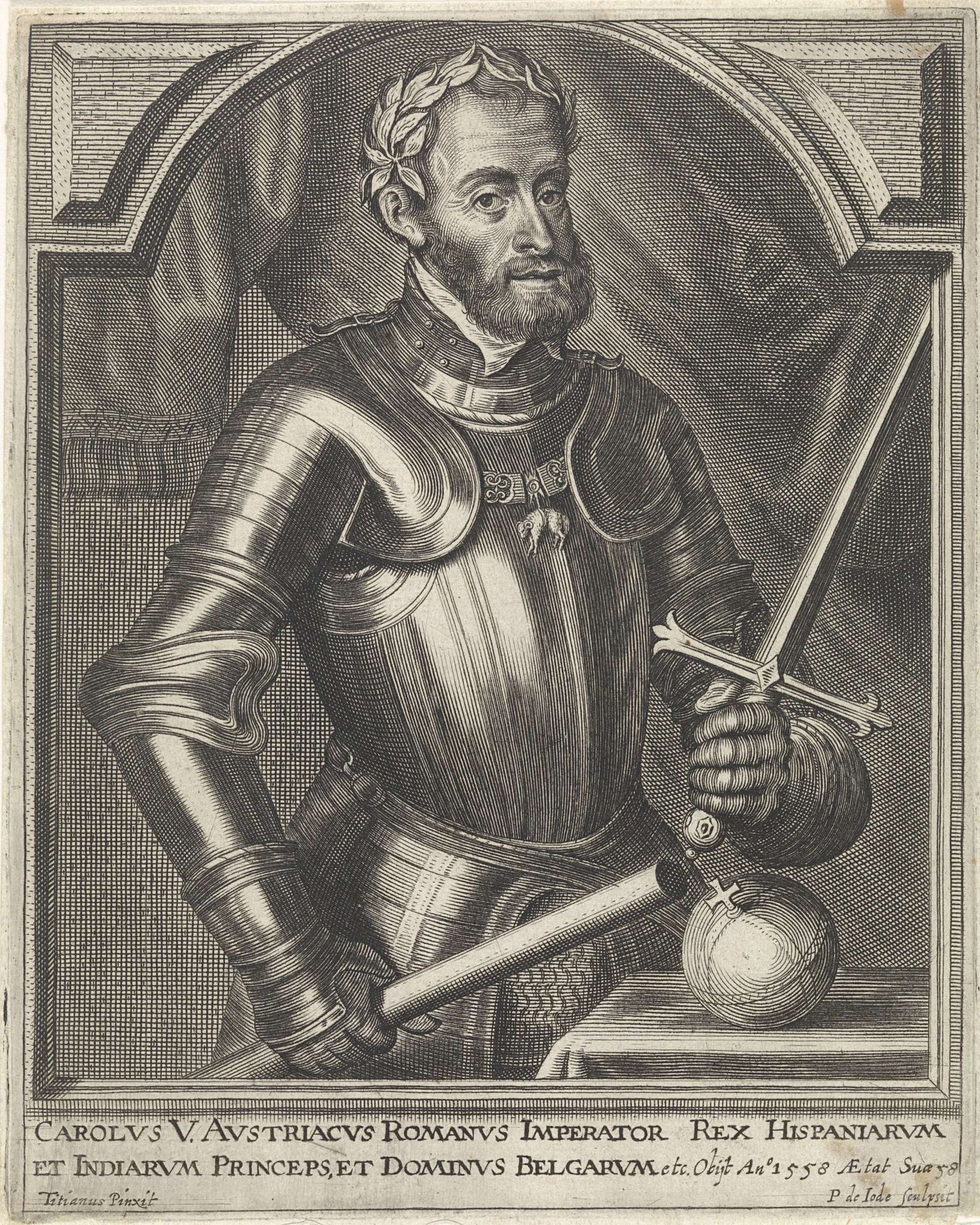
Pieter de Jode II created this portrait of Charles V of Habsburg using engraving techniques. Notice the subject’s commanding presence conveyed through the detailed rendering of his armor and regal bearing. The composition is structured around the contrast between the textured surfaces of the armor and the smoother planes of the face, drawing the viewer's eye to the portrait's core. The lines of the engraving are meticulously placed to convey light and shadow, adding depth and volume to the figure. The semiotic interplay here is potent. Charles V is framed by classical motifs, such as the laurel wreath, which signify victory and imperial authority. The arrangement of these symbols within the frame creates a layered narrative about power, legacy, and the constructed image of leadership. Consider how the artist uses the medium to amplify the symbolic weight of his subject. It invites us to decode the visual language of power and representation in early modern Europe.
Portret van Karel V van Habsburg
1628 - 1670

Pieter de (II) Jode
1606 - 1674Location
RijksmuseumArtwork details
- Medium
- metal, engraving
- Dimensions
- height 165 mm, width 133 mm
- Location
- Rijksmuseum
- Copyright
- Rijks Museum: Open Domain
Tags
portrait
metal
caricature
11_renaissance
portrait reference
history-painting
engraving
Comments
Be the first to share your thoughts about this work.
About this artwork
Pieter de Jode II created this portrait of Charles V of Habsburg using engraving techniques. Notice the subject’s commanding presence conveyed through the detailed rendering of his armor and regal bearing. The composition is structured around the contrast between the textured surfaces of the armor and the smoother planes of the face, drawing the viewer's eye to the portrait's core. The lines of the engraving are meticulously placed to convey light and shadow, adding depth and volume to the figure. The semiotic interplay here is potent. Charles V is framed by classical motifs, such as the laurel wreath, which signify victory and imperial authority. The arrangement of these symbols within the frame creates a layered narrative about power, legacy, and the constructed image of leadership. Consider how the artist uses the medium to amplify the symbolic weight of his subject. It invites us to decode the visual language of power and representation in early modern Europe.
Comments
Be the first to share your thoughts about this work.