1898
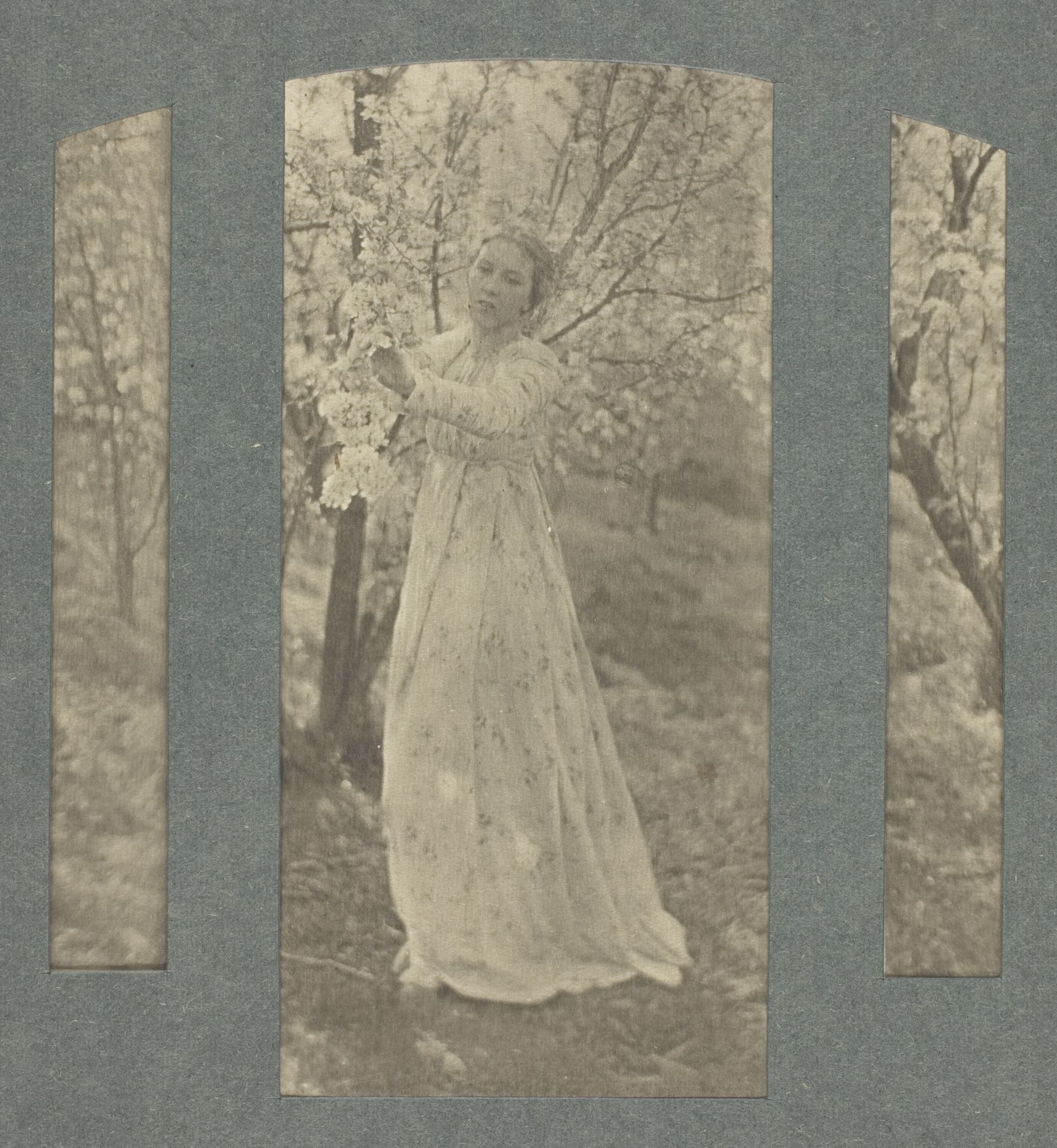
Spring


Listen to curator's interpretation
Curatorial notes
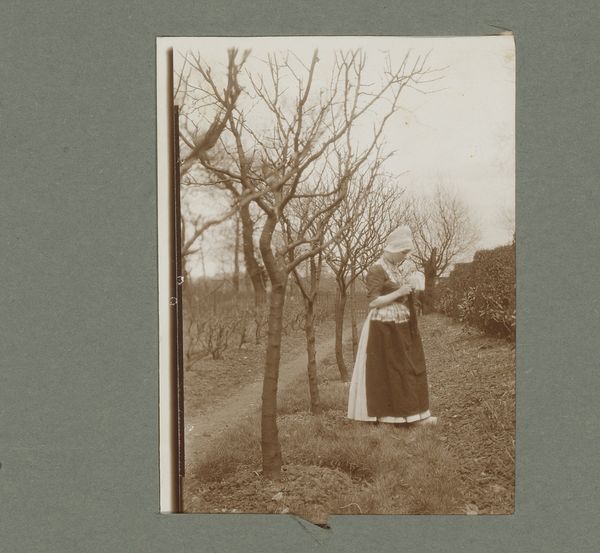
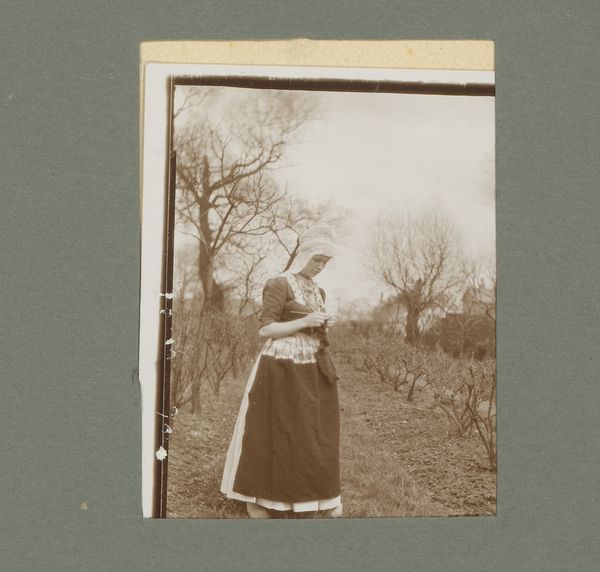
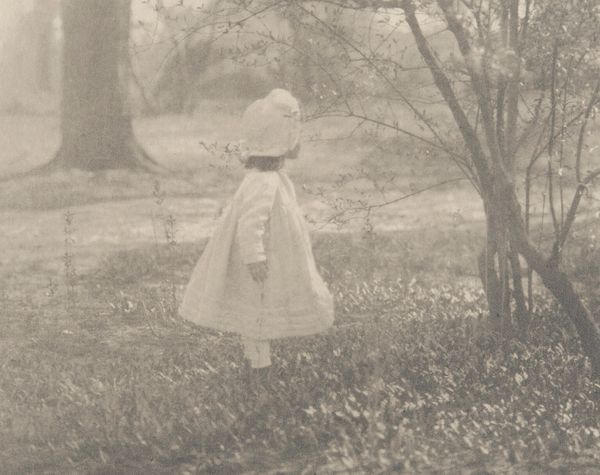
Clarence H. White's photographic triptych, "Spring," captures a figure amidst blossoming trees, and invites us to consider the photographic processes at play. White employed platinum printing, a labor-intensive technique prized for its tonal range and matte surface. Unlike silver prints, platinum resides within the paper fibers, giving permanence and a soft, diffused quality to the image. The careful arrangement of the triptych, each panel a separate print, speaks to a hand-crafted approach, resisting the mass production ethos of industrial photography. The choice of platinum, with its expense and technical demands, also ties into the artistic circles of the time, who embraced photography as a fine art, equal to painting or sculpture. This elevation of the medium involved skilled darkroom work, rejecting photography's purely documentary function. So, consider "Spring" not just as a representation, but as a carefully constructed object, imbued with the values of craft, artistry, and the hand-made.