photography
#
landscape
#
photography
#
photojournalism
Dimensions: height 138 mm, width 200 mm
Copyright: Rijks Museum: Open Domain
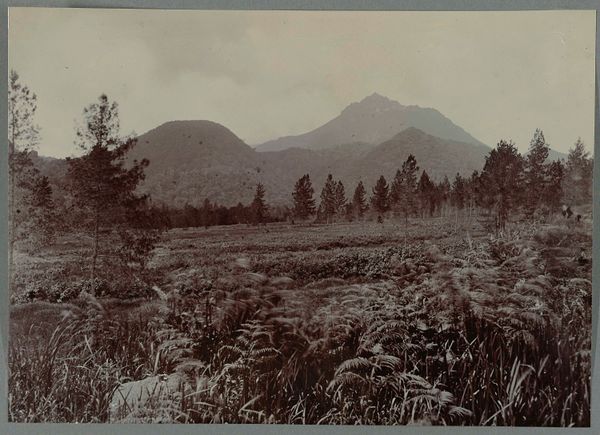
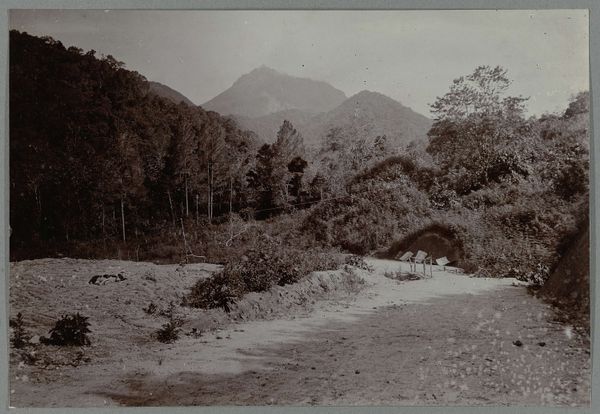
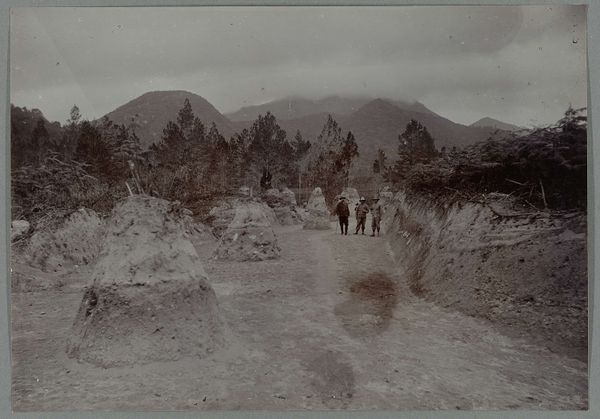
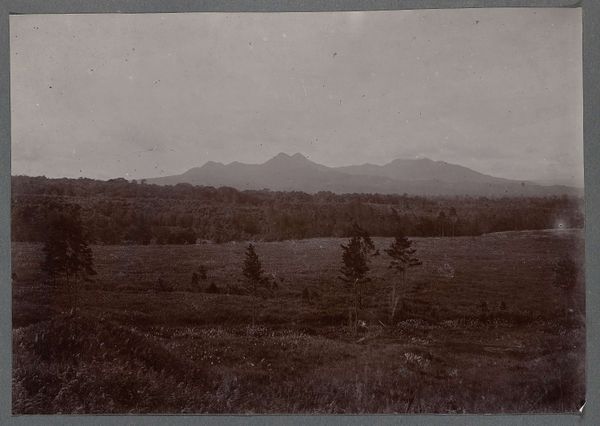
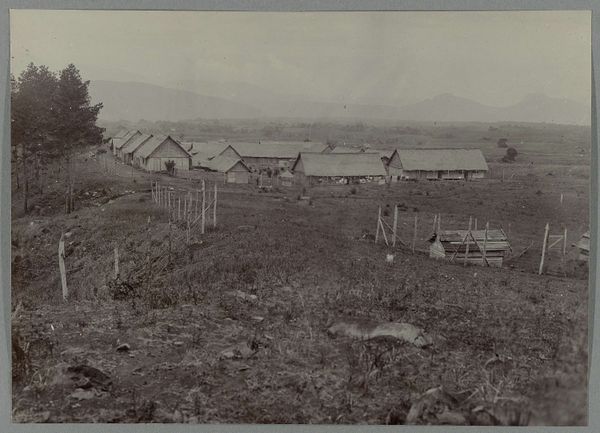
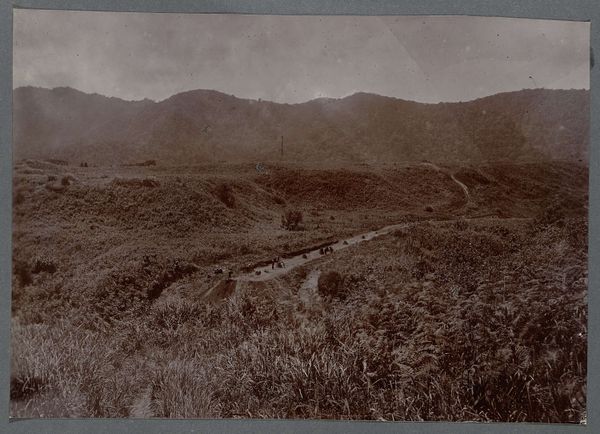
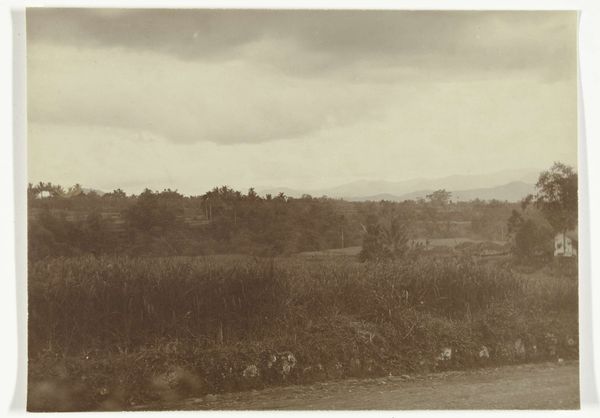
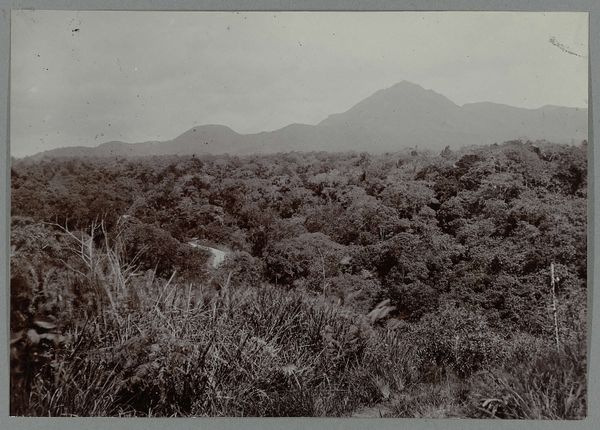
Editor: Here we have an intriguing gelatin silver print, "Bivak Lampahan," dating from sometime between 1903 and 1913, artist unknown. It strikes me as a document, cool and somewhat remote, despite the inviting, winding path. What story does it tell, from your perspective? Curator: Well, viewing it through a historical lens, the photograph opens a window onto Dutch colonial activity in, likely, the Dutch East Indies. "Bivak" suggests a temporary encampment. We should consider this image within the broader context of colonial administration, military expeditions, resource extraction, and, certainly, the use of photography as a tool for documentation and control. Editor: Control? You mean it wasn't simply about recording what they saw? Curator: Photography during this period played a crucial role in shaping perceptions of colonized lands. It helped create a visual inventory, which, in turn, reinforced colonial power structures. Consider the composition—the orderly rows of structures within this vast landscape. What does that contrast suggest to you? Editor: I see the orderliness set against the untamed landscape... Like they're trying to impose their own order. It's more than just a neutral depiction, isn’t it? Curator: Precisely. The photographer is not just passively recording; they are constructing a narrative, visually asserting a claim on the territory. The photograph served to inform people, often with agendas or assumptions we cannot ignore. Think of the impact such images had back "home" – fueling public imagination about distant lands. How might it shape public opinion? Editor: It probably bolstered support for colonialism, painting this picture of expansion as civilizing something that seemed so untamed and…empty? Curator: Indeed. Recognizing this reveals that photographs are very often, loaded documents that continue shaping our understanding of history today. Editor: So, beyond the landscape, it’s also about understanding the power dynamics captured within the frame. I’ll never look at historical photos the same way!
Comments
No comments
Be the first to comment and join the conversation on the ultimate creative platform.
 Collect
 React
React Comment
More like this