About this artwork
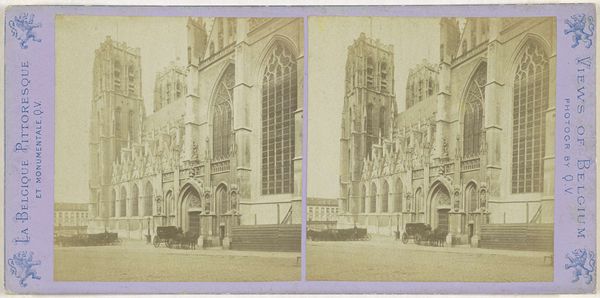
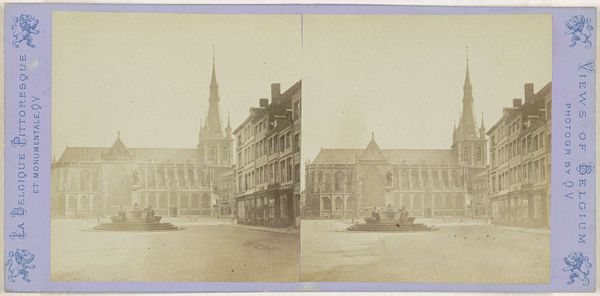
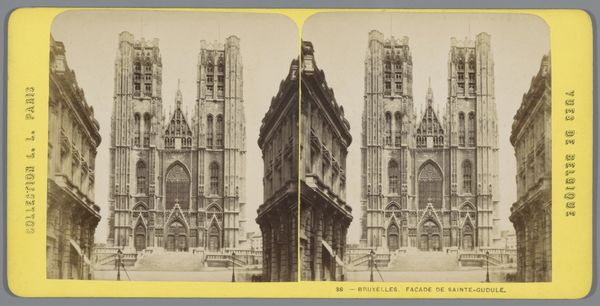
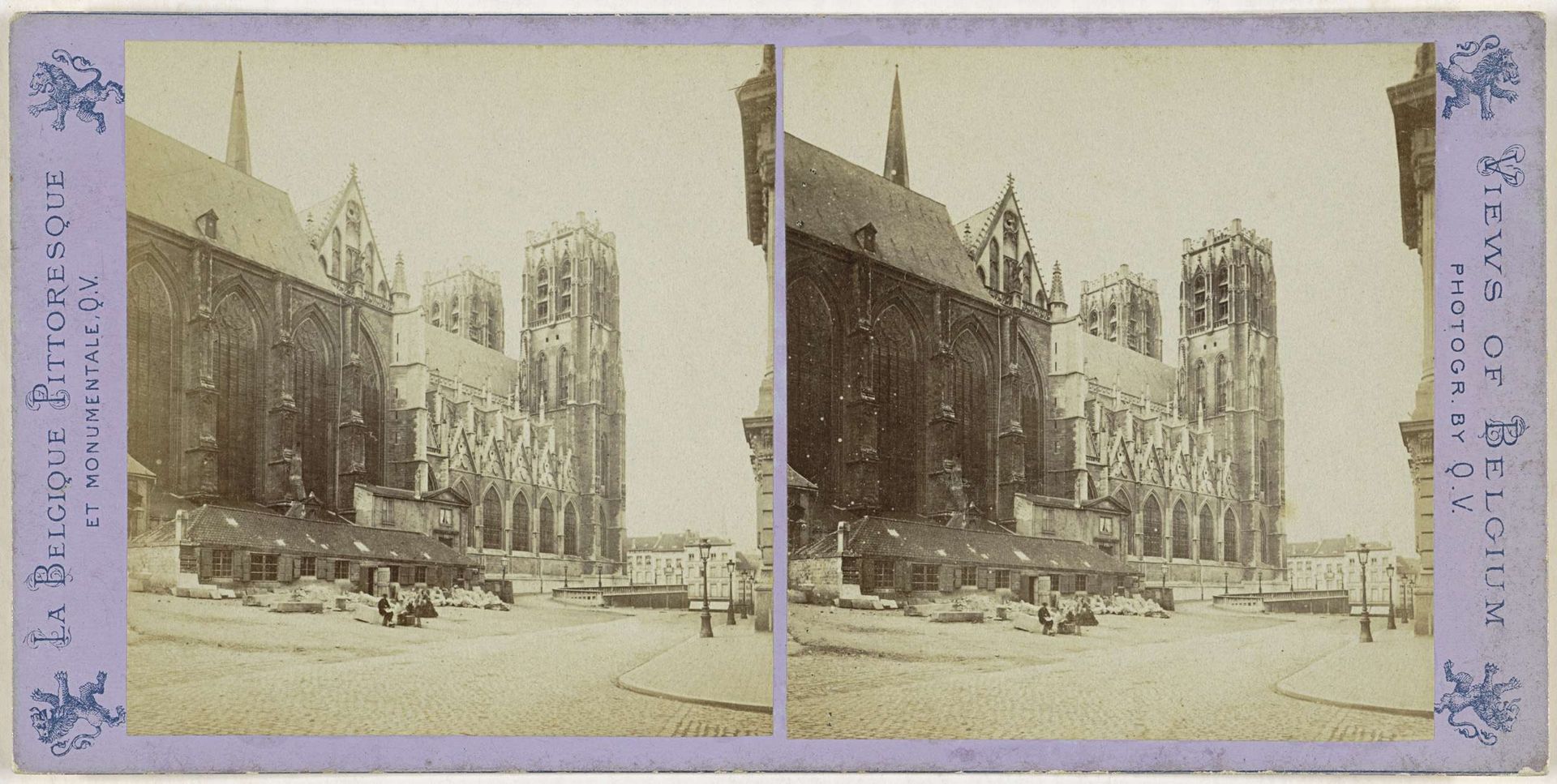
This stereoscopic photograph of the north side of the Cathedral of St. Michael and St. Gudula in Brussels was made by Jules Hippolyte Quéval. Stereoscopic photographs like this one were popular in the mid-19th century, offering a sense of depth and realism to viewers. Beyond its aesthetic appeal, the image serves as a historical document, capturing the cathedral's architecture and its urban surroundings. Constructed over centuries, this cathedral stands as a symbol of religious authority and civic identity in Brussels. Quéval's photograph invites us to reflect on the cathedral's role as a site of social gathering, religious practice, and cultural heritage within the evolving urban landscape of Brussels. To fully understand this artwork, we might consult archival records and historical accounts to shed light on the social, political, and religious contexts of 19th-century Brussels. Only then can we grasp the complex interplay between art, history, and society.
Gezicht op de noordkant van de Kathedraal van Sint-Michiel en Sint-Goedele in Brussel
1866 - 1870

Jules Hippolyte Quéval
1824Location
RijksmuseumArtwork details
- Medium
- print, photography, site-specific
- Dimensions
- height 87 mm, width 175 mm
- Location
- Rijksmuseum
- Copyright
- Rijks Museum: Open Domain
Tags
photography
site-specific
cityscape
realism
Comments
Be the first to share your thoughts about this work.
About this artwork
This stereoscopic photograph of the north side of the Cathedral of St. Michael and St. Gudula in Brussels was made by Jules Hippolyte Quéval. Stereoscopic photographs like this one were popular in the mid-19th century, offering a sense of depth and realism to viewers. Beyond its aesthetic appeal, the image serves as a historical document, capturing the cathedral's architecture and its urban surroundings. Constructed over centuries, this cathedral stands as a symbol of religious authority and civic identity in Brussels. Quéval's photograph invites us to reflect on the cathedral's role as a site of social gathering, religious practice, and cultural heritage within the evolving urban landscape of Brussels. To fully understand this artwork, we might consult archival records and historical accounts to shed light on the social, political, and religious contexts of 19th-century Brussels. Only then can we grasp the complex interplay between art, history, and society.
Comments
Be the first to share your thoughts about this work.