1901
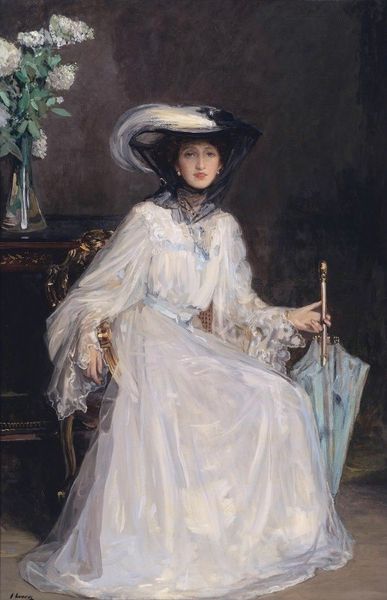
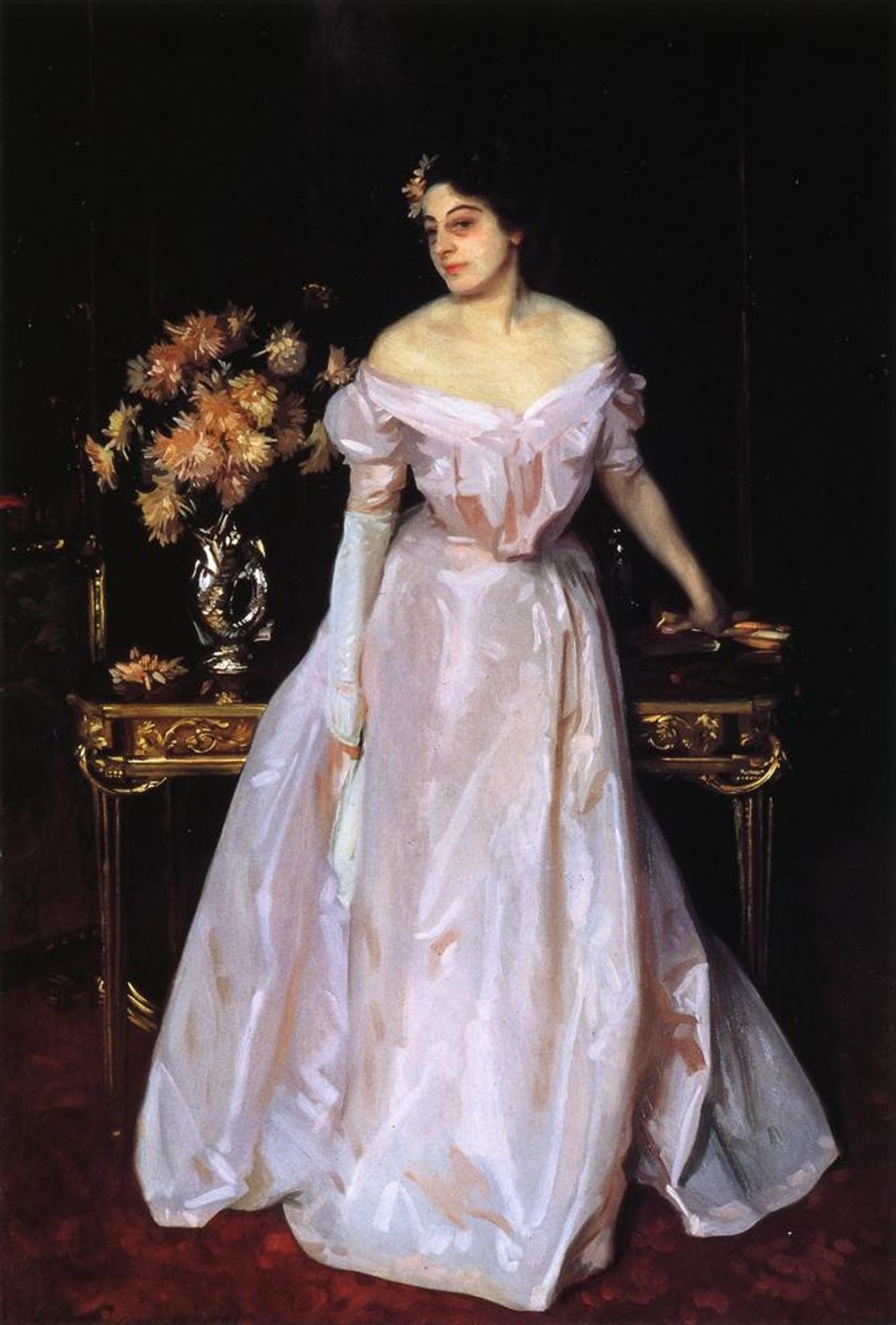
Hylda, Daughter of Asher and Mrs. Wertheimer


Listen to curator's interpretation
Curatorial notes
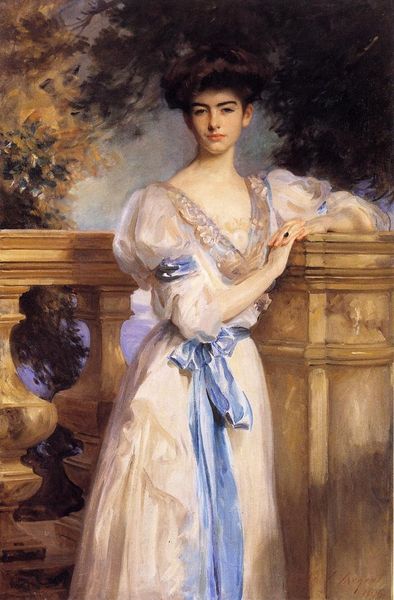
Editor: So, here we have John Singer Sargent's "Hylda, Daughter of Asher and Mrs. Wertheimer," painted in 1901. It's an oil painting currently at the Tate Britain. I find her expression really striking, a mixture of poise and perhaps a hint of melancholy. What can you tell me about this painting? Curator: Sargent often painted portraits of wealthy women, capturing their elegance and status, and it's important to understand the socio-economic context. How did women of this era negotiate power? Were they merely symbols of their husband’s success, or did they possess agency? Consider the dress itself: a beautiful, light pink confection. Does it empower her or confine her within societal expectations of femininity? Editor: That's a great point about the dress. I hadn’t thought about the tension there. I guess it could be both empowering and restrictive, depending on her position within society. Curator: Exactly. And consider the role of Asher Wertheimer, her father, a wealthy art dealer. Was this portrait commissioned to elevate the family's status? Sargent was highly sought after, so having him paint your daughter was a statement in itself. Does this influence how we view Hylda's gaze? Editor: It does add another layer. Knowing about her father and Sargent’s reputation makes me wonder about the dynamics at play. Was she truly seen or was she being presented? Curator: Precisely! These paintings become documents of their time, reflecting societal aspirations and often, subtle power imbalances. Editor: This has really changed how I see this portrait, beyond just admiring its aesthetic qualities. It's a snapshot of a very specific moment. Curator: Yes. It's a powerful reminder that art is always in dialogue with its social context, inviting us to question the narratives they present and uncover hidden perspectives.