About this artwork
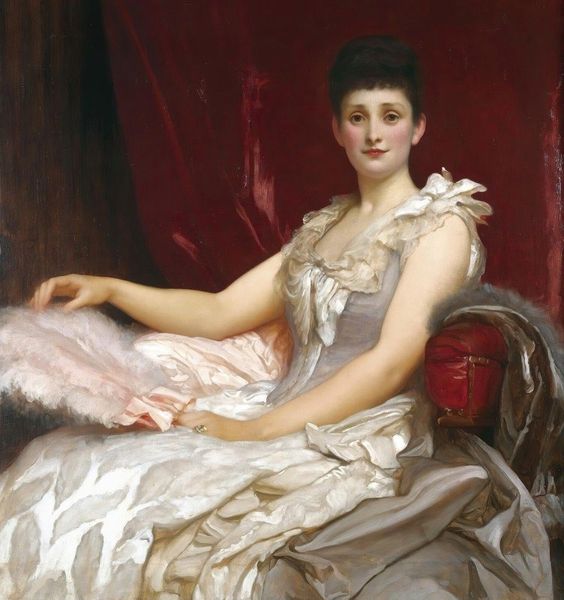
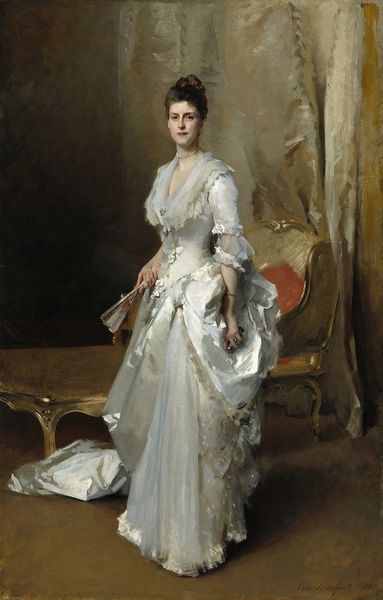
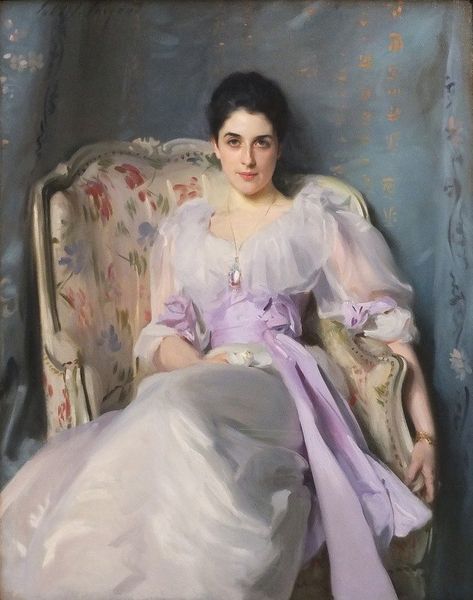
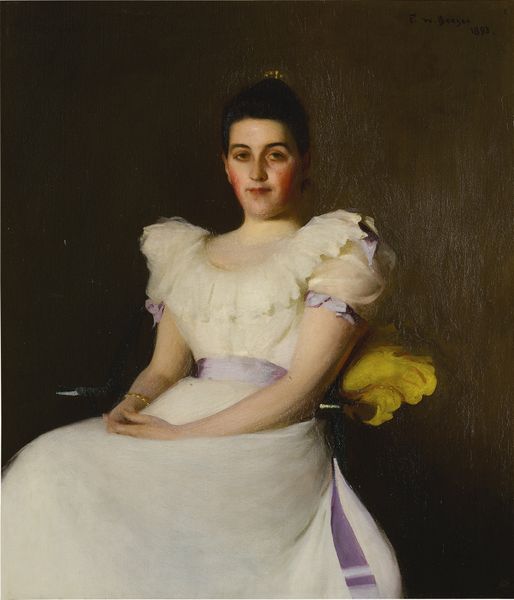
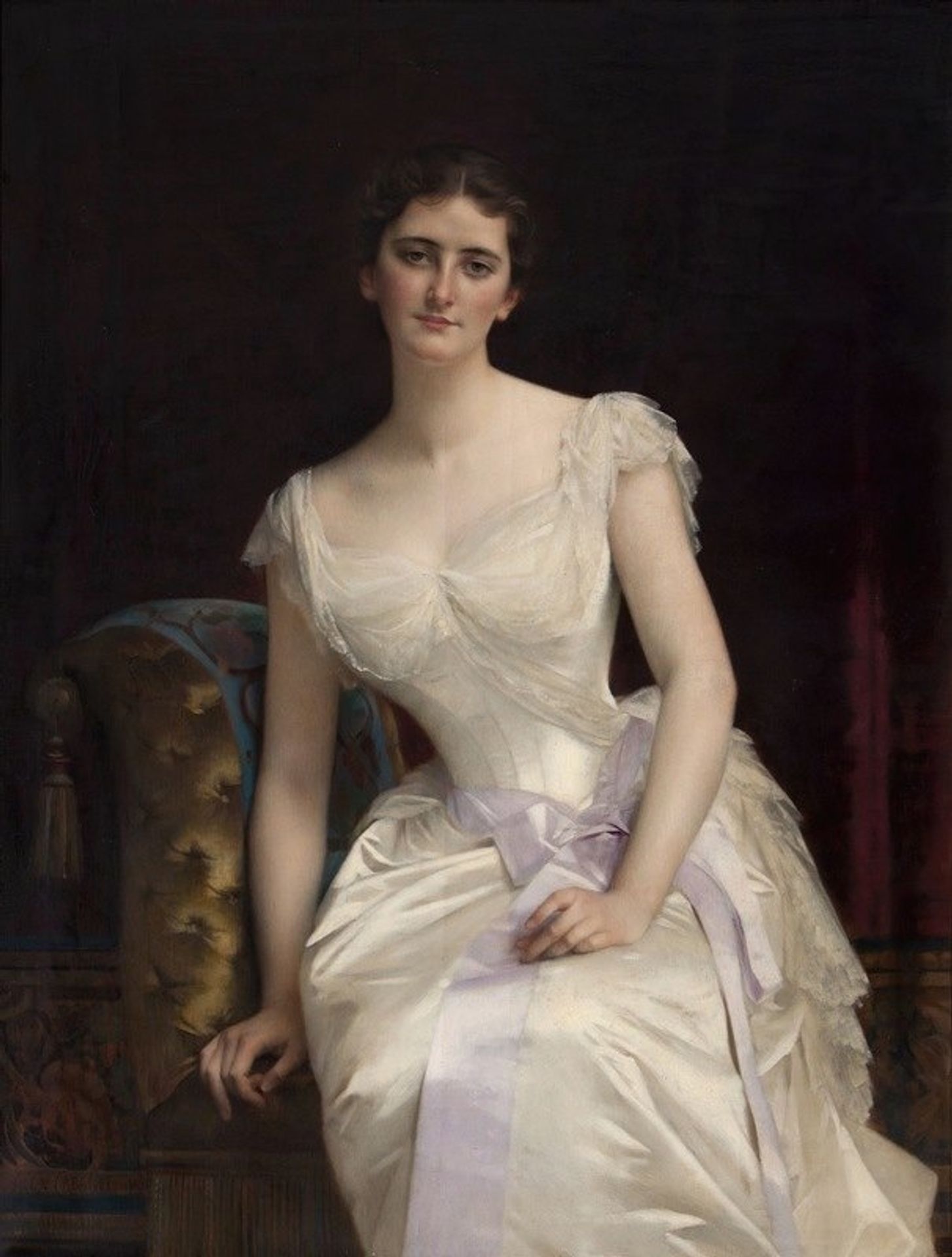
Alexandre Cabanel captured Mary Victoria Leiter, later Lady Curzon, in this portrait, employing oil on canvas to convey a sense of refined elegance. The composition is dominated by Leiter's figure, her white satin dress reflecting light in soft, undulating patterns, contrasted with the darker, muted background. Cabanel’s brushwork is smooth, almost polished, typical of his academic training. The colour palette is restrained, focusing on whites and creams, accented by the subtle lavender sash and the deep, rich hues of the backdrop. This formal restraint serves to emphasize the sitter's poise and aristocratic bearing. The textures here do not just describe clothing and setting; they communicate social meanings, reflecting wealth, status, and the values of the time. Cabanel doesn’t just represent Mary Victoria Leiter, he constructs a visual argument about her place in society. In doing so, the artwork operates within a structured visual language that speaks of power and representation. The portrait is an intersection of aesthetic form and cultural values.
Portrait of Mary Victoria Leiter, the later Lady Curzon of Kedleston, Vicereine of India
1887

Artwork details
- Medium
- painting, oil-paint
- Copyright
- Public Domain: Artvee
Tags
Comments
Share your thoughts
About this artwork
Alexandre Cabanel captured Mary Victoria Leiter, later Lady Curzon, in this portrait, employing oil on canvas to convey a sense of refined elegance. The composition is dominated by Leiter's figure, her white satin dress reflecting light in soft, undulating patterns, contrasted with the darker, muted background. Cabanel’s brushwork is smooth, almost polished, typical of his academic training. The colour palette is restrained, focusing on whites and creams, accented by the subtle lavender sash and the deep, rich hues of the backdrop. This formal restraint serves to emphasize the sitter's poise and aristocratic bearing. The textures here do not just describe clothing and setting; they communicate social meanings, reflecting wealth, status, and the values of the time. Cabanel doesn’t just represent Mary Victoria Leiter, he constructs a visual argument about her place in society. In doing so, the artwork operates within a structured visual language that speaks of power and representation. The portrait is an intersection of aesthetic form and cultural values.
Comments
Share your thoughts