drawing, graphic-art, print, pen
#
portrait
#
drawing
#
graphic-art
#
imaginative character sketch
#
aged paper
#
toned paper
#
art-nouveau
#
blue ink drawing
# print
#
caricature
#
caricature
#
cartoon sketch
#
figuration
#
personal sketchbook
#
line
#
sketchbook drawing
#
pen
#
watercolour illustration
#
cartoon style
Copyright: Public domain
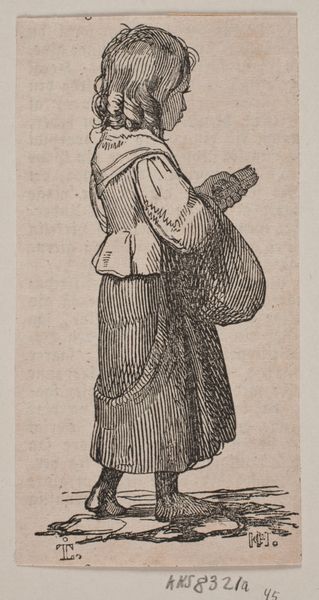
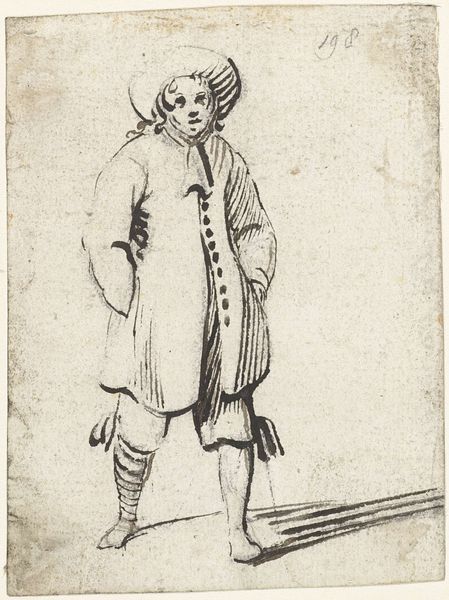
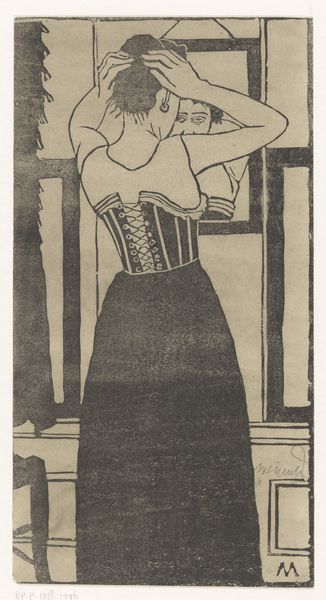
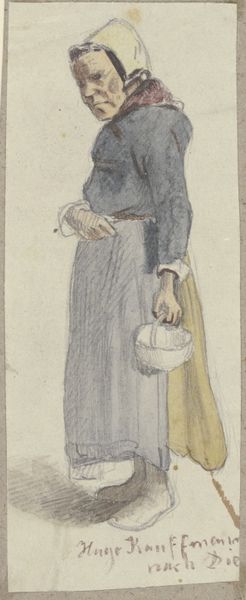
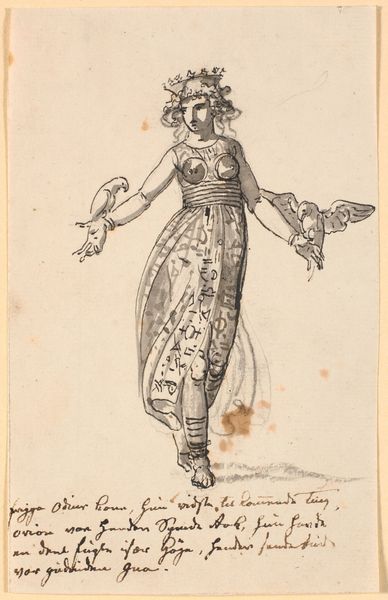
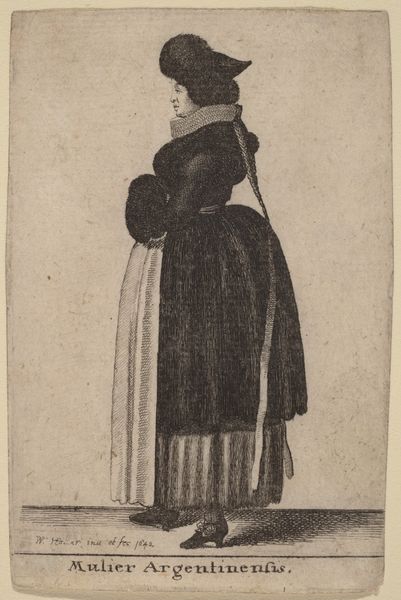
Curator: Consider the caricature, entitled "Caricature of Mily-meyer in 'le Rire,'" crafted in 1902 by Leonetto Cappiello, employing drawing and print mediums. Editor: The stark lines and muted colors, predominantly in gray and beige tones, make for an unusual choice for a caricature, lending it a slightly unsettling feel. It’s like a political cartoon stripped down to its essential forms. How would you interpret the impact of this visual choice? Curator: Focusing on form, notice the exaggeration of bodily features, especially the bust and chin, against the simplification of other areas. What is the relationship between the artist's expressive use of line and shape versus the potential cultural significance this might signal? Editor: Good question. The disproportionate features draw the eye and create an immediate sense of exaggeration, as opposed to realism. The lines appear bold, but the choice of paper is almost gentle. Curator: Yes, this tension creates a critical aspect to its interpretation. Consider the surface: the paper appears aged and textured, contributing an archival feel that emphasizes the graphic and linear. This materiality enhances our awareness of the print’s inherent flatness, directing our attention toward the rhythmic interplay between the subject's silhouette and the framing space. Editor: It's as if the artwork calls attention to its very construction, from the choice of media to its physical form, highlighting its artistic intention. Curator: Precisely! Cappiello encourages an engagement with the print as an object. By reflecting on these properties, it might give insight into our own interpretations of what is presented, versus what it means. Editor: Thank you! This definitely broadened my perspective on appreciating not just what's depicted, but how it's depicted, so the artistic components. Curator: Likewise, reflecting on the piece alongside your questions highlighted aspects of materiality and form I hadn't considered.
Comments
No comments
Be the first to comment and join the conversation on the ultimate creative platform.
 Collect
 React
React Comment
More like this